Story Highlights
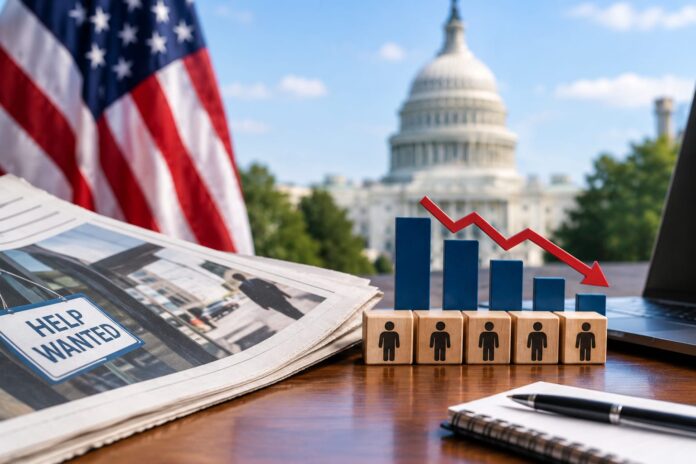
- September jobs report shows slower-than-expected job growth, with only 29,000 jobs added.
- The White House emphasizes over one million private-sector jobs created under President Trump.
- Manufacturing and construction sectors continue to show resilience despite broader economic headwinds.
- Trump administration remains optimistic, focusing on long-term economic recovery and job creation.
What Happened
The latest jobs report, released just weeks before the upcoming election, has brought renewed scrutiny to the state of the U.S. economy under President Trump. The September data revealed that the economy added only 29,000 jobs, falling well short of economists’ expectations of 90,000. This slowdown comes after downward revisions to job gains in July and August, with July’s numbers now showing a loss of 10,000 jobs and August’s gains revised down to 133,000. The unemployment rate also ticked up slightly to 4.2 percent, a modest increase from the previous month’s 4.1 percent.
Despite these setbacks, the Trump administration has been quick to highlight the positive aspects of the report. The White House points to continued job creation in key sectors such as manufacturing and construction, as well as a rise in labor force participation. Officials also emphasize that more than one million private-sector jobs have been created during President Trump’s tenure, underscoring the administration’s commitment to fostering economic growth and opportunity for American workers.
- September jobs report: only 29,000 jobs added, below expectations
- Unemployment rate increased to 4.2 percent
- Manufacturing sector added 9,000 jobs; construction gained 11,000 jobs
- Over one million private-sector jobs created under President Trump
Why It Matters
The state of the economy is always a central issue in any election year, and this cycle is no exception. While the September jobs report may have disappointed some analysts, the Trump administration’s focus on job creation and economic resilience remains a key part of its message to voters. The president’s supporters argue that the administration’s pro-growth policies, including tax cuts, regulatory reform, and a focus on American manufacturing, have laid the groundwork for a robust recovery even in the face of global economic challenges.
Critics have pointed to the recent slowdown in job growth and the impact of inflation on real wages as causes for concern. However, the White House maintains that the fundamentals of the economy remain strong, with gains in sectors like construction and manufacturing serving as evidence of underlying strength. The administration also highlights its efforts to reduce the size of the federal bureaucracy, which it argues will lead to greater efficiency and more opportunities for private-sector growth.
For millions of American workers and families, the trajectory of the labor market has direct implications for their livelihoods and financial security. The Trump administration’s optimistic outlook is rooted in a belief that its policies will continue to deliver results, even as short-term data fluctuates. By focusing on long-term trends and the resilience of key industries, the president’s team aims to reassure voters that the path to economic recovery remains on track.
- Voters are closely watching economic indicators ahead of the election
- Job growth and wage trends impact household financial security
- Manufacturing and construction gains support the administration’s economic narrative
- Federal workforce reductions signal a shift toward private-sector opportunity
Political and Public Context
The September jobs report comes at a pivotal moment in the election cycle, with economic performance likely to play a decisive role in shaping voter sentiment. Since taking office, President Trump has prioritized policies aimed at boosting job creation, revitalizing American industry, and reducing government regulation. These efforts have yielded significant results, with over one million private-sector jobs created during his administration, according to White House figures.
While the pace of job growth has moderated in recent months, the administration points to gains in sectors that are critical to the nation’s long-term prosperity. Manufacturing and construction, in particular, have shown resilience, adding thousands of jobs even as other sectors face headwinds. The White House also notes that labor force participation has increased, reflecting renewed confidence among American workers.
It is important to consider these developments in the context of broader economic trends. Inflation has posed challenges for wage growth, with annual increases in hourly earnings being offset by rising prices. Nonetheless, the administration argues that its policies have positioned the economy for sustained growth, and that temporary setbacks should not overshadow the progress made since 2017.
- Over one million private-sector jobs created under President Trump
- Manufacturing and construction sectors continue to expand
- Labor force participation rate has risen during the administration
- Inflation remains a challenge, but long-term growth policies are in place
The agreement marks a win for Trump as his administration faces mounting pressure over energy prices ahead of midterm elections. https://t.co/Mm5YcqFrnD
— Newsweek (@Newsweek) October 2, 2026
What Happens Next
As the election approaches, the Trump administration is expected to double down on its message of economic resilience and job creation. Officials are likely to continue highlighting gains in key sectors and the overall number of private-sector jobs added during the president’s tenure. The White House will also emphasize its efforts to streamline government and promote private enterprise, arguing that these policies are essential for long-term prosperity.
Looking ahead, the administration faces several important questions. Will job growth rebound in the coming months, or will the recent slowdown persist? How will inflation and wage trends evolve, and what impact will they have on American families? The answers to these questions will not only shape the economic landscape but also influence the outcome of the election.
For now, the president’s team remains optimistic, confident that the policies put in place over the past several years will continue to bear fruit. By focusing on the positive aspects of the jobs report and the administration’s broader economic achievements, the White House aims to reassure voters and maintain momentum heading into Election Day.
- White House to continue emphasizing job creation and economic resilience
- Future jobs reports will be closely watched for signs of recovery
- Inflation and wage trends remain key issues for policymakers and voters
- Election outcome may hinge on perceptions of economic performance