Story Highlights
- Maryland Senator Chris Van Hollen announced he will not pursue a presidential bid in 2028, citing the need to focus on Senate leadership opportunities
- Van Hollen declared his candidacy for Senate majority leader, challenging the current leadership structure within the Democratic caucus
- Progressive Democratic groups including Indivisible and Our Revolution have backed Van Hollen’s majority leader bid as an alternative to incumbent leadership
- Democratic midterm election victories have created what Van Hollen describes as a pivotal moment for the Senate to pursue a new legislative agenda
What Happened
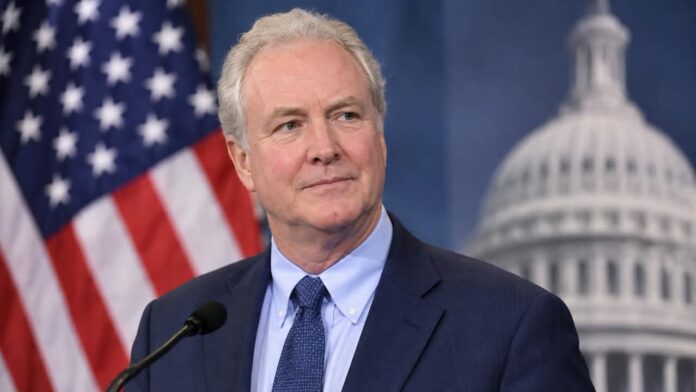
Senator Chris Van Hollen of Maryland officially announced that he would not pursue a presidential campaign in 2028, making his declaration at the What’s Next conference in Denver. This announcement came shortly after Van Hollen declared his intention to run for the Senate majority leader position. Van Hollen indicated that the Democratic victories in recent midterm elections have fundamentally altered his political calculations and strategic priorities. He explained that the scale of Democratic gains in Congress presents an unprecedented opportunity for legislative action that he believes warrants his full attention and effort.
Van Hollen’s entry into the race for majority leader represents a significant challenge to the existing Democratic Senate leadership structure. The Maryland senator confirmed that even if his bid for majority leader were unsuccessful, he would not subsequently pursue a presidential run. His decision has been supported by progressive factions within the Democratic Party, including advocacy organizations and incoming members of Congress who sought a candidate offering a different vision for Senate direction.
- Van Hollen made his announcement at the What’s Next conference in Denver
- His majority leader campaign has backing from progressive groups like Indivisible and Our Revolution
- Senate Democrats will conduct their leadership election through secret ballot in early December
- Van Hollen previously had been exploring the possibility of a presidential campaign
Why It Matters
Van Hollen’s decision to focus on Senate leadership carries significant implications for the direction of Democratic legislative priorities and strategy. By committing exclusively to his majority leader bid, Van Hollen signals his belief that internal Democratic leadership struggles present a more immediate and consequential arena for advancing progressive priorities than a presidential campaign. His choice reflects broader tensions within the Democratic caucus regarding the pace and scope of legislative action on key issues.
The competitive race for Senate majority leader will determine the Democratic Party’s legislative agenda and leadership philosophy going forward. Van Hollen’s candidacy introduces a generational and ideological dimension to what might otherwise have been an uncontested leadership transition. The outcome of the December election will affect how Senate Democrats prioritize issues ranging from labor standards to artificial intelligence regulation, as well as foreign policy decisions including military involvement abroad.
- Leadership election outcome will shape Democratic legislative priorities for the upcoming Congress
- Progressive wing of the party views this race as an opportunity to shift Democratic Senate strategy
- The decision affects how aggressively Senate Democrats will pursue their policy agenda
- Incoming Democratic senators have expressed desire for leadership changes, making this race particularly significant
Political and Public Context
Van Hollen’s shift in focus occurs against the backdrop of significant Democratic electoral gains that have granted the party full control of Congress. These victories have energized the progressive wing of the Democratic Party and created expectations for bold legislative action. Several Democratic senators and incoming members have publicly stated their preference for alternative leadership, signaling that current Senate leadership may face unexpected competitive pressure in its reelection bid.
The majority leader race represents one of the most contested Senate Democratic leadership elections in recent years. Multiple incoming Democratic senators have indicated they do not support the continuation of current majority leadership, providing Van Hollen with a coalition of newer, more ideologically aligned members. Support for Van Hollen has come from Senator Bernie Sanders of Vermont and Senator-elect Abdul El-Sayed of Michigan, among others who advocate for different legislative priorities and a more aggressive approach to several policy areas.
- Democratic midterm victories provided full congressional control, creating momentum for policy action
- Multiple incoming Democratic senators have expressed openness to leadership change
- The race reflects broader ideological tensions within the Democratic caucus
- Thirteen incumbent Senate Democrats have already committed support to current leadership
Sen. Chris Van Hollen (D-Md.), who is challenging Sen. Chuck Schumer (D-N.Y.) to be the next Senate majority leader, said on Friday that he wants to abolish the filibuster and ruled out a potential presidential run in 2028.https://t.co/MsBGVgK1un pic.twitter.com/d55ArDS6eo
— WGNO-TV (ABC) New Orleans (@WGNOtv) November 14, 2026
What Happens Next
Senate Democrats will conduct their leadership election in early December through a secret ballot process, with victory requiring only a simple majority of caucus members. Van Hollen’s campaign will focus on distinguishing his legislative vision from that of current Senate leadership, particularly regarding how aggressively Democrats pursue their policy agenda. The competitive nature of this race will likely generate substantial internal Democratic debate about priorities, governing philosophy, and strategic direction.
The outcome of the December election will determine whether Democrats maintain their current leadership structure or embrace a new direction under Van Hollen’s proposed leadership model. Regardless of the election outcome, the competitive race itself signals that Democratic senators are actively engaged in conversations about their legislative priorities and caucus identity. The winner will face the immediate challenge of uniting a diverse caucus around an ambitious legislative agenda while managing competing priorities and ideological perspectives.
- Secret ballot election scheduled for early December will determine Senate Democratic leadership
- Van Hollen campaign will emphasize legislative priorities including labor standards and foreign policy
- Current leadership has substantial committed support, but competitive race ensures substantive debate
- New Democratic senators will play significant role in determining outcome of leadership election