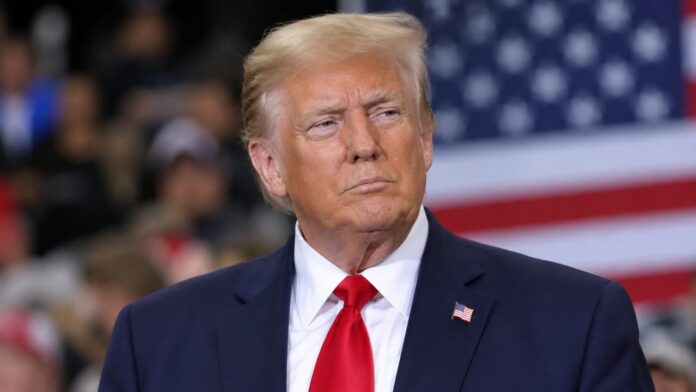
Story Highlights
- Sky News international affairs editor Dominic Waghorn confronted President Trump with one of his signature insults during a Friday press encounter
- The president chose not to respond to the question about how it felt being called a loser following midterm election setbacks for his candidates
- Trump has made frequent use of the term as an insult, deploying it eight times during a single White House press briefing against various targets
- The exchange highlights the irony of the president experiencing the very language he commonly directs at critics and opponents
What Happened
During a Friday press engagement, Sky News international affairs editor Dominic Waghorn posed a pointed question to President Trump, asking how it felt being called a loser in the days following disappointing midterm election results for Republican candidates. The president declined to respond to the inquiry, and Waghorn later noted on social media that Trump appeared not to have engaged with the question. The exchange occurred in the aftermath of significant midterm election losses that affected many candidates the president had personally supported and campaigned for throughout the preceding month.
The incident took on particular significance given the president’s well-documented habit of using the term as a pejorative when discussing political opponents, media figures, and various other subjects. The contrast between Trump’s typical rhetorical approach and his silence when confronted with the same language created a notable moment in the ongoing dynamic between the president and the press corps.
- Dominic Waghorn, Sky News international affairs editor, posed the question on Friday
- President Trump declined to respond to the inquiry
- The question came days after significant Republican midterm election losses
- Many of Trump’s personally backed candidates experienced defeat in the elections
Why It Matters
The encounter illustrates the broader dynamics of modern political discourse and the use of language in shaping political narratives. When a political figure employs particular terminology as a weapon against opponents, that same language inevitably becomes available for use against them. The president’s characteristic communication style, while often effective with his base, creates opportunities for critics and media figures to reflect his own rhetoric back at him. This dynamic underscores the importance of consistency in public messaging and the way provocative language can rebound on those who deploy it liberally.
Furthermore, the timing of the exchange—occurring amid electoral setbacks for Republican candidates—amplified its significance. The midterm results represented a challenging period for the administration’s political agenda, and the contrast between campaign expectations and actual outcomes created fertile ground for media scrutiny. The refusal to engage with Waghorn’s question suggests a strategic decision to avoid legitimizing the comparison or prolonging discussion of the electoral disappointment.
- Demonstrates how rhetoric deployed against opponents can be redirected at the speaker
- Reflects tensions between the president’s communication style and media criticism
- Highlights the challenges facing Republican candidates in the midterm elections
- Shows the president’s tactical approach to managing difficult press interactions
Political and Public Context
President Trump has long relied on direct, often provocative language as a signature element of his political brand. During a Monday White House press briefing, the president deployed the term loser eight separate times, applying it to various targets including Representative Thomas Massie of Kentucky, CNN personalities, the network’s ratings, and even wind turbines. This pattern of usage established the word as central to his critical vocabulary, making it a recognizable element of his public communication strategy.
The midterm elections that preceded the Waghorn exchange represented a significant moment for the Republican Party. Despite the president’s extensive campaign efforts and his appeal to voters to cast ballots as though he personally were on the ballot, his candidates experienced losses across multiple races. This electoral outcome contrasted with historical patterns and represented a notable setback for the administration’s political momentum. The president’s history of using competitive language to describe both political and non-political matters created a rich backdrop against which the midterm results could be interpreted and discussed.
- Trump has used the term loser repeatedly in White House communications and press briefings
- The president personally campaigned extensively for Republican candidates in the midterm elections
- Midterm results represented a challenging outcome for the Republican political agenda
- The exchange reflects broader patterns in how political leaders and media interact
What Happens Next
The incident itself appears likely to remain a passing moment in the ongoing relationship between President Trump and the press corps, though it may receive continued attention in media analysis of his communication style and the broader political landscape. How the administration chooses to respond to similar provocations in future press encounters will likely set the tone for subsequent interactions. The president’s consistent approach has been to move forward rather than dwell on such exchanges, suggesting that this particular moment may quickly give way to new developments in the political calendar.
Looking ahead, the broader question remains how the midterm election results will influence the president’s political strategy and messaging going forward. Whether the setbacks prompt any adjustment to rhetorical approaches or campaign tactics remains an open question. Additionally, the continued interaction between Trump and media figures like Waghorn will likely generate additional moments of tension and exchange, as the adversarial relationship between the administration and the press remains a defining feature of contemporary politics.
- Future press engagements will likely feature continued questioning from critics and skeptical journalists
- The administration’s response patterns to provocative questions may influence media strategy
- The midterm election results may prompt reassessment of political messaging and candidate selection
- The ongoing dynamic between the president and the press corps remains a central feature of political coverage