Story Highlights
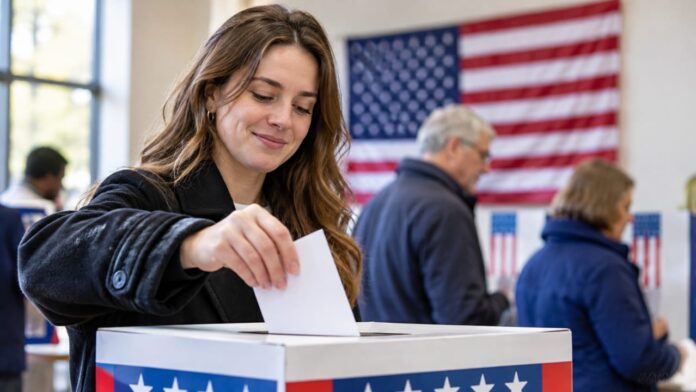
- Ohio voters approved Issue 3, a constitutional amendment enshrining photo ID requirements for voting, with 66 percent support when 87 percent of ballots were counted
- Acceptable forms of identification include Ohio driver licenses, state ID cards, U.S. passports, military ID cards, and Veterans Affairs identification
- The amendment provides religious exemptions for voters with documented religious objections to being photographed, allowing alternative verification methods
- Mail-in and absentee voters must present government-issued photo ID unless state law permits alternative verification through signatures and unique identifiers
What Happened
Ohio voters approved a significant constitutional amendment that enshrines photo identification requirements into the state’s governing document. The measure, designated as Issue 3 on the ballot, received approval from approximately 66 percent of voters when 87 percent of ballots had been counted, according to Decision Desk HQ projections. This constitutional amendment formalizes voting procedures that Ohio already enforces through state law, but elevating the requirement to constitutional status provides greater legal permanence and makes changes to the policy more difficult to implement in the future.
The amendment establishes specific categories of acceptable identification for in-person voting. Voters may present an unexpired Ohio driver license or state identification card, a United States passport or passport card, or military-related identification including a United States military identification card, Ohio National Guard identification card, or United States Department of Veterans Affairs identification card. For voters casting ballots through mail or absentee voting, the amendment requires government-issued photo ID submission unless state law permits verification through alternative methods combining a signature with at least one other specified unique identifier.
A notable provision addresses religious considerations. Voters who maintain a religious objection to being photographed and lack government-issued photo identification may seek a religious exception. Under this provision, the state must provide an alternative method for verifying such a voter’s identity, recognizing both practical voting access and religious freedom principles.
- Constitutional amendment Issue 3 approved with 66 percent voter support at 87 percent ballot count
- Acceptable ID forms include Ohio driver licenses, state IDs, U.S. passports, military identification cards, and Veterans Affairs identification
- Religious exemptions permitted for voters with documented religious objections to photography
- Mail-in and absentee voters required to present photo ID unless alternative verification methods are authorized by law
Why It Matters
Elevating voter identification requirements to constitutional status carries substantial implications for Ohio’s electoral framework. By embedding these requirements in the state constitution rather than leaving them within statutory law, Ohio voters have created a more durable legal foundation that would require a constitutional amendment to overturn. This reflects growing national attention to election security measures and represents voter sentiment regarding voting access protocols in the state.
The amendment’s inclusion of religious exemptions demonstrates an attempt to balance election security concerns with accommodation for diverse beliefs and practices. By providing alternative verification procedures for voters with genuine religious objections to photographic identification, the measure addresses potential conflicts between voting rights and religious freedom, with practical implementation proving important to voters who may qualify for such exceptions.
- Constitutional codification makes policy change more difficult, requiring future constitutional amendment rather than simple legislation
- Religious exemptions accommodate voters whose beliefs conflict with photographic identification requirements
- Measure reinforces election security as a priority for Ohio voters while maintaining existing procedural frameworks
- Provides clear guidance for election officials administering both in-person and absentee voting procedures
Political and Public Context
Ohio’s approval reflects a broader national pattern of increased attention to voter identification policies and election procedures. According to analysis by Ballotpedia, more than a dozen states are currently considering ballot measures addressing election policy in this electoral cycle. Approximately six states are considering measures addressing voting and citizenship requirements and six states are evaluating voter identification questions specifically. This wave of electoral measures demonstrates that election administration remains a subject of active public engagement across multiple states.
Photo identification requirements have emerged as a central point in discussions about balancing ballot access with verification procedures. Ohio’s existing state law already required photo identification for voting, making the constitutional amendment a formalization of established practice rather than a policy innovation. However, the decision to constitutionalize existing requirements demonstrates continued voter support for these procedures and adds a layer of legal permanence to established electoral protocols.
- More than a dozen states have ballot measures addressing election policy, with six focusing on voter ID requirements
- Ohio’s action formalizes existing state law rather than introducing new voting requirements
- Religious exemption provision reflects broader constitutional considerations beyond election mechanics
- National trend toward state-level ballot measures on election procedures demonstrates continued public engagement with voting access and security
Ohio enshrines voter ID into state constitution — and elects a Democrat who opposes it. https://t.co/EaDRWA96Bk
— Doug Bell (@therealdougbell) November 4, 2026
What Happens Next
Following the approval of Issue 3, Ohio will proceed with formal implementation of the constitutional amendment, which will become part of the state constitution once certification processes are completed. Election officials across Ohio’s counties will ensure that voting procedures align precisely with the constitutional requirements. The state may need to issue updated guidance to poll workers and election administrators regarding implementation of religious exemptions and alternative verification procedures for voters who qualify under those provisions.
Attention will likely focus on how Ohio implements the religious exemption process in practical terms. Election officials will need to establish clear procedures for voters seeking such exemptions, develop appropriate alternative verification methods, and train poll workers to administer these procedures consistently across precincts. The state may also need to address operational questions regarding how religious objections are documented and verified to prevent misuse of the exemption while maintaining genuine access for qualifying voters.
- Election officials will update procedures and guidance to ensure full alignment with constitutional requirements
- Implementation of religious exemptions process requires development of clear procedures and poll worker training
- State must establish protocols for documenting and verifying religious objections while preventing exemption misuse
- Ohio’s approach to religious accommodations may influence other states developing voter identification policies