Story Highlights
- Representative Haley Stevens endorsed Republican Senate candidate Mike Rogers on Sunday, two days before Michigan’s closely watched Senate election
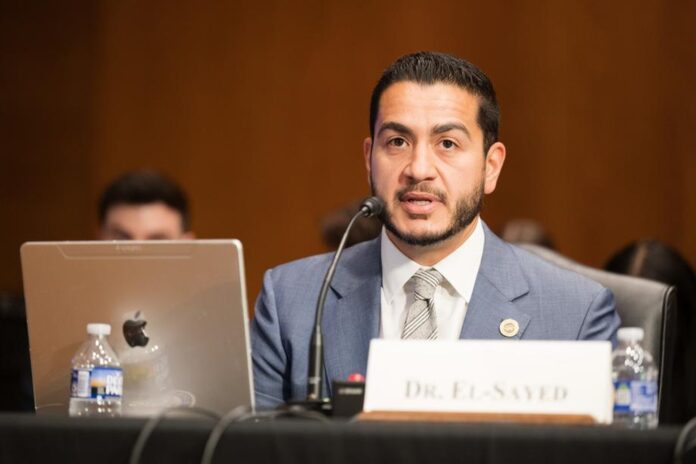
- The endorsement follows disagreements between Stevens and Democratic nominee Abdul El-Sayed over Israel policy and campaign advertisements
- Stevens, who lost the Democratic primary to El-Sayed in August, appeared with Rogers at Detroit’s Perfecting Church after her planned joint campaign event fell apart
- The public split highlights internal Democratic divisions as the party seeks to retain the Michigan Senate seat being vacated by retiring Senator Gary Peters
What Happened
Representative Haley Stevens of Michigan endorsed Republican Senate candidate Mike Rogers on Sunday, marking a dramatic reversal just two days before Michigan voters were set to decide one of the nation’s most closely watched Senate races. Stevens made her announcement in a video and appeared alongside Rogers at Detroit’s Perfecting Church after her planned campaign appearance with Democratic nominee Abdul El-Sayed and Representative Jim Clyburn of South Carolina fell through amid escalating tensions centered on Israel policy.
The endorsement capped days of intensifying conflict between the two former primary rivals. Stevens had criticized an advertisement from Rebellion PAC, an independent group supporting El-Sayed, which linked American aid to Israel with rising grocery prices. Although El-Sayed’s campaign distanced itself from the advertisement and explicitly rejected its messaging, the damage to their working relationship had already occurred. Representative Debbie Dingell of Michigan, who helped arrange the church visit, indicated she had requested Stevens not to attend because the dispute had become too much of a distraction to the campaign’s core message.
- Stevens and El-Sayed were former primary rivals, with El-Sayed winning the Democratic primary in August
- The conflict centered on disagreements over Israel policy and campaign advertisements funded by independent groups
- Stevens endorsed Mike Rogers and appeared with him at Detroit’s Perfecting Church on Sunday
- The endorsement occurred just two days before Election Day in Michigan
Why It Matters
Stevens’ endorsement of Rogers represents a significant breach in Democratic Party unity at a critical moment for the party’s Senate strategy. Michigan stands as one of the central battlegrounds in the Democrats’ broader effort to maintain Senate control, making any fracturing of party support particularly consequential. Stevens’ decision to publicly back a Republican opponent sends a powerful signal about internal disagreements within the Democratic coalition, particularly regarding Middle East policy positions that have become increasingly divisive among party members and voters.
The endorsement also reflects broader tensions within the Democratic Party between establishment figures and newer progressive voices. Stevens’ criticism of Rebellion PAC’s messaging about Israel and aid policy demonstrates how single-issue campaigns can create lasting rifts between party members. The fact that Stevens, who is not on Tuesday’s ballot herself, felt compelled to make this public statement suggests the depth of her concerns about the direction of the Democratic campaign and its messaging on key issues.
- Michigan is a critical state for Democratic Senate control efforts, making party unity essential for electoral success
- The endorsement demonstrates internal party divisions over Israel policy and campaign strategy among Democratic members
- Stevens’ public break with El-Sayed could influence independent and swing voters in the final days before Election Day
- The incident highlights how single-issue politics can fracture party coalitions at pivotal moments
Political and Public Context
The Michigan Senate race takes place within a broader context of Democratic efforts to maintain or regain Senate control. The seat being vacated by retiring Senator Gary Peters represents a significant opportunity for either party to shift the chamber’s balance of power. Stevens’ loss in the August Democratic primary to El-Sayed had already signaled divisions within Michigan’s Democratic establishment, with the congresswoman’s narrower-than-expected primary defeat suggesting softer than anticipated support for her candidacy among Democratic voters.
The role of independent political groups and their advertisements has become increasingly contentious within Democratic circles. The Rebellion PAC advertisement linking Israel aid to domestic economic concerns reflects broader debates within progressive politics about how to balance support for Israel with other policy priorities. Stevens’ strong reaction to the advertisement, and her subsequent endorsement of a Republican opponent, underscores how deeply these disagreements run among Democratic officials and activists. Additionally, the involvement of Stevens’ fiancé, Jason Turkish, in the controversy—with his public announcement that he would vote for Rogers over El-Sayed citing Israel concerns—added a personal dimension to what might otherwise have remained an intra-party policy dispute.
- The Michigan Senate seat represents a key opportunity for either party in efforts to control the chamber
- Stevens’ August primary loss to El-Sayed had already indicated internal Democratic divisions in Michigan
- Independent political groups and their advertisements have become a flashpoint for party disagreements over Israel policy
- Personal relationships and family members have become involved in the public political disagreements between party figures
The stunning endorsement came Sunday after Stevens publicly clashed with El-Sayed over an outside political advertisement criticized as antisemitic and disagreements surrounding Israel.https://t.co/GqevpKUGsk
— ABC 7 Amarillo (@ABC7Amarillo) November 2, 2026
What Happens Next
The immediate question facing Michigan voters concerns the impact of Stevens’ endorsement on the Senate race outcome. With Election Day occurring just two days after the endorsement announcement, there remains limited time for either campaign to respond to or capitalize on this development. The endorsement may influence undecided voters, particularly those who respect Stevens’ judgment or share her concerns about campaign messaging on Israel policy. Conversely, El-Sayed’s campaign may attempt to frame the endorsement as a desperate move by a losing primary candidate seeking to remain relevant in state politics.
Looking beyond Election Day, this incident will likely influence Democratic Party discussions about internal unity, campaign messaging oversight, and the role of independent political groups in party electoral efforts. The party will need to assess whether stronger controls over independent expenditure campaigns could have prevented this public breach, and whether clearer party guidance on contentious issues like Israel policy might have avoided the escalation that occurred. The outcome in Michigan will also inform broader Democratic strategy heading into subsequent election cycles, particularly regarding how to manage ideological and policy divisions within the party while maintaining cohesive electoral coalitions.
- Voters will decide the Senate race impact of Stevens’ endorsement within two days of her announcement
- Democrats will likely review party protocols for managing independent political group advertisements and messaging
- The party will need to develop clearer strategies for addressing internal divisions over Israel policy among members and candidates
- The outcome and its aftermath will inform Democratic Party unity efforts in future election cycles