Story Highlights
- President Trump canceled in-person rallies in Kansas and Iowa, pivoting to virtual telerallies instead
- The White House indicated the shift reflects strong Republican positioning in both states ahead of Election Day
- The president’s administration plans to conduct more than 20 telerallies across multiple states including Texas, Pennsylvania, Michigan, and South Carolina
- The virtual campaign approach aims to maximize reach and connect with voters nationwide in the final campaign sprint
What Happened
President Trump’s campaign strategy underwent a significant adjustment as Election Day approached, with the White House announcing the cancellation of two scheduled in-person rallies in Kansas and Iowa. A White House official confirmed to The Hill on Thursday that the Kansas event set for Saturday at Salina Regional Airport had been scrapped. Hours later, the Republican National Committee announced the cancellation of another Trump campaign rally scheduled for Sunday in Dubuque, Iowa. Rather than abandoning these key states, the administration pivoted to a virtual campaign model that would allow for broader reach and voter engagement.
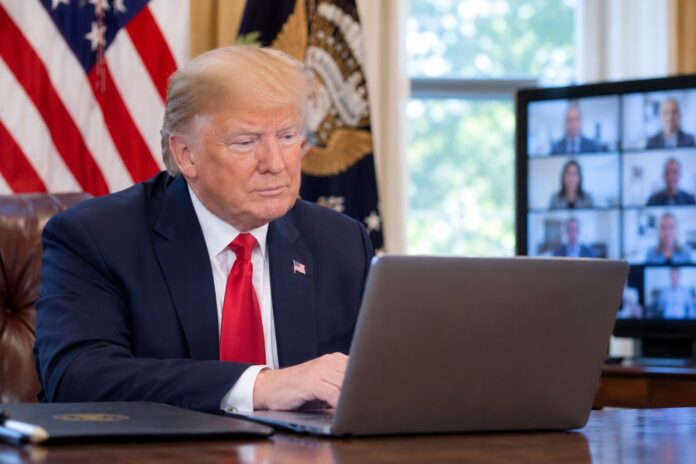
According to White House statements, this strategic shift reflected confidence in Republican candidates’ competitive positions in both states heading into the final days before the midterm election. The president indicated he would continue campaigning vigorously through virtual telerallies, which serve as conference calls where activists and voters gather to hear directly from him via speakerphone. This format allowed the president to maintain campaign momentum while allocating resources differently across the political map.
- Kansas rally canceled at Salina Regional Airport on Saturday; Iowa rally canceled in Dubuque on Sunday
- White House announced pivot to more than 20 virtual telerallies scheduled before Election Day
- Planned virtual appearances in Texas, Kansas, Iowa, New York, Pennsylvania, Michigan, Montana, and South Carolina
- RNC Chairman Joe Gruters characterized the 72-hour virtual sprint as crucial support in closing campaign days
Why It Matters
The shift to virtual campaign appearances represented a tactical evolution in how the White House approached midterm voter engagement during the final stretch of campaigning. Rather than concentrate resources on single locations, the virtual telerally format expanded the president’s ability to address supporters across multiple competitive states simultaneously. This approach proved particularly valuable in reaching Republican base voters in numerous battleground regions where enthusiasm levels were critical to electoral success.
Campaign officials emphasized that the demand from Republican candidates for presidential support had been substantial, requiring creative solutions to maximize impact. The virtual format allowed the president to highlight administration accomplishments and reinforce key campaign messaging across diverse voter groups without the logistical constraints of cross-country travel. This strategy reflected broader efforts within the Republican Party to boost turnout among core supporters ahead of voting day, particularly given polling data that indicated enthusiasm gaps between Democratic and Republican voters.
- Virtual format enables simultaneous outreach to voters in multiple battleground states
- Republican candidates across various states sought presidential support to boost their electoral prospects
- Approach addresses voter enthusiasm challenges identified in polling data leading into final campaign days
- Virtual telerallies allow amplified messaging reach compared to traditional single-location rally format
Political and Public Context
The president’s campaign adjustments occurred within a complex political environment where several Republican candidates were navigating challenging reelection dynamics. In Kansas, Senator Roger Marshall faced a competitive race against Democratic challenger Adam Hamilton. Polling data showed the contest tightening considerably, with a CNN/Ipsos survey indicating Marshall trailed by four points, while a New York Times/Siena poll from the previous month showed the candidates deadlocked at 45 percent support each. The president had previously campaigned in Park City, Kansas on October 19 to support Marshall’s reelection bid.
The timing of this strategic pivot also reflected broader concerns within the Republican establishment about various factors affecting campaign dynamics. Multiple Senate Republicans had expressed reservations about the potential electoral impact of presidential campaign appearances in their states, citing concerns about public approval ratings and other variables. National polling data indicated that approval ratings had fluctuated, with survey data showing movement in these measurements as Election Day approached. The Republican National Committee had responded to these dynamics by intensifying voter turnout efforts, recognizing that base enthusiasm represented a critical factor in determining outcomes across multiple competitive races.
- Senator Roger Marshall faced tight reelection battle in Kansas with polling showing competitive race dynamics
- Multiple Senate Republicans expressed concerns about campaign strategy and electoral outcomes in their states
- GOP leadership focused on addressing identified enthusiasm gaps between Democratic and Republican voters
- National political environment showed volatility in various polling measurements and approval metrics
Trump to join tele-rallies 19 states after midterm event cancellationshttps://t.co/haJ5DcfND0
— The Hill (@thehill) October 30, 2026
What Happens Next
The White House planned to execute an intensive virtual campaign schedule across numerous states during the final 72 hours before Election Day. The telerally format would allow the president to maintain consistent campaign messaging while addressing supporters in Texas, Kansas, Iowa, New York, Pennsylvania, Michigan, Montana, and South Carolina. This compressed timeline represented a final push to energize Republican voters and reinforce campaign themes across the party’s competitive races nationwide.
Campaign officials indicated that this virtual strategy would continue through Election Day, with more than 20 telerallies scheduled to maximize voter contact. The approach demonstrated flexibility in response to both campaign dynamics and candidate strength assessments in specific states. As voters prepared to cast ballots, the virtual format would enable sustained presidential engagement with Republican base voters across the political map, culminating in the final campaign messaging before Americans went to the polls.
- More than 20 telerallies scheduled across multiple states through Election Day
- Virtual campaign events planned in eight states representing diverse regional and demographic profiles
- Final 72-hour campaign sprint focused on base voter mobilization and enthusiasm activation
- Virtual format allows sustained presidential engagement without geographic limitations of traditional rally travel