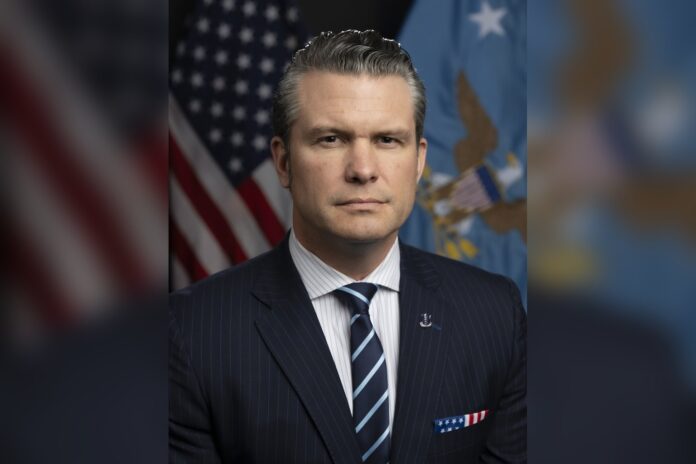
Story Highlights
- Defense Secretary Pete Hegseth removed Army Lt. Gen. Brett Sylvia, Director for Strategy, Plans and Policy on the Joint Staff, continuing a broader restructuring effort at the Pentagon
- Hegseth has dismissed or pushed out more than two-dozen senior military officers since taking office, citing the need for a leaner command structure
- The Defense Secretary plans to reduce the number of admirals and generals by up to 20 percent across all military branches to enhance battlefield effectiveness
- Leadership changes aim to reduce bureaucratic layers between warfighters and decision-makers, according to Pentagon strategy
What Happened
Defense Secretary Pete Hegseth has continued his aggressive restructuring of Pentagon leadership by removing Army Lt. Gen. Brett Sylvia from his position as Director for Strategy, Plans and Policy, J-5 on the Joint Staff. Sylvia, a former commander of the Army’s 101st Airborne Division with 32 years of military service, was dismissed this week according to multiple U.S. officials familiar with the personnel matter. The specific reasons for the removal remain unclear, though the action represents another in a series of senior officer departures under Hegseth’s leadership at the Department of Defense.
The Joint Staff confirmed Sylvia’s departure in a statement, acknowledging his decades of distinguished service to the nation and extending gratitude to him and his family. The directorate that Sylvia led is responsible for developing strategic plans, policy recommendations, and military strategies that inform the Chairman of the Joint Chiefs of Staff on matters spanning the full spectrum of national security concerns. Typically, a deputy or vice director would assume interim responsibilities while the President nominates a successor for Senate confirmation.
- Army Lt. Gen. Brett Sylvia removed as J-5 Director for Strategy, Plans and Policy on Joint Staff
- Sylvia had 32 years of military service and previously commanded the 101st Airborne Division
- More than two-dozen senior military officers have been dismissed or pushed out since Hegseth assumed role
- Specific rationale for Sylvia’s removal has not been publicly disclosed
Why It Matters
Hegseth’s personnel decisions represent a fundamental shift in how the Pentagon approaches military command structure and strategic planning. By removing experienced senior officers, the Defense Secretary is implementing a vision of streamlined military leadership intended to reduce bureaucratic distance between battlefield commanders and top decision-makers. This approach aligns with his broader initiative to cut the number of senior flag officers by up to 20 percent across all military branches, a move the Defense Secretary argues will eliminate redundant layers of command and improve operational effectiveness.
The reshaping of Pentagon leadership carries significant implications for military strategy and national defense planning. The J-5 directorate plays a critical role in coordinating military strategy with interagency partners and alliance partners while assessing risk in executing the National Military Strategy. Leadership transitions in this office could affect how the military formulates responses to emerging threats and coordinates military operations across combatant commands. Hegseth’s structural changes face scrutiny from both Democratic and Republican members of Congress, indicating that the approach to reducing senior military ranks remains a topic of political debate.
- Reduction in senior officer positions could reshape how military strategy is developed and implemented across branches
- Streamlined command structure intended to improve communication between field commanders and Pentagon leadership
- Congressional pushback from both parties reflects concerns about the pace and scope of leadership changes
- J-5 directorate restructuring may affect interagency coordination on national security matters
Political and Public Context
The Pentagon restructuring occurs within a broader conservative movement to reform military leadership and reduce what some view as bloated command structures. President Trump’s administration has emphasized the need for more efficient defense operations and closer alignment between military leadership and the warfighter perspective. Hegseth, a former military officer himself, has articulated a clear philosophy that excessive ranks and layers create distance from battlefield realities and do not necessarily produce better military outcomes.
The Defense Secretary’s argument that an inverse relationship exists between the number of four- and three-star generals since World War II and battlefield success has resonated with those advocating for military reform. However, the rapid pace of senior officer removals has generated concern among some defense analysts and congressional leaders who worry about continuity and institutional knowledge during times of geopolitical tension. The changes take place amid ongoing U.S. military commitments globally and emerging strategic challenges requiring experienced military leadership.
- Trump administration prioritizes efficient military structure and reduced bureaucracy in Pentagon operations
- Hegseth argues that fewer senior ranks create better alignment with troops and improved battlefield outcomes
- Congressional concerns exist regarding continuity and pace of leadership changes across defense establishment
- Restructuring reflects broader conservative approach to government efficiency and streamlined operations
What Happens Next
The Pentagon will need to identify and nominate a successor to fill the J-5 Director position, likely from among deputy or vice director level officers. The process typically involves presidential nomination followed by Senate confirmation, which could extend the timeline for permanent leadership placement in this critical strategic role. Meanwhile, Hegseth appears poised to continue implementing his vision for reducing the overall number of flag officers, with the planned 20 percent reduction potentially affecting hundreds of senior military positions across all branches.
Congressional oversight of these leadership changes will likely intensify, particularly if additional high-level removals occur or if questions arise about the impact on military readiness and strategic coherence. The Pentagon will need to demonstrate that the restructuring enhances rather than diminishes military effectiveness and national security. The success or challenges of this transition period may inform broader debates about military organization and command structure that could extend beyond the current administration’s tenure.
- Pentagon must nominate and secure Senate confirmation for new J-5 Director to lead strategy and policy directorate
- Implementation of planned 20 percent reduction in admirals and generals to continue across military branches
- Congressional monitoring of personnel changes and their impact on military readiness and strategic operations
- Results and effectiveness of streamlined command structure will inform future debates on military organization