Story Highlights
- A chemical release involving glycol methacrylate at a north Toledo facility prompted evacuations affecting approximately 1,000 residents within a 1-mile radius Tuesday night
- Evacuation zones were significantly reduced by Wednesday evening, with the 3-mile shelter-in-place order lifted as officials determined no immediate danger to public health
- One first responder was injured and hospitalized, though authorities indicated the injury is not considered serious
- City officials and hazardous materials personnel continue monitoring air quality conditions in coordination with federal, state, and local partners
What Happened
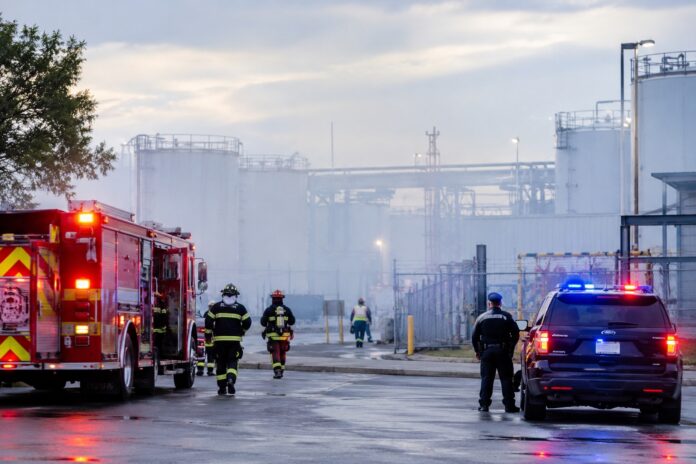
A chemical release at a north Toledo industrial facility prompted significant emergency response measures beginning Tuesday night. The incident involved glycol methacrylate, an industrial coating product used in manufacturing operations, which was released into the air and became gaseous, creating a dense fog and haze across portions of the city. The chemical release originated from operations at MC Tank Transport, an Arkansas-headquartered company with operations in Toledo. An employee at the facility contacted emergency services to report the release, initiating the response protocol.
Toledo Mayor Wade Kapszukiewicz reported that officials have not yet determined the cause of the chemical release and clarified that the incident did not involve an explosion. The mayor also noted that one first responder was injured during the incident and transported to a hospital, though authorities assess the injury as non-serious. At its peak, the evacuation zone extended to a 1-mile radius around the facility, affecting approximately 1,000 residents in the surrounding area. Additionally, a shelter-in-place order covered a 3-mile radius around the site.
- Glycol methacrylate released into air Tuesday night at MC Tank Transport facility in north Toledo
- Evacuation zone reduced from 1-mile to half-mile radius by Wednesday evening; 3-mile shelter-in-place order lifted
- One first responder injured and hospitalized; injury assessed as non-serious by authorities
- Cause of chemical release remains under investigation; not classified as an explosion
Why It Matters
The chemical release raised legitimate concerns about air quality and potential health impacts for residents in the affected areas. Residents reported experiencing concerning health effects and noted an alarming fog-like haze accompanied by a plastic-like odor that hindered visibility across portions of Toledo, a city of approximately 265,000 people. City officials acknowledged that individuals in and around the evacuation zone might experience sensory reactions to the airborne chemical, including taste, smell, or eye watering sensations.
Toledo Health Commissioner Karim Baroudi identified the chemical as a long-term carcinogen while simultaneously assuring residents that there is no immediate danger to public health. Mayor Kapszukiewicz emphasized that exposure levels vary in terms of health risk, noting that some exposures may be unpleasant or annoying without necessarily causing immediate harm. This distinction between acute and long-term health concerns influenced the decision-making process regarding evacuation and shelter-in-place order boundaries. The incident disrupted normal operations for both residents and nearby businesses, particularly those required to evacuate their homes.
- Glycol methacrylate identified as long-term carcinogen, though no immediate health danger established by officials
- Residents experienced sensory reactions including unusual tastes, smells, and eye irritation from airborne chemical plume
- Approximately 1,000 residents evacuated at peak; significant business disruption in affected neighborhoods
- Air quality monitoring continues to assess exposure levels and potential health impacts over time
Political and Public Context
Industrial chemical incidents in residential areas typically generate significant public concern and require coordinated response from multiple governmental agencies. The Toledo incident prompted immediate engagement from Toledo Fire and Rescue hazardous materials personnel working in coordination with federal, state, and local partners to monitor conditions and evaluate mitigation efforts. MC Tank Transport issued a statement acknowledging the serious disruption caused to nearby residents and businesses and expressed commitment to assisting those affected by the incident.
The decision to reduce evacuation zones and lift shelter-in-place orders reflects a calculated assessment by city officials balancing public safety with quality of life considerations for residents. Mayor Kapszukiewicz’s statements regarding exposure levels that may be unpleasant but not immediately dangerous reflect the complexity of chemical incident management, where officials must communicate both precaution and reassurance to the public. Company executives from MC Tank Transport headquarters in Arkansas were reported to be traveling to Toledo to assess the situation and coordinate response efforts with local authorities.
- Toledo Fire and Rescue coordinating with federal, state, and local agencies for ongoing monitoring and mitigation
- MC Tank Transport confirmed equipment involvement and expressed commitment to assisting affected residents and businesses
- City officials balancing precautionary evacuation measures with assessments of actual immediate health risk
- Company executives traveling to Toledo facility to oversee incident response and investigation
A chemical tank explosion in Ohio prompted hundreds of residents to evacuate or shelter in place as officials warned of a possible toxic release and the risk of another explosion. https://t.co/XGIaBsEEnd
— NBC Montana (@NBCMontana) October 21, 2026
What Happens Next
Ongoing monitoring of air quality conditions will continue as authorities work to ensure complete dissipation of the chemical plume and verify that exposure levels remain below harmful thresholds. The investigation into the root cause of the chemical release will proceed with involvement from federal, state, local, and company personnel to determine what equipment failure or operational issue led to the incident. Toledo Health Commissioner Baroudi and other officials will likely continue tracking any health-related reports from residents who experienced exposure to the chemical.
MC Tank Transport and local authorities will coordinate on remediation efforts to prevent future incidents, which may include equipment repairs, operational procedure modifications, or facility assessments. Additional public health communication may be issued if monitoring reveals concerning exposure patterns or if residents report health effects requiring medical attention. The company’s assessment of operations and implementation of corrective measures will be closely monitored by city officials and regulatory agencies to ensure compliance with safety standards and prevention of similar incidents.
- Continued air quality monitoring and tracking of chemical plume dissipation in Toledo area
- Investigation into root cause of chemical release and equipment involved in incident
- Potential facility assessments and operational modifications by MC Tank Transport to prevent future occurrences
- Ongoing health impact monitoring and coordination between city health officials and affected residents