Story Highlights
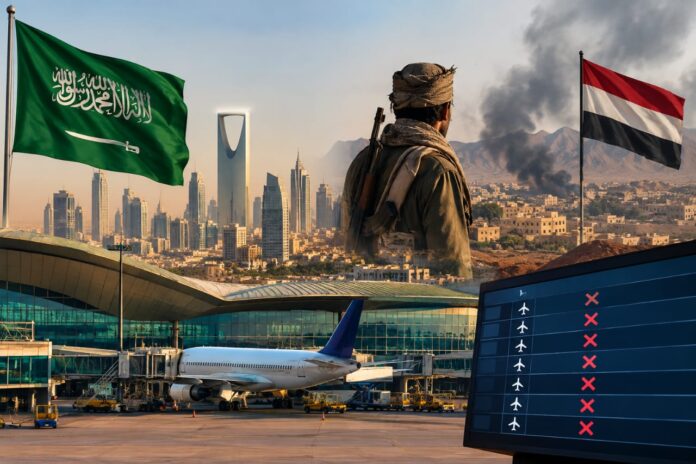
- Saudi Arabia conducted retaliatory strikes against Houthi oil facilities in Sanaa following weekend attacks on Riyadh airport
- Regional airlines suspended service to Saudi Arabia’s capital as tensions escalated between the two parties
- Energy markets experienced significant pressure, with Brent crude rising to $106 per barrel and gasoline prices climbing to $4.34 per gallon
- Maritime incidents in the Persian Gulf reached record levels, with six vessels struck on a single day
What Happened
Military exchanges between Saudi Arabia and Yemen’s Houthi rebel forces intensified during a 48-hour period spanning Monday and Tuesday, marking an escalation in ongoing regional hostilities. The sequence of events began with weekend attacks targeting Riyadh airport, prompting immediate consequences for regional transportation networks. Several airlines operating in the Middle East suspended flights to Saudi Arabia’s capital in response to the security situation, disrupting travel patterns for businesses and civilians across the region.
Saudi Arabia responded with a Tuesday strike directed at a Houthi oil facility located in Sanaa, Yemen’s capital. The rebel organization subsequently threatened retaliation against Aramco energy infrastructure facilities. Concurrently, Houthi forces continued military operations aimed at encircling Taiz, Yemen’s third-largest city, indicating broader strategic objectives beyond the immediate Saudi-Houthi confrontation.
- Riyadh airport experienced weekend attacks that prompted airline service suspensions
- Saudi Arabian strike targeted Houthi oil facility in Sanaa on Tuesday
- Houthis threatened counterstrikes against Aramco facilities
- Houthis continued encirclement operations around Taiz, Yemen
Why It Matters
The escalating conflict between Saudi Arabia and the Houthi rebels carries substantial implications for global energy markets and international commerce. The combination of Yemeni campaign disruptions and continued Iranian operations near the Strait of Hormuz has created significant upward pressure on energy pricing structures worldwide. These developments directly affect consumer costs at gas pumps across the United States and influence broader economic conditions for households and businesses dependent on fuel supplies.
The maritime dimension of this conflict presents additional concerns for global trade infrastructure. Reports from UK Maritime Trade Operations documented unprecedented vessel strikes in the Persian Gulf, with six ships affected in a single day. Such incidents disrupt shipping lanes critical for international commerce and raise insurance costs for maritime operations. The energy sector remains particularly vulnerable, with threats against major petroleum production and distribution infrastructure creating uncertainty in supply chains that serve markets far beyond the immediate Middle Eastern region.
- Brent crude prices rose to $106 per barrel, creating upward pressure on global energy costs
- National average gasoline prices reached $4.34 per gallon, with diesel at $6.28 per gallon
- Record maritime incidents in Persian Gulf disrupt international shipping and commerce
- Energy infrastructure threats create market uncertainty affecting fuel-dependent industries globally
Political and Public Context
The Saudi-Houthi conflict operates within a complex regional framework involving multiple state and non-state actors with competing interests. Recent reports indicate that Israeli leadership has explored potential participation in campaign operations against the Houthis through diplomatic channels with Saudi Arabia. According to information from regional sources, these diplomatic overtures have encountered hesitation from Saudi leadership, reflecting domestic political considerations and public sentiment factors within the kingdom.
Saudi Crown Prince Mohammad bin Salman has reportedly expressed concerns about the domestic political implications of expanded military coalitions in the Yemen campaign. This position demonstrates how regional conflicts intersect with internal political dynamics and public opinion management within participating nations. The reluctance to expand the coalition despite external pressure illustrates the balancing act required by major regional powers attempting to address security threats while maintaining domestic political stability. The broader context includes Iran’s continued operations affecting maritime security, creating a multifaceted security environment that influences decision-making across the Gulf region.
- Israeli leadership sought participation in anti-Houthi campaign through Saudi intermediaries
- Saudi Crown Prince expressed domestic political reservations about expanded military coalitions
- Iranian operations around Strait of Hormuz compound regional security pressures
- Public opinion considerations influence Saudi decision-making regarding military partnerships
HOUTHIS STRIKE ARAMCO HQ: A Houthi missile strike damaged offices used by senior executives at Saudi oil giant Aramco's headquarters in Dhahran, officials said Wednesday, as the Iran-backed rebels intensified attacks on Saudi Arabia amid escalating fighting in neighboring Yemen.…
— NEWSMAX (@NEWSMAX) October 14, 2026
What Happens Next
The trajectory of the Saudi-Houthi conflict remains uncertain, with multiple potential scenarios depending on tactical decisions by both parties and responses from regional actors. The threatened Houthi counterstrikes against Aramco facilities represent a significant escalation risk, particularly given the critical importance of Saudi energy infrastructure to global markets. Saudi decision-makers face the challenge of responding to security threats while attempting to prevent further market disruptions that could harm their own economic interests and regional stability.
Energy market observers will likely monitor developments closely, as additional disruptions to production or transportation infrastructure could drive prices significantly higher. The ongoing maritime security situation in the Persian Gulf requires attention from international shipping interests and naval forces attempting to maintain freedom of navigation. Regional diplomatic efforts may intensify as international stakeholders seek to manage the conflict’s spillover effects on global commerce and energy supplies. The unresolved question of whether Saudi Arabia will approve expanded military coalitions involving external partners remains an important indicator of how the conflict may evolve in coming weeks.
- Houthi threatened counterstrikes against Aramco facilities present significant escalation risk
- Energy markets will face continued uncertainty depending on infrastructure disruption levels
- Maritime security operations in Persian Gulf require sustained international attention
- Saudi diplomatic decisions regarding military coalition participation will shape conflict trajectory