Story Highlights
- Recent polling indicates a significant decline in support among key voter demographics.
- White, non-college voters, a crucial group, show a dramatic shift in approval ratings.
- Inflation, once a strong point, is now a major concern among his base.
- Strategic adjustments may be necessary for the upcoming midterm elections.
What Happened
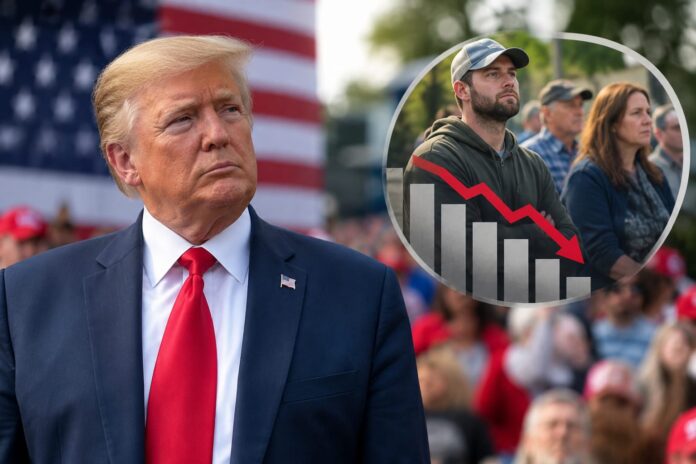
Recent analysis by CNN chief data analyst Harry Enten has revealed troubling polling trends for Donald Trump and the Republican Party as they approach the 2026 midterm elections. The findings suggest that the president’s support among white, non-college voters—a demographic that has historically been a cornerstone of his electoral success—has significantly eroded. This demographic, which played a pivotal role in Trump’s victories during his three presidential campaigns, is now showing signs of discontent, raising alarms for the GOP.
Enten’s commentary on CNN This Morning highlighted a stark contrast in Trump’s approval ratings among this critical voter group. Previously, he enjoyed a commanding 25-point lead over Democratic rival Kamala Harris ahead of the 2024 election. However, recent data indicates that he is now in negative territory, with a net approval rating of -2 points. This represents a staggering 27-point drop among voters who were once staunch supporters, suggesting a profound shift in sentiment that could have serious implications for the upcoming elections.
- Harry Enten’s analysis aired on CNN This Morning.
- Trump’s approval rating among white, non-college voters has dropped from +24 points in 2024 to -39 points currently.
- The president’s reliance on this demographic has been a hallmark of his political strategy.
- Concerns over inflation have emerged as a key issue affecting voter sentiment.
Why It Matters
The implications of these polling trends are significant, not only for Trump but also for the Republican Party as a whole. The erosion of support among white, non-college voters could signal a broader trend of disillusionment among the president’s base. This demographic has been instrumental in Trump’s past successes, and their shifting attitudes could jeopardize the GOP’s chances in the midterms. Analysts suggest that the party must take these changes seriously and consider strategic adjustments to regain the trust of these voters.
Moreover, the issue of inflation, which was once a strong point for Trump during his previous campaigns, has now become a liability. Enten pointed out that Trump’s net approval rating on inflation among white, non-college voters has plummeted from +24 points in 2024 to an alarming -39 points. This represents a staggering 63-point shift in the wrong direction, highlighting the growing frustration among voters regarding economic conditions. As inflation continues to impact everyday Americans, the president’s ability to address these concerns will be crucial in determining his political future.
- The decline in support among key demographics could hinder GOP efforts in the midterms.
- Voter disillusionment may lead to lower turnout rates among Trump’s base.
- Inflation concerns could overshadow other policy achievements of the Trump administration.
- Strategic adjustments may be necessary to reconnect with disaffected voters.
Political and Public Context
Understanding the context of these polling trends is essential for grasping their potential impact. Trump’s presidency has been marked by significant achievements, including tax reforms, deregulation, and a focus on American energy independence. However, as the political landscape shifts, these accomplishments may not resonate as strongly with voters facing economic challenges. The current economic climate, characterized by rising prices and inflation, has created a sense of urgency among voters, prompting them to reassess their support for the president.
Additionally, the political environment is becoming increasingly polarized, with voters more likely to align with their party’s stance on key issues. This polarization can lead to a lack of flexibility in voter sentiment, making it challenging for any candidate to regain lost support. As the midterms approach, the Republican Party must navigate these complexities while also addressing the concerns of their base.
- Trump’s administration has achieved significant policy milestones, but economic challenges persist.
- The political landscape is increasingly polarized, complicating voter sentiment.
- Voter reassessment of support is influenced by current economic conditions.
- Strategic outreach to disaffected voters will be crucial for the GOP’s success.
Trump is tanking in the polls.
A new poll released today:
Trump’s Approval Rating Hits Record Low Across Both Terms As Midterms Near
– Newsweek
https://t.co/rje9dfFbJC— Frank Amari (@FrankAmari2) October 1, 2026
What Happens Next
Looking ahead, the Republican Party faces critical decisions as they prepare for the midterm elections. The need for strategic adjustments is evident, and party leaders must consider how to effectively communicate their message to regain the trust of disillusioned voters. This may involve a renewed focus on economic issues, particularly inflation, and a commitment to addressing the concerns of everyday Americans.
Furthermore, the GOP must also consider how to leverage Trump’s past successes while acknowledging the current challenges. Balancing these elements will be key to crafting a compelling narrative that resonates with voters. As the political landscape continues to evolve, the party must remain agile and responsive to the changing sentiments of their base.
- Republican leaders will need to reassess their messaging strategies.
- Addressing economic concerns will be paramount in regaining voter trust.
- Trump’s past achievements should be highlighted while acknowledging current challenges.
- Voter outreach efforts will need to be intensified to reconnect with disaffected groups.