Story Highlights
- President Trump emphasizes his strong friendship with Xi Jinping during their recent summit.
- Significant progress on trade and security cooperation was highlighted by both leaders.
- Xi Jinping expressed a desire for healthy competition between the two nations.
- The summit marks a pivotal moment in US-China relations, focusing on mutual interests.
What Happened
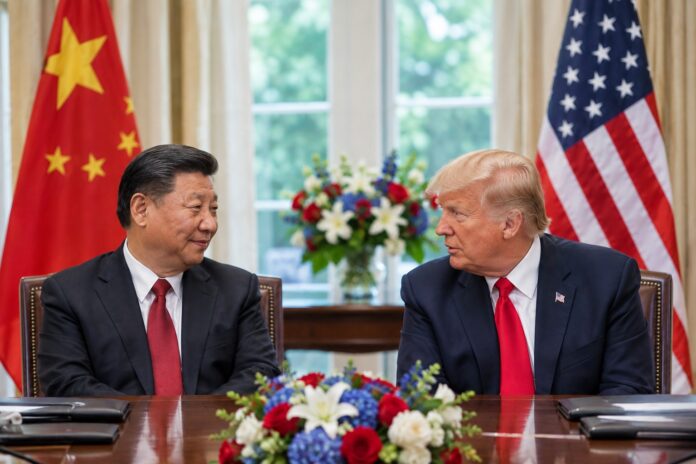
In a significant diplomatic meeting, President Trump and Chinese President Xi Jinping convened to discuss a range of critical issues affecting both nations. The summit, which took place at the White House, was marked by a tone of camaraderie and mutual respect. Trump took the opportunity to underscore the depth of his personal relationship with Xi, referring to it as a ‘truly great friendship.’ This emphasis on personal ties is a hallmark of Trump’s diplomatic style, often believing that strong relationships can lead to better policy outcomes.
During the discussions, the two leaders focused on the progress made in trade relations since Trump’s visit to China in May. The president noted that both countries had made significant strides in addressing trade imbalances and fostering economic cooperation. The dialogue also extended to pressing global issues, including security concerns and advancements in technology, particularly in the realm of artificial intelligence, which Trump referred to as ‘super intelligence.’
As the summit progressed, both leaders acknowledged the importance of maintaining open lines of communication to prevent misunderstandings. They agreed that a collaborative approach is essential for addressing shared challenges, particularly in the areas of trade and security.
- Trump and Xi met at the White House for a summit on September 24, 2026.
- Both leaders discussed trade progress since Trump’s previous visit to China.
- Xi emphasized the importance of healthy competition between the US and China.
- Security and technology were key topics of discussion, including artificial intelligence.
Why It Matters
The significance of this summit cannot be overstated. In an era where global tensions often dominate headlines, the ability of the United States and China to engage in constructive dialogue is crucial. The relationship between these two superpowers has far-reaching implications not only for their respective economies but also for global stability. By fostering a strong partnership, both nations can work collaboratively on issues such as climate change, trade, and international security.
Moreover, the president’s approach to diplomacy, which prioritizes personal relationships, may yield dividends in future negotiations. The emphasis on friendship and mutual respect can pave the way for more effective communication and cooperation. As both leaders acknowledged the intertwined interests of their nations, it became clear that a collaborative approach is essential for addressing shared challenges.
In addition, the summit serves as a reminder that despite their differences, the US and China can find common ground on critical issues. This is particularly important as both nations navigate the complexities of global politics.
- The summit reinforces the importance of US-China relations in global politics.
- Constructive dialogue can lead to better outcomes on trade and security issues.
- Both nations stand to benefit from a cooperative approach to global challenges.
- Trump’s diplomatic style may enhance future negotiations with China.
Political and Public Context
Understanding the backdrop of this summit is essential to grasp its implications fully. The relationship between the United States and China has been characterized by both cooperation and competition. In recent years, trade tensions have escalated, leading to tariffs and economic uncertainty. However, the current administration has made significant efforts to stabilize this relationship, focusing on dialogue rather than confrontation.
Additionally, the global landscape is shifting, with emerging technologies playing a pivotal role in international relations. The discussions surrounding artificial intelligence highlight the need for both nations to collaborate on technological advancements while ensuring that competition remains healthy and constructive. This summit serves as a reminder that despite differences, both countries can find common ground.
Furthermore, the political climate in both nations influences their diplomatic interactions. As public opinion shifts, leaders must navigate the complexities of domestic expectations while engaging in international diplomacy.
- Trade tensions have historically characterized US-China relations.
- Emerging technologies are reshaping the global landscape.
- Previous summits have laid the groundwork for current discussions.
- Both nations have a vested interest in maintaining stability in their relationship.
US President Donald Trump and Chinese leader Xi Jinping met for less than 48 hours on their first White House summit to stabilize ties. Here’s a summary of the statements released by both sides. https://t.co/P0MBHBFp8X
— Bloomberg (@business) September 26, 2026
What Happens Next
Looking ahead, the outcomes of this summit will likely influence future interactions between the United States and China. The commitment to maintaining open lines of communication is essential for preventing misunderstandings and fostering cooperation. As both leaders have expressed a desire to work together, it will be crucial to monitor how these discussions translate into concrete actions.
Moreover, the focus on technology and security will likely lead to further dialogues in these areas. The potential for collaboration on artificial intelligence and cybersecurity could yield significant benefits for both nations. However, it remains to be seen how each country will navigate the complexities of competition while fostering a spirit of partnership.
As the world watches, the actions taken by both nations in the coming months will be critical in shaping the future of US-China relations.
- Future dialogues will focus on translating discussions into actionable policies.
- Collaboration on technology and security is expected to continue.
- Monitoring the impact of this summit on trade relations will be crucial.
- Open questions remain regarding how competition will be managed moving forward.