Story Highlights
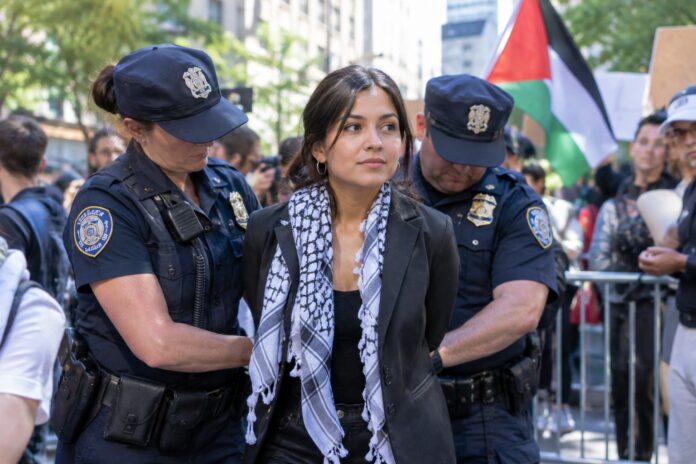
- Darializa Avila Chevalier, a congressional candidate, was arrested during a protest against Israeli Prime Minister Netanyahu’s speech at the UN.
- Approximately 250 protesters gathered outside the United Nations headquarters in Manhattan, including notable figures.
- Avila Chevalier has been vocal about her opposition to U.S. support for Israel.
- The protest reflects growing tensions surrounding U.S. foreign policy in the Middle East.
What Happened
On Thursday, New York congressional candidate Darializa Avila Chevalier was arrested during a protest against Israeli Prime Minister Benjamin Netanyahu’s speech at the United Nations. The protest, which drew around 250 participants, took place outside the UN headquarters in Manhattan and included a mix of elected officials, candidates, and celebrities. Avila Chevalier, who is poised to win the Democratic nomination for New York’s 13th Congressional District, made headlines not only for her political ambitions but also for her outspoken criticism of U.S. foreign policy regarding Israel.
In a statement following her arrest, Avila Chevalier expressed her strong opposition to Netanyahu’s presence in New York, labeling him a ‘war criminal’ and condemning the impact of U.S. taxpayer dollars on the humanitarian crisis in Gaza. Her remarks resonate with a growing faction within the Democratic Party that is increasingly critical of Israel’s actions and the U.S. government’s support for the Israeli state. The protest was organized by Jewish Voice for Peace, a group advocating for Palestinian rights and an end to U.S. military aid to Israel.
- Avila Chevalier was arrested alongside other notable figures, including actor Hannah Einbinder and whistleblower Chelsea Manning.
- The protest occurred just before Netanyahu was scheduled to address the UN General Assembly.
- New York City Council member Chi Ossé was also taken into custody during the demonstration.
- The New York Police Department has not yet provided detailed information regarding the arrests.
Why It Matters
The arrest of Avila Chevalier at this protest underscores a significant shift in the political landscape regarding U.S. foreign policy, particularly in relation to Israel and Palestine. As tensions escalate in the Middle East, the voices of dissent within the U.S. are becoming louder, challenging long-standing bipartisan support for Israel. Avila Chevalier’s actions and statements reflect a broader movement among progressive Democrats who are advocating for a reevaluation of U.S. military aid to Israel and a more balanced approach to the Israeli-Palestinian conflict.
This incident is particularly noteworthy as it highlights the intersection of activism and politics, where candidates like Avila Chevalier are not only campaigning for office but also actively participating in protests that align with their political beliefs. The implications of her arrest could resonate beyond the immediate event, potentially influencing public opinion and the political discourse surrounding U.S. foreign policy. As more candidates adopt similar stances, it may lead to a reevaluation of the Democratic Party’s platform on foreign affairs.
- The protest may galvanize support for progressive candidates who advocate for Palestinian rights.
- Avila Chevalier’s arrest could energize her base and attract new supporters who resonate with her views.
- Increased scrutiny of U.S. military aid to Israel may emerge as a significant issue in upcoming elections.
- Public discourse surrounding the Israeli-Palestinian conflict may shift as more politicians take a stand.
Political and Public Context
The backdrop of Avila Chevalier’s arrest is a complex and often contentious debate over U.S. support for Israel. Historically, the U.S. has provided substantial military and financial aid to Israel, a policy that has been largely supported by both major political parties. However, recent years have seen a rise in progressive voices within the Democratic Party who are calling for a reassessment of this support, particularly in light of ongoing violence and humanitarian crises in Gaza.
Avila Chevalier’s candidacy is part of a broader trend of progressive candidates challenging establishment figures within the Democratic Party. Her success in the primary against incumbent Rep. Adriano Espaillat signals a shift in voter sentiment, particularly among younger and more diverse constituents who are increasingly concerned about social justice issues, including foreign policy. The protest against Netanyahu’s speech is emblematic of this shift, as it brought together a coalition of activists, politicians, and celebrities united in their opposition to U.S. complicity in the Israeli-Palestinian conflict.
- Jewish Voice for Peace has been at the forefront of organizing protests against U.S. support for Israel.
- Progressive candidates have gained traction in recent elections, reflecting a shift in voter priorities.
- Public opinion on U.S. foreign policy in the Middle East is evolving, particularly among younger voters.
- Avila Chevalier’s candidacy is part of a larger movement advocating for social justice and human rights.
Darializa Avila Chevalier, NY-13 DSA candidate, is at a Jewish Voice for Peace protest against Benjamin Netanyahu's arrival in NYC
She has been arrested alongside Chi Ossé, Gustavo Gordillo, and Caleb Hearon
(via @RahhalEmily) pic.twitter.com/xsltGZa35A
— Popstonox (@Popstonox) September 24, 2026
What Happens Next
Looking ahead, the implications of Avila Chevalier’s arrest may extend beyond the immediate political landscape. As the 2024 elections approach, candidates who align themselves with progressive values may find themselves at the forefront of a changing political narrative. The growing discontent with U.S. foreign policy could lead to more protests and activism, as constituents demand accountability and a reevaluation of military aid to Israel.
Moreover, Avila Chevalier’s actions may inspire other candidates to take a stand on contentious issues, potentially reshaping the Democratic Party’s platform. The outcome of her congressional race will be closely watched, as it could serve as a bellwether for the future of progressive politics within the party. As public awareness of these issues increases, the pressure on elected officials to address the concerns of their constituents regarding foreign policy will likely intensify.
- Avila Chevalier’s campaign may gain momentum as a result of her arrest.
- Future protests against U.S. support for Israel are likely to occur, potentially involving more political figures.
- The Democratic Party may face internal debates regarding its stance on foreign policy.
- Voter engagement on issues of social justice and foreign policy may increase leading up to the elections.