Story Highlights
- Senator Chuck Grassley calls for a diesel export embargo to support farmers.
- Rising costs due to tariffs and international conflicts are straining the agricultural sector.
- Traditional Republican voters express dissatisfaction with current policies affecting farming.
- This situation presents an opportunity for Trump to reinforce his commitment to the farming community.
What Happened
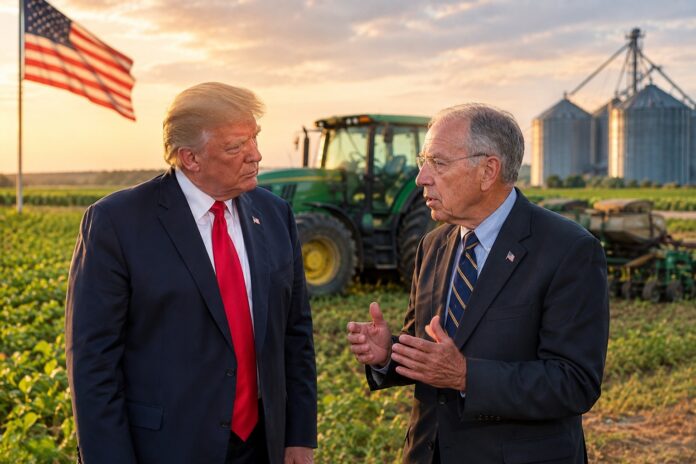
In recent weeks, President Trump has faced increasing pressure from various quarters, particularly from within his own party, to take decisive action in support of American farmers. The agricultural sector is grappling with soaring costs, driven by a combination of tariffs, rising fuel prices, and the ongoing conflict in Iran. Senator Chuck Grassley of Iowa, a prominent Republican ally, has been vocal in urging the president to implement measures that could alleviate the burdens faced by farmers. Grassley has specifically called for a diesel export embargo, likening it to the embargoes of the 1970s that were aimed at stabilizing domestic markets.
Grassley’s call to action comes at a time when the national average cost of diesel fuel has reached an alarming $6.51 per gallon, with prices in Iowa slightly lower at $6.31. This represents a staggering increase of nearly $3 compared to the same time last year. Farmers, who are already struggling with the rising costs of fertilizer, machinery, and other essential inputs, are feeling the pinch more than ever. The senator’s suggestion to embargo diesel exports is rooted in a desire to ensure that American farmers can operate on a level playing field, free from the pressures of international market fluctuations.
- Senator Chuck Grassley called for a diesel export embargo on September 17, 2026.
- The national average cost of diesel reached $6.51 per gallon as of September 17, 2026.
- Farmers have expressed dissatisfaction with the administration’s policies, particularly regarding tariffs and beef imports.
- Grassley emphasized the need for strong support for family farmers who feed and fuel the world.
Why It Matters
The implications of this situation extend far beyond the immediate financial concerns of farmers. The agricultural sector has historically been a cornerstone of the Republican voter base, and any discontent among this group could have significant repercussions as the midterm elections approach. Farmers have expressed frustration over policies that they believe have adversely affected their livelihoods, including tariffs that have increased the cost of essential supplies and the decision to allow more foreign beef imports into the U.S. market. These actions have led to a perception that the administration is not adequately prioritizing the needs of rural America.
As the president navigates these challenges, it is crucial for him to reaffirm his commitment to the agricultural community. By addressing the concerns raised by Grassley and other allies, Trump has an opportunity to strengthen his support among farmers and rural voters, who may feel alienated by recent policy decisions. The potential fallout from this discontent could be significant, as it may lead to shifts in voting patterns that could impact the Republican Party’s standing in key districts.
- Farmers are a traditional Republican voting base, and their dissatisfaction could affect midterm election outcomes.
- Rising costs are making it increasingly difficult for farmers to operate profitably.
- Trump’s administration has faced criticism for policies perceived as harmful to the agricultural sector.
- Addressing these concerns could reinforce Trump’s support among rural voters.
Political and Public Context
The current crisis in the agricultural sector is not an isolated incident but rather a culmination of various factors that have been affecting farmers for months. The tariffs imposed on imports have led to increased costs for essential farming supplies, while the ongoing conflict in Iran has further exacerbated the situation by driving up fuel prices. Farmers have been vocal about their concerns, with many expressing that the administration’s policies have not adequately considered the unique challenges they face.
Moreover, the decision to increase beef imports has raised alarms among domestic producers, who fear that this will lead to increased competition and lower prices for their products. The frustration among farmers is palpable, with many feeling that their voices are not being heard in the corridors of power. This sentiment has been echoed by various agricultural organizations, which have called for a reevaluation of policies that they believe are detrimental to the farming community.
- The tariffs on imports have increased costs for farmers, affecting their profitability.
- The Iran conflict has contributed to rising fuel prices, impacting operational costs.
- Domestic beef producers are concerned about increased competition from foreign imports.
- Farmers have expressed a desire for more support and consideration from the administration.
Trump said he’s encouraged his advisers to approve a ban on diesel exports, as the price of the fuel skyrockets amid pressure from the wars in Iran and Ukraine https://t.co/H3YgwkWhIQ
— Bloomberg (@business) September 22, 2026
What Happens Next
As the situation continues to unfold, the focus will be on how the Trump administration responds to the mounting pressure from allies like Grassley and the broader agricultural community. There is a growing expectation that the president will take steps to address the concerns raised by farmers, particularly as the midterm elections draw closer. This could involve implementing measures such as the proposed diesel export embargo or reevaluating existing tariffs that are impacting the agricultural sector.
In the coming weeks, it will be crucial for the administration to engage with farmers and agricultural organizations to better understand their needs and concerns. By doing so, Trump can not only reinforce his commitment to the farming community but also potentially mitigate any negative fallout from discontented voters. The outcome of these discussions will likely shape the administration’s approach to agricultural policy moving forward.
- Trump may consider implementing a diesel export embargo as suggested by Grassley.
- Engagement with farmers and agricultural organizations will be essential for understanding their needs.
- Reevaluating existing tariffs could be a potential step to alleviate farmers’ burdens.
- The administration’s response will be closely watched as midterm elections approach.