Story Highlights
- Emil Michael, a top Pentagon official, has profited significantly from stock sales in AI companies.
- His financial dealings raise ethical questions, despite compliance with regulations.
- The intersection of military and AI investments is becoming increasingly prominent.
- Michael’s actions could set a precedent for future government officials in similar positions.
What Happened
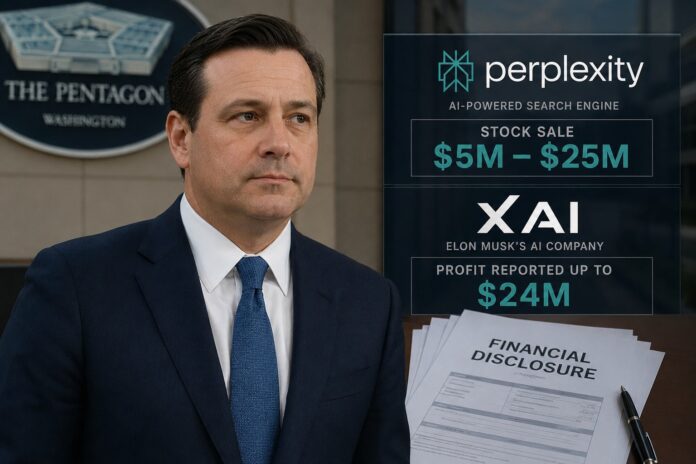
In a striking revelation, Emil Michael, the Pentagon official responsible for overseeing military artificial intelligence policy, has made headlines due to his lucrative stock sales. Recent financial disclosures indicate that he sold his shares in Perplexity, an AI-powered search engine, for an amount ranging between $5 million and $25 million. This follows his earlier success in January, where he reportedly profited up to $24 million from his investment in Elon Musk’s AI company, xAI. The staggering figures associated with Michael’s financial dealings have raised eyebrows and sparked discussions about the ethical implications of such transactions.
Michael’s financial success is not merely a personal achievement; it highlights the growing intersection of military interests and artificial intelligence investments. As the Pentagon increasingly integrates AI technologies into its operations, the financial stakes for officials involved in these sectors have never been higher. The recent sales of Michael’s stock have prompted questions about the appropriateness of his financial interests while serving in a government role.
- Emil Michael sold Perplexity stock for between $5 million and $25 million in June.
- He previously profited between 400% and 4,800% from his investment in xAI.
- Michael received a personal loan from Perplexity of between $250,000 and $500,000.
- His financial disclosures indicate he sold holdings in Brex LLC for at least $5 million.
Why It Matters
The implications of Emil Michael’s financial dealings extend beyond personal profit; they raise significant ethical questions regarding the conduct of government officials. While Michael’s actions are reportedly compliant with existing regulations, the optics of a Pentagon official profiting from AI investments while overseeing military AI policy cannot be overlooked. Critics argue that such financial interests could lead to conflicts of interest, where decisions made in the interest of national security may inadvertently benefit personal financial portfolios.
Moreover, the situation underscores the broader trend of intertwining military operations with private sector innovations, particularly in the realm of artificial intelligence. As the U.S. government increasingly relies on AI technologies for defense and intelligence purposes, the potential for ethical dilemmas grows. The financial success of officials like Michael could set a precedent for future government employees, potentially normalizing the practice of holding significant financial stakes in companies that directly relate to their governmental responsibilities.
- Michael’s financial success could lead to increased scrutiny of government officials’ investments.
- Potential conflicts of interest may arise as military and AI sectors become more intertwined.
- Future officials may feel encouraged to maintain financial interests in related companies.
- The situation could prompt calls for stricter regulations regarding government officials’ financial disclosures.
Political and Public Context
To fully understand the implications of Emil Michael’s stock sales, it is essential to consider the broader context of military and AI investments. The U.S. government has been increasingly investing in artificial intelligence technologies, recognizing their potential to enhance national security and operational efficiency. As a result, the demand for skilled professionals in this field has surged, leading to a competitive landscape where financial success can be achieved through strategic investments.
Furthermore, the ethical considerations surrounding government officials’ financial interests are not new. Previous administrations have grappled with similar issues, often leading to calls for transparency and accountability. The case of Emil Michael serves as a reminder of the ongoing need for clear guidelines regarding the financial activities of those in positions of power. As the military continues to evolve in its use of AI, the potential for ethical dilemmas will likely remain a pressing concern.
- The U.S. government has increased its investment in AI technologies for national security.
- Previous administrations have faced scrutiny over officials’ financial interests.
- Calls for transparency and accountability in government financial dealings are ongoing.
- The intersection of military and private sector interests is becoming more pronounced.
Pentagon official overseeing military AI sold millions worth of stock in AI firm #TheGuardian https://t.co/60jMtJM0Xd
— #TuckFrump (@realTuckFrumper) September 1, 2026
What Happens Next
Looking ahead, the situation surrounding Emil Michael’s stock sales raises several important questions about the future of government officials’ financial dealings. Will there be increased scrutiny of similar transactions in the future? As the military’s reliance on AI technologies grows, will there be a push for stricter regulations governing the financial interests of officials in this sector? The answers to these questions could shape the landscape of government ethics and accountability in the years to come.
Moreover, the potential for conflicts of interest may prompt calls for reform within the Pentagon and other government agencies. As the lines between military operations and private sector innovations continue to blur, it will be crucial for officials to navigate these complexities with transparency and integrity. The actions taken in response to Michael’s financial dealings could set a precedent for how similar situations are handled in the future.
- Increased scrutiny of government officials’ financial transactions may be on the horizon.
- Calls for reform within the Pentagon regarding financial disclosures could gain momentum.
- Future regulations may be established to prevent conflicts of interest in military and AI sectors.
- The outcome of this situation could influence public trust in government officials.