Story Highlights
- A 48-year-old father was reprimanded by Japanese police after leaving his seven-year-old son alone on Mount Fuji while continuing a climb with his elder son
- The boy was discovered sitting on a bench at an elevation exceeding 2,000 meters in foggy and rainy conditions with only a soft drink and snack
- Mountain hut staff located the child near the sixth station of the hiking route and alerted authorities, while the father was found three hours away at the eighth station
- The incident raises significant concerns about child safety protocols during mountaineering activities and parental responsibility in outdoor recreation
What Happened
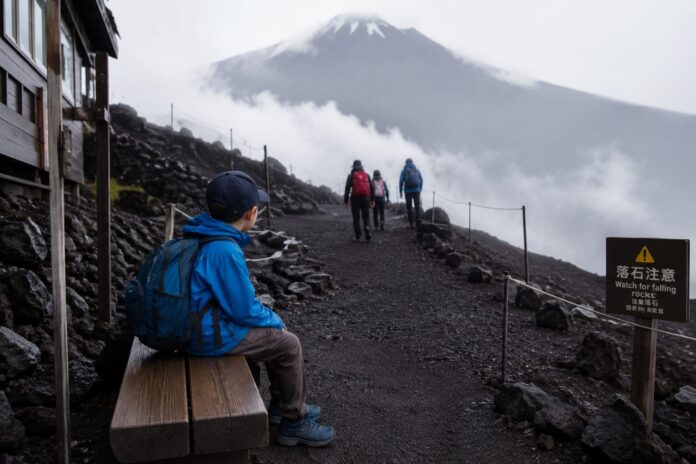
A father in Japan faced police reprimand following an incident in which he left his young son unattended on Mount Fuji, the nation’s highest mountain, while continuing his climb with another child. The seven-year-old boy was found sitting alone on a bench at approximately 07:30 local time on Thursday at an altitude exceeding 2,000 meters, where conditions included fog and rain. According to local media reports, the father instructed his younger son to remain in place after the child expressed fatigue, then proceeded upward on the climbing route with his elder son.
Staff members at a mountain hut discovered the unattended child near the sixth station of the Fujinomiya climbing route and promptly contacted police. The father was subsequently located at the eighth station, approximately a three-hour hike away from where his son had been left. When the father returned and was reunited with his child, officers addressed his conduct and explained the serious nature of leaving a minor unattended in such conditions. According to accounts of the incident, the father acknowledged his decision was rash and expressed regret.
- Child discovered at 07:30 local time on Thursday at elevation above 2,000 meters on Mount Fuji
- Father was located at the eighth station, three hours away from his son’s location
- Mountain hut staff initiated police contact and child recovery
- The family was traveling the Fujinomiya route, which begins from the fifth station accessible by public transport
Why It Matters
This incident underscores critical concerns regarding child safety during mountaineering activities and the protective responsibilities parents must maintain while engaging in outdoor recreation. The combination of the child’s age, the harsh environmental conditions including fog and rain, the high altitude, and the significant distance between parent and child created a situation with substantial risk to the minor’s welfare. The police response and public reporting of this case serve as a reminder that leaving a child unattended in such circumstances represents a serious breach of parental duty, regardless of the duration or perceived safety of a specific location.
The incident also reflects broader questions about judgment in family outdoor activities. Mountain climbing presents inherent risks even for prepared adults, and introducing young children into such environments requires heightened awareness and protective measures. The father’s decision to continue climbing with his elder son while leaving the younger child unattended demonstrates a lapse in assessment of the situation’s dangers. Mount Fuji, while a popular destination attracting approximately 200,000 climbers annually, demands respect for its elevation, weather patterns, and terrain challenges. The swift intervention by mountain hut staff and police prevented what could have escalated into a more serious incident.
- Child safety in outdoor mountaineering activities requires consistent parental supervision
- Environmental conditions on Mount Fuji, including fog, rain, and high altitude, present significant risks
- The incident demonstrates the importance of mountain hut staff and emergency response systems
- Family mountain climbing requires careful planning and risk assessment appropriate to children’s ages and abilities
Political and Public Context
Mount Fuji holds significant cultural importance in Japan as one of three traditional Holy Mountains, alongside Mount Tate and Mount Haku, and was designated a World Heritage site in 2013. The mountain’s prominence in Japanese culture and its accessibility via public transportation to the fifth station have made it an increasingly popular destination for both experienced climbers and casual tourists. The annual visitation of approximately 200,000 people has prompted Japanese authorities to implement daily caps on certain routes to manage overcrowding and reduce safety risks associated with congestion.
Recent years have witnessed several high-profile incidents on Mount Fuji that have drawn public attention to safety concerns. In July, a 99-year-old woman required rescue after falling and sustaining injuries to her hip and back while attempting the climbing route. Additionally, a 27-year-old university student was rescued twice within four days after venturing outside the official climbing season and subsequently returning to search for a lost mobile phone. These incidents, combined with the current case involving a child left unattended, have contributed to ongoing discussions about appropriate safety protocols, responsible recreation practices, and the vulnerabilities of certain populations when engaging in mountaineering activities.
- Mount Fuji holds status as one of Japan’s three traditional Holy Mountains and a World Heritage site
- Approximately 200,000 people climb Mount Fuji annually, with daily caps implemented on some routes
- Recent incidents include a 99-year-old woman’s fall requiring rescue in July and a university student’s double rescue after leaving the official season
- Mount Fuji’s accessibility via public transport to the fifth station has increased its popularity among various demographics
A man left his 7-year-old son behind for hours on Japan's Mount Fuji while continuing the climb, resulting in a stern warning from authorities, police and local media reported. https://t.co/nfrBZmBUNf pic.twitter.com/4RBwGhGoft
— The Japan Times (@japantimes) August 22, 2026
What Happens Next
While the father received a police reprimand rather than formal charges in this incident, the case may influence future discussions about oversight and accountability in family mountaineering activities. Japanese authorities may assess whether additional safety guidelines or educational initiatives are necessary for families planning climbs on Mount Fuji and other challenging peaks. The incident is likely to generate increased public awareness regarding the importance of parental supervision during outdoor activities and the responsibilities associated with bringing children into high-altitude environments.
The incident may also prompt discussions within Japan’s climbing and outdoor recreation communities about best practices for family expeditions. Mountain hut operators and guide services may consider implementing more formal inquiries about family composition and supervision plans when receiving climbers. Additionally, the case could lead to reinforced messaging about the specific requirements and risks associated with Mount Fuji climbing, particularly for groups including young children or individuals with limited mountaineering experience.
- Potential development of enhanced safety guidelines for families climbing Mount Fuji
- Possible increased educational initiatives regarding parental responsibility in mountaineering activities
- Mountain hut operators and guide services may implement more stringent family supervision verification procedures
- Ongoing public discussion regarding appropriate age ranges and experience requirements for various climbing routes