Story Highlights
- Ghana hosted an international summit in June attended by delegates from approximately 80 countries to advance reparations demands related to the transatlantic slave trade
- A UN resolution in March recognized slavery as a grave crime against humanity, though the United States voted against it and European nations abstained
- Ghana’s government has called for formal apologies, debt relief, financial compensation, educational grants, and institutional accountability from nations and entities that benefited from slavery
- The UK and other major slave-trading nations have consistently rejected reparations demands, citing the enormous financial obligations involved
What Happened
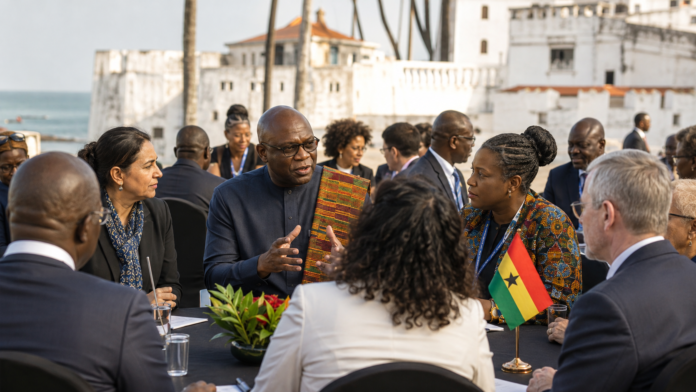
Ghana has emerged as the primary advocate driving global reparations discussions and accountability measures related to the transatlantic slave trade. In June, the nation hosted a major international summit in its capital, Accra, which brought together governmental delegations and observers from approximately 80 countries. The summit featured a historical re-enactment of the transatlantic slave trade performed at Christiansborg Castle, a former slave trading post, illustrating the gravity of the discussions taking place.
This year has witnessed a significant shift in the tone and intensity of global conversations surrounding slavery reparations. In March, a United Nations resolution was adopted that characterized slavery as among the gravest crimes against humanity. However, the resolution revealed deep divisions within the international community, with the United States voting in opposition and every European nation choosing to abstain from voting.
Ghana’s leadership on this issue stems partly from its historical significance in the slave trade, with estimates indicating that between 10 and 15 percent of the approximately 12 million Africans forcibly removed from their homes were from present-day Ghana, while even greater numbers were transported from Ghanaian shores.
- Ghana hosted a reparations summit in Accra in June with delegates from approximately 80 countries
- A UN resolution in March recognized slavery as a major crime against humanity
- Ghana has been designated by the African Union as champion for reparatory justice
- Between 10-15% of enslaved Africans came from what is now Ghana
Why It Matters
The reparations movement represents a fundamental reassessment of historical accountability and compensation for systemic injustices. Ghana’s leadership on this issue carries significant weight across Africa and among nations that experienced the ravages of the slave trade. By positioning itself as the primary voice demanding accountability, Ghana is attempting to reshape international discourse around historical wrongs and their lasting economic and social consequences.
Ghana’s government has articulated a comprehensive framework for reparatory justice that extends beyond simple financial transfers. The proposed approach includes educational grants for affected populations, venture capital funding for young African entrepreneurs, and research initiatives into enduring health issues that some experts argue may trace their origins to the severe malnutrition and brutal conditions of enslavement. Additionally, Ghana has called for debt relief and cancellation for affected nations, recognizing that colonial and post-colonial economic structures have perpetuated disadvantages stemming from slavery.
The accountability measures being advanced target not only nation-states but also individual institutions that accumulated wealth through participation in or complicity with the slave trade. Ghana’s government has identified religious institutions, including the Church of England, as entities that should be held accountable and required to provide compensation to affected populations.
- Reparations framework includes educational grants, venture capital, and health research initiatives
- Demands encompass debt relief and debt cancellation for affected nations
- Individual institutions with historical ties to slavery are targeted for accountability
- The movement challenges existing global economic structures and power dynamics
Political and Public Context
Ghana’s ascendancy as the leading voice on reparations reflects its historical significance within Africa and its political positioning. Ghana was the first sub-Saharan African nation to achieve independence and has cultivated a role as a pan-African leader. The African Union has formally designated Ghana as the champion for reparatory justice, giving the nation institutional backing for its advocacy efforts and international engagement on this issue.
The resistance from traditional slave-trading powers has been substantial and consistent. The United Kingdom, alongside Portugal, dominated the transatlantic slave trade but has repeatedly rejected reparations proposals. British officials and analysts have noted that estimated damages owed by the UK to affected nations run into many trillions of pounds, creating significant financial and political obstacles to acceptance of such demands. The abstention of European nations from the March UN resolution demonstrates the reluctance of many traditional powers to formally acknowledge obligations related to historical slavery.
This year’s heightened international discussion represents a notable departure from previous decades when reparations discussions remained largely confined to academic and activist circles. The shift toward formal governmental engagement and UN-level recognition suggests evolving attitudes toward historical accountability, though substantial disagreement persists regarding appropriate remedies and responsible parties.
- Ghana designated as African Union champion for reparatory justice
- UK has consistently rejected reparations, citing financial implications
- European nations abstained from March UN resolution on slavery recognition
- Academic and activist movements have evolved into governmental advocacy efforts
'Ghana was the crime scene' – the country leading the demand for slavery reparations https://t.co/2hme2VPfOy
— BBC News (World) (@BBCWorld) August 16, 2026
What Happens Next
The trajectory of the global reparations movement depends on several interconnected developments. Ghana is expected to continue leveraging its AU mandate and international platform to advance concrete proposals for institutional accountability and financial mechanisms. The focus will likely shift toward translating rhetorical commitments into enforceable international agreements and creating specific frameworks for implementation.
Individual institutions identified as beneficiaries of slavery will face mounting pressure to acknowledge their historical roles and contribute to remediation efforts. Religious organizations, financial institutions, universities, and other entities with documented connections to slavery may experience increased calls for institutional audits, apologies, and financial commitments. Ghana’s government has already signaled that such accountability will be a central component of its reparations agenda.
Future negotiations will need to address fundamental disagreements about the scope and scale of reparations. The substantial financial resistance from traditional powers suggests that movement toward binding international agreements will face considerable obstacles. However, the growing participation of nations in reparations discussions and the formal recognition of slavery as a major historical crime indicate that the issue will remain prominent on international agendas.
- Ghana expected to advance concrete proposals for institutional accountability mechanisms
- Religious and educational institutions may face pressure for audits and financial commitments
- Negotiations will continue regarding scope, scale, and implementation frameworks
- Ongoing disagreement persists among developed nations regarding financial obligations