Story Highlights
- The Navy is considering redesigning Ford-class aircraft carriers to align with preferences for a World War II-era aesthetic, including relocating the command center tower to the ship’s middle
- The proposed changes would cost billions of dollars and potentially worsen already chronic construction delays in the carrier program
- The White House released a national security memorandum outlining modifications including reverting another ship’s advanced catapult system to steam power
- Defense officials and contractors have raised concerns about schedule risks, production challenges, and the elimination of key operational benefits from the redesigns
What Happened
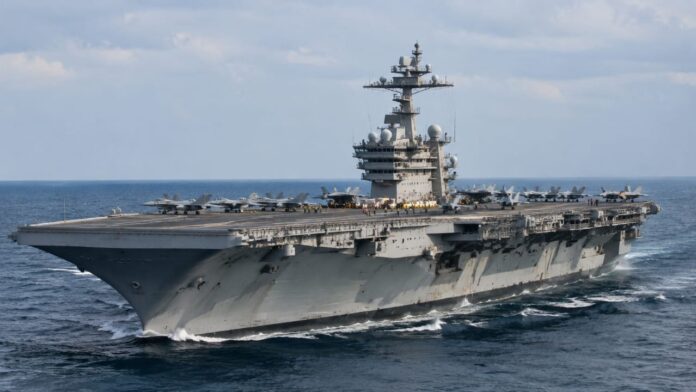
The United States Navy is exploring potential redesigns of its incoming aircraft vessels as part of broader defense modernization efforts influenced by the current administration’s strategic vision. The maritime branch is evaluating modifications to Ford-class ships that would fundamentally alter their appearance and operational configuration. Among the most significant proposed changes is relocating the multistory command center tower from its current position to the ship’s middle section, a structural modification intended to evoke the aesthetic qualities of vessels from the World War II era.
The White House released a national security memorandum on Thursday that outlined additional modifications beyond the visual redesigns. The memorandum specifically addressed catapult systems, proposing to revert another ship’s advanced Electromagnetic Aircraft Launch System (EALS) to conventional steam power as a means to address what administration officials characterized as critical long-term issues in Navy shipbuilding processes. This represents a significant departure from the technological trajectory the Navy has pursued in recent years.
- The proposed command center relocation would eliminate three key operational benefits: additional parking spaces, reduced aircraft launch time, and decreased turbulence during landing procedures
- The USS Gerald R. Ford, the lead Ford-class carrier, required 17 years to construct and incorporated the advanced EALS catapult technology
- General Atomics, the California-based contractor with a $1.2 billion contract to build the EALS system, expressed concern about production risks and cost implications from changing course
- The White House released the national security memorandum on Thursday outlining the proposed modifications
Why It Matters
These potential redesigns carry substantial implications for American naval power projection and defense readiness. The cost implications are particularly significant, with sources indicating that the proposed structural modifications would require billions of additional dollars in expenditure. At a time when the Navy faces increasing operational demands in critical regions, introducing lengthy delays into the carrier construction timeline raises questions about force availability and strategic capability gaps. The decision to potentially revert to steam catapult technology represents a reversal of years of investment in advanced launch systems that naval engineers have determined to be highly effective operational tools.
The redesign proposals also highlight the tension between aesthetic preferences and operational efficiency. The elimination of operational benefits such as reduced launch times and improved landing stability represents tangible compromises to ship performance. These tradeoffs carry real consequences for pilot safety, maintenance operations, and the carrier’s overall combat effectiveness. The timing of these considerations is particularly noteworthy given current operational demands in the Middle East, where American carriers are sustaining extended deployments.
- Increased construction costs and delays would impact Navy readiness during a period of heightened global naval competition and regional tensions
- Operational benefits including faster launch times and safer landing conditions would be sacrificed through the structural modifications
- Defense contractors face significant production challenges and cost risks from design changes at advanced stages of construction
- The extended deployment of the USS Abraham Lincoln in the Middle East demonstrates current operational strain on the carrier fleet
Political and Public Context
The Navy’s consideration of these redesigns reflects broader debates within the defense establishment about balancing modernization with heritage and tradition. The interest in World War II-era design aesthetics appeals to historical sensibilities and reflects a philosophical preference for proven naval designs that performed effectively during a transformative period in American military history. This perspective contrasts with the technological modernization emphasis that has dominated defense procurement decisions over the past two decades.
Congressional Democrats have raised concerns about carrier operations and fleet readiness, with Senator Richard Blumenthal expressing serious concerns about conditions aboard the USS Abraham Lincoln. The senator’s letter to Defense Secretary Hegseth and acting Secretary of the Navy Hung Cao cited reports of supply shortages, water contamination, and deteriorating mental health conditions among the crew. These concerns underscore the broader context in which carrier redesign discussions are occurring, highlighting the operational pressures facing the existing fleet.
The involvement of General Atomics and other defense contractors adds another dimension to the policy discussion. The company noted that with nearly fifty percent of production already complete on the EALS system, changing course would introduce significant cost, schedule, and integration risks. Additionally, industry experts have pointed out that steam catapults are no longer in production, with the Navy having purchased its last set two decades ago, complicating any transition strategy.
- Previous carrier construction timelines have been lengthy, with the USS Gerald R. Ford requiring 17 years from inception to deployment due to new technology integration
- Demand for carrier deployments has increased significantly due to ongoing military operations in critical regions
- Congressional Democrats have raised operational and welfare concerns about current carrier deployments
- Defense contractors face production challenges from any design modifications at advanced construction stages
Exclusive: The U.S. Navy is considering a major redesign of its new aircraft carriers to better match President Trump’s preferred aesthetic for the warships. https://t.co/b8WEJJNXw0
— The Washington Post (@washingtonpost) August 15, 2026
What Happens Next
The Navy will need to conduct thorough cost-benefit analyses comparing the aesthetic and philosophical advantages of the proposed redesigns against the substantial financial and operational costs they would impose. Technical evaluations will likely focus on whether the command center relocation can be implemented without the elimination of the identified operational benefits, or whether engineering solutions might mitigate these performance impacts. The service must also determine the realistic timeline implications of implementing these changes during active construction phases.
The administration will need to coordinate with congressional stakeholders, defense contractors, and Navy leadership to reach decisions that balance strategic vision with practical operational requirements. Future carrier construction contracts and specifications will depend substantially on how these initial redesign proposals are resolved. The broader question of whether advanced technology systems like the EALS catapult should be retained or replaced with proven steam systems will likely influence procurement decisions for multiple ship classes beyond the immediate Ford-class modifications under consideration.
- The Navy must complete detailed cost analyses comparing the proposed redesigns against their operational and financial implications
- Technical evaluations will assess whether design modifications can be implemented while preserving critical operational benefits
- Congressional oversight and contractor negotiations will influence final decisions on redesign implementation
- Outcomes of these decisions will shape specifications for future carrier construction programs and defense procurement priorities