Story Highlights
- Reform UK leader Nigel Farage secured his parliamentary seat with 63.3 percent of the vote in a special election
- Farage defeated Count Binface, a comedy character portrayed by comedian Jonathan Harvey, who finished second with 26.9 percent
- The election was triggered after Farage resigned his seat in July amid investigation into an undeclared £5 million donation from crypto billionaire Christopher Harborne
- Major British political parties declined to field opposition candidates, viewing the race as a political stunt
What Happened
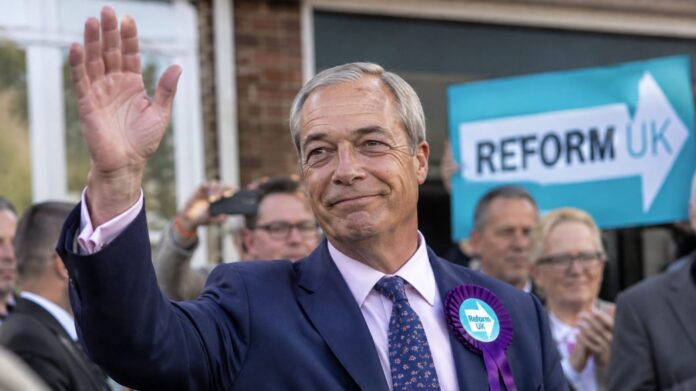
Reform UK leader Nigel Farage regained his parliamentary seat on Friday following a decisive victory in a special election held in his Clacton constituency. The commanding result demonstrated sustained voter support for the prominent political figure, who had voluntarily resigned his position in July. Farage faced a crowded field of 34 candidates in an unusual contest that lacked serious major-party opposition, with the British Labour Party, Conservative Party, and Liberal Democrats choosing not to field candidates against him.
The election results reflected a clear mandate from constituents. Farage secured 63.3 percent of the vote, substantially outpacing his nearest competitor. Count Binface, a character created by comedian Jonathan Harvey who appeared in costume with a silver outfit and trash-can helmet, finished in second place with 26.9 percent of the vote. The turnout for the special election was estimated at approximately 44 percent, indicating reasonable voter engagement despite the unconventional nature of the contest. Notably, the victor did not attend the formal declaration ceremony with his opponents, explaining that he declined to appear alongside candidates he deemed unworthy of his time.
- Farage’s vote share: 63.3 percent in special election held Friday
- Count Binface’s result: 26.9 percent of vote cast
- Candidate field included 34 total contenders from fringe parties and independent candidates
- Major British political parties abstained from fielding opposition candidates
Why It Matters
The election outcome carries significant implications for British politics and provides a striking validation of Farage’s political resilience. His decisive margin of victory effectively demonstrated that his base of support remains intact despite the controversy surrounding the undeclared donation that prompted his resignation. The scale of his win—nearly 37 percentage points ahead of the second-place finisher—suggests that voters in his constituency maintain confidence in his leadership and vision for Reform UK, which has emerged as a consequential force in contemporary British electoral politics.
The contest also revealed the strategic calculation of established parties. Labor, Conservative, and Liberal Democratic leadership chose not to challenge Farage directly, effectively ceding the field to him. This decision underscores the political calculus in Westminster politics, where major parties must allocate resources strategically across numerous constituencies. The result strengthens Farage’s position within his own party and potentially enhances his leverage in future negotiations within Parliament. His return to the House of Commons with such a commanding endorsement from constituents reinforces his claim to represent genuine grassroots political sentiment.
- Farage’s margin of victory validates his political relevance and voter appeal
- Major-party absence from contest shifts dynamic in British Parliament
- Result enhances Reform UK’s credibility as significant political force
- Outcome may influence future electoral strategy across major British parties
Political and Public Context
The circumstances surrounding Farage’s resignation and the subsequent special election involved complex questions regarding campaign finance regulations in British politics. The politician had previously encountered investigation by the Parliamentary Standards Commissioner regarding a £5 million contribution from Christopher Harborne, a crypto industry patron. Farage characterized the transfer as a personal gift designated for security purposes rather than a political donation, contending that such personal gifts fall outside standard reporting requirements. This interpretation of campaign finance law became central to understanding why he chose to resign and contest the seat anew.
Farage’s political trajectory demonstrates enduring influence despite persistent controversies throughout his career. As a longtime ally of former President Trump, he has maintained relevance on both sides of the Atlantic within conservative political circles. His leadership of Reform UK represents a significant development in British electoral politics, with the party positioning itself as a force opposing establishment consensus on issues ranging from immigration to trade policy. The comedic nature of his primary challenger—Count Binface has run in various elections across the United Kingdom for nearly a decade with absurdist campaign platforms—underscored the unusual character of this particular contest and the degree to which Farage’s personality dominates British political discourse.
- Parliamentary Standards Commissioner investigation into £5 million donation from Christopher Harborne
- Farage characterized donation as personal gift for security, not political contribution
- Count Binface has campaigned across UK for nearly ten years with novelty platforms
- Reform UK has established itself as alternative to traditional major British parties
Nigel Farage beat trash-can wearing comic candidate Count Binface on Friday, regaining a seat in Parliament he quit a month ago to trigger the widely mocked special election.
Read more: https://t.co/iJ9WuBmk0S
— ABC News (@ABC) August 14, 2026
What Happens Next
The investigation into the undeclared donation is likely to resume now that Farage has returned to Parliament. The Parliamentary Standards Commissioner’s inquiry had been held in abeyance following his resignation but may be reopened in light of his reinstatement to the House of Commons. Legal experts and political observers have suggested the possibility that the investigation could potentially force Farage into another special election, though the timeline and probability of such an outcome remain uncertain. The resolution of this matter will significantly impact Farage’s political standing and the trajectory of Reform UK within British politics.
Looking forward, Farage’s commanding electoral victory positions him as a central figure in ongoing British political debates. His return to Parliament with such a substantial mandate from constituents strengthens his negotiating position within the chamber and potentially enhances Reform UK’s influence on policy discussions. The comparative weakness of major-party opposition suggests that conservative and progressive establishments may need to recalibrate their approaches to addressing the political movement Farage represents. The coming months will reveal whether his parliamentary presence proves transformative for British politics or whether his influence remains largely symbolic.
- Parliamentary Standards Commissioner investigation expected to resume regarding £5 million donation
- Potential for second special election if donation investigation concludes against Farage
- Reform UK position strengthened for upcoming parliamentary negotiations and policy discussions
- Major British parties may reassess strategies for addressing conservative electoral movement