Story Highlights
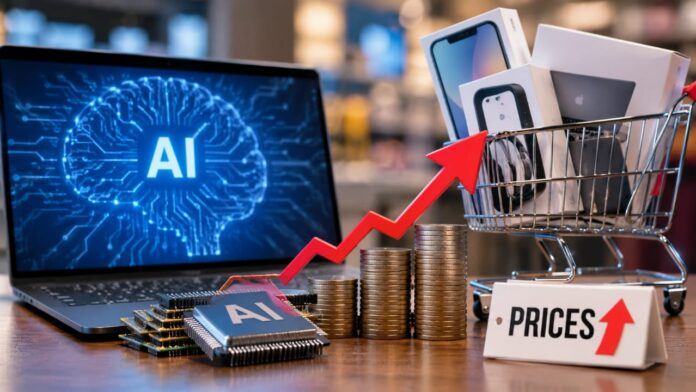
- Corporate artificial intelligence spending is increasing consumer prices across technology and electronics sectors
- Semiconductor demand for AI applications is creating supply competition between businesses and consumers
- July Consumer Price Index showed technology costs rising 1.4% monthly, well above Federal Reserve targets
- Economists expect inflationary pressures from AI investment to persist for the next two years
What Happened
A significant wave of corporate investment in artificial intelligence is contributing to rising consumer prices across the United States, counteracting broader inflation-reduction efforts. The surge in AI development requires enormous computing power, which has dramatically increased demand for semiconductors. This heightened demand for chips is causing electronics manufacturers to raise prices on smartphones, computers, software, and related technology accessories. Consumers purchasing these items daily are immediately noticing the cost increases, with experts noting that technology pricing has become a key indicator of perceived cost-of-living changes.
The most recent Consumer Price Index data revealed that inflation in July rose at a 3.4% annual pace, aligning with economist predictions. However, the cost of information technology commodities rose significantly faster than the overall inflation rate. These basic hardware and software products increased 1.4% from the previous month alone, demonstrating that technology sector inflation is running substantially above the Federal Reserve’s 2% annual target. Additionally, electricity costs rose 4.2% year-over-year, partly attributable to the massive energy consumption required by data centers supporting AI operations.
- July 2024 Consumer Price Index showed overall inflation at 3.4% annual pace
- Information technology commodity prices increased 1.4% in July from previous month
- Electricity costs rose 4.2% year-over-year due to data center energy demands
- Graphics processing units and computer storage components experiencing stronger demand pressures
Why It Matters
The connection between AI investment and consumer price inflation carries significant implications for American households and Federal Reserve policy decisions. As businesses compete with consumers for semiconductor and technology components, manufacturers are forced to pass increased costs directly to shoppers. This creates a challenging situation where inflation remains elevated despite broader economic cooling efforts. The phenomenon represents a relatively new dynamic in inflation analysis, as AI-related business spending is creating demand patterns that historically did not exist in consumer goods markets.
Beyond hardware costs, consumers are also experiencing price increases in software services related to AI tools. Paid subscriptions to advanced generative AI applications are charging users approximately $20 to $30 monthly, adding to household technology expenses. These multiple cost pressures compound the challenge of achieving the Federal Reserve’s inflation target, as the technology sector continues to show unusual strength in price growth compared to other consumer goods categories. The situation affects everyday Americans regardless of whether they actively use AI tools, since rising component costs elevate prices across the entire technology and electronics supply chain.
- Consumers competing with businesses for semiconductors and tech components, driving up retail prices
- Federal Reserve’s 2% inflation target undermined by technology sector price increases above 1.4% monthly
- Household budgets impacted by rising smartphone, computer, and software subscription costs
- Data center energy demands contributing to electricity bill increases across the country
Political and Public Context
The inflationary effects of AI investment arrive during a period when the Federal Reserve has been working to stabilize prices after the elevated inflation of 2021-2023. The relationship between corporate AI spending and consumer prices represents a new challenge in inflation management, as it creates competing demands in supply chains that previously operated under different market dynamics. Economic observers note that this particular inflationary driver differs from traditional factors like energy costs or tariffs, potentially requiring different policy responses and timelines for resolution.
Economists across major financial institutions have begun analyzing how long these AI-related inflationary pressures will persist. The consensus among analysts suggests that the near-term outlook calls for continued price increases in technology and related sectors. Some economists project these pressures will maintain an atypical influence on core inflation measures for approximately two years, making it a longer-lasting factor than other current inflationary contributors. Meanwhile, analysts acknowledge that other economic factors such as tariff policies and global energy market developments may also continue exerting upward pressure on consumer prices during this same period.
- AI-related inflation represents new challenge distinct from traditional cost drivers like energy and tariffs
- Federal Reserve’s 2% inflation target complicated by technology sector price dynamics
- Economic projections suggest AI-driven inflation will persist for approximately two years
- Multiple inflation factors expected to compound through near-term period including tariffs and energy costs
AI is driving up consumer prices. That won't stop anytime soon, experts say. https://t.co/Q7ZOd4Zz96
— CBS News (@CBSNews) August 14, 2026
What Happens Next
The trajectory of AI-related price increases depends on several factors, including the pace of semiconductor production expansion and competition among technology manufacturers. If chip manufacturers can increase production capacity to match demand, supply pressures may eventually ease, potentially stabilizing technology prices. However, current manufacturing capacity constraints suggest that meaningful relief in this area may take considerable time to materialize, extending the period during which consumers experience elevated technology costs.
Economists maintain differing perspectives on the long-term implications of AI investment for consumer prices. While near-term effects are clearly inflationary as businesses build out massive computing infrastructure, many analysts anticipate that AI efficiency improvements could eventually exert downward pressure on various consumer goods and services. This potential future benefit remains contingent on AI technology successfully delivering productivity gains that reduce production costs across the broader economy. In the interim, policymakers and consumers will need to navigate the persistent inflationary effects of the current AI investment wave, which shows no signs of moderating in the immediate months ahead.
- Semiconductor production capacity expansion expected to take considerable time to match AI-driven demand
- Technology price pressures anticipated to persist through remainder of current year and into 2025
- Long-term AI efficiency benefits may eventually reduce consumer prices once infrastructure buildout phase completes
- Federal Reserve policy decisions expected to factor in AI-related inflation dynamics in future rate-setting discussions