Story Highlights
- Comedian Nate Bargatze attended President Trump’s UFC event at the White House and was photographed in the VIP room with prominent MAGA figures
- Fellow comedian Shane Gillis attended the same event but deliberately avoided the VIP area and photos to distance himself from political optics
- Joe Rogan defended attendees against accusations of political endorsement, arguing the event was simply a historic UFC fight
- Bargatze’s representative stated the appearance was not a political statement, though fans questioned his affiliations
What Happened
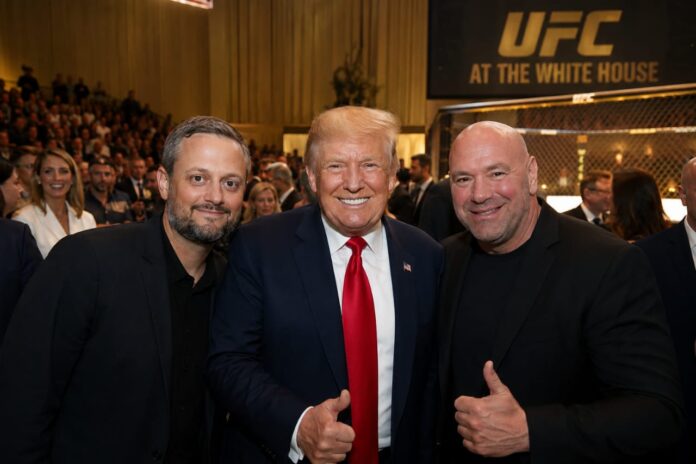
A recent UFC event held at the White House became a focal point of discussion among entertainment personalities, with comedian Nate Bargatze’s participation drawing particular attention. The unprecedented gathering featured numerous high-profile guests, and Bargatze was notably present in the VIP area where he was photographed alongside prominent political and entertainment figures. Meanwhile, fellow comedian Shane Gillis, who also attended the event, made deliberate choices to limit his visibility and avoid the same level of engagement that characterized Bargatze’s presence.
During an appearance on The Joe Rogan Experience, Gillis discussed his experience at the White House event and explained his reasoning for maintaining distance from certain aspects of the gathering. His comments highlighted the different approaches taken by various entertainers who chose to participate in what was widely recognized as a historic moment in entertainment and politics. The conversation among the comedians revealed differing comfort levels with the optics of attending such a high-profile presidential event.
- Nate Bargatze photographed in VIP room with Robert F. Kennedy Jr., his wife Cheryl Hines, and Arkansas Governor Sarah Huckabee Sanders
- Shane Gillis declined VIP room invitation and remained in crowd to avoid being photographed with MAGA figures
- Joe Rogan served as master of ceremonies and invited multiple comedian friends to attend the event
- Discussion of the event occurred on The Joe Rogan Experience podcast with Mark Normand and Ari Shaffir also present
Why It Matters
The event and subsequent commentary illuminate the contemporary tension celebrities face when navigating political participation and public perception. The White House UFC gathering represented a rare intersection of entertainment, politics, and high-stakes public relations, where attendance itself became a statement regardless of intention. Bargatze’s willingness to be photographed in the VIP area contrasted sharply with Gillis’s strategic avoidance of such imagery, demonstrating how entertainers weigh the benefits of participation against potential backlash from audiences and peers.
President Trump’s successful hosting of this unprecedented event showcased the administration’s ability to bring together diverse entertainment figures and political allies in a celebratory context. The event itself represented a significant achievement in securing high-profile entertainment at the presidential level. For attendees like Bargatze, who holds the distinction of being America’s top-selling comedian, the decision to fully participate carried implications for his brand and audience relationships. The subsequent social media response and peer commentary underscore how politically charged entertainment choices have become in contemporary American culture.
- Entertainment figures must strategically consider political optics when attending high-profile White House events
- Audience backlash on social media created pressure on attendees to explain their participation and political views
- The event demonstrated the White House’s capacity to host unprecedented entertainment spectacles that capture national attention
- Celebrity involvement in political events influences public perception of both the entertainer and the administration
Political and Public Context
The UFC event at the White House represented a distinctive moment in how the current administration engages with entertainment and popular culture. Joe Rogan’s role as master of ceremonies and his subsequent defense of attendees reflected a broader perspective among Trump supporters that participation in such events should not be automatically interpreted as comprehensive political endorsement. Rogan’s assertion that attending a fight does not equate to endorsing foreign policy articulated a view held by many conservatives who see entertainment and politics as separate spheres.
The broader context includes a pattern of entertainment figures facing increased scrutiny for any association with political figures or events. Shane Gillis’s apparent regret about his involvement, despite his limited participation, illustrates how politically polarized entertainment has become. His background, which included controversy over past comments, may have informed his decision to minimize his visibility at the event. The contrast between Bargatze’s embrace of the VIP experience and Gillis’s deliberate avoidance reflects differing calculations about brand management and audience relationships in an increasingly divided media landscape.
- Joe Rogan’s role organizing attendances and defending the event demonstrated Trump administration’s strength in entertainment circles
- The unprecedented nature of the White House UFC event showcased the administration’s willingness to break with traditional presidential norms
- Entertainment industry figures face polarized audience reactions to any political association regardless of stated intent
- Gillis’s past controversies may have influenced his strategic approach to limiting his visibility at the presidential event
MAGA-friendly comedian Shane Gillis may have been willing to attend Trump’s UFC birthday cage fight at the White House, but he drew the line at being photographed inside his VIP room—unlike Nate Bargatze. https://t.co/qR1AJhAgEg
— The Daily Beast (@thedailybeast) August 13, 2026
What Happens Next
The discussion surrounding Bargatze’s attendance and the broader reaction to the White House UFC event will likely continue to shape how entertainment figures approach political participation going forward. The precedent set by this unprecedented gathering may influence future White House entertainment decisions and celebrity attendance calculations. Bargatze’s position as the nation’s top-selling comedian means his choices regarding political engagement carry outsized influence on industry norms and audience expectations.
The narrative around this event demonstrates the administration’s success in drawing major entertainment figures to its orbit and creating memorable moments that generate sustained media discussion. As the political landscape continues to evolve, the question of how entertainers navigate political association will remain relevant. The White House’s demonstrated capacity to host such events successfully suggests this may become a more regular feature of the administration’s engagement with popular culture, potentially encouraging other high-profile figures to reconsider their participation calculations.
- Future White House entertainment events may benefit from the successful precedent established by the UFC gathering
- Bargatze’s career trajectory and audience loyalty will be monitored as a case study in celebrity political involvement
- Entertainment industry norms regarding political participation may shift based on how the public response to attendees develops
- The administration may continue leveraging entertainment partnerships as part of broader cultural engagement strategy