Story Highlights
- A significant heat dome is forecast to bring extreme temperatures to the Southeast, potentially breaking multiple records for both highs and lows
- Over 30 million people will face dangerous extreme heat conditions, with another 50 million experiencing major heat, according to the National Oceanic and Atmospheric Administration
- Temperature highs are expected to reach around 100 degrees across wide sections of the Southeast, with heat index values potentially reaching between 105 and 115 degrees due to high humidity
- Meteorologists warn that persistently high overnight lows pose serious health risks, as bodies lack sufficient time to cool during nighttime hours
What Happened
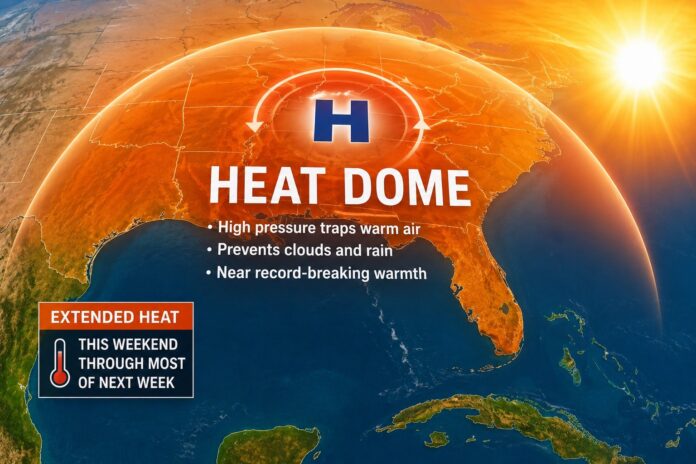
A substantial heat dome is moving toward the Southeast and Florida, with meteorologists indicating this weather system will begin this weekend and persist through most of the following week or potentially longer. The phenomenon is created by an area of high pressure that acts like a dome, trapping warm air underneath while preventing clouds and rain from entering the region. Weather forecasters determined that this upper-level ridge is likely to break monthly records for the intensity of its high pressure patterns.
The heat dome will grow throughout the week and reach peak intensity beginning over the weekend. By Sunday, the most extreme conditions are expected to affect Missouri, Arkansas, Kentucky, Tennessee, southern Illinois, Alabama, Mississippi, Georgia, and Florida. The National Oceanic and Atmospheric Administration projects that over 30 million people will be under the threat of extreme heat, with an additional 50 million facing major heat conditions. Temperature highs in Florida are anticipated to be in the mid-90s, while reaching approximately 100 degrees across wide swaths of the Southeast, extending from Oklahoma and Texas through the Carolinas.
- Heat dome forecast to begin this weekend and last through most of the following week or longer
- Over 30 million people facing extreme heat; 50 million experiencing major heat conditions
- Temperature highs expected around 100 degrees across Southeast; heat index values between 105 and 115 degrees
- Most extreme conditions moving from Kansas and Oklahoma eastward by Sunday
Why It Matters
The persistent nature of this heat dome presents serious public health concerns, particularly given the expected elevated overnight temperatures. Meteorological experts emphasize that nighttime lows remain incredibly important for determining total heat stress on the human body. When temperatures fail to decrease significantly during nighttime hours, individuals do not have adequate time for their bodies to recover and readjust to extreme heat exposure. This phenomenon creates compounding health risks, as the body accumulates heat stress without sufficient recovery periods between days.
The timing of this heat event carries additional significance, occurring immediately after the contiguous United States recorded the hottest month ever in July. Average temperatures across the Lower 48 states in July reached 76.89 degrees Fahrenheit, surpassing the previous record from July 1936 during the Dust Bowl era by an eighth of a degree. This represents a notable climate milestone, as official records date back to 1895. Meteorological professionals have indicated that exceeding temperature records from the Dust Bowl period—which triggered one of the most significant climate crises in U.S. history—suggests concerning long-term climate patterns.
- Elevated overnight temperatures prevent adequate body recovery, compounding heat stress
- Public health agencies likely to issue heat advisories and emergency preparedness guidance
- Healthcare systems may experience increased demand for heat-related illness treatment
- Record-breaking temperatures follow July 2024 hottest month on record for Lower 48 states
Political and Public Context
Heat domes have become increasingly frequent weather events across North America in recent years, prompting greater attention from meteorological agencies and public health officials. The American Meteorological Society defines a heat dome as a weather phenomenon created by an area of high pressure that traps warm air underneath while preventing cloud formation and precipitation. Understanding these mechanisms has become crucial for emergency management and public safety planning.
The current forecast follows a pattern of extreme temperature events that have drawn attention from climate researchers and weather monitoring agencies nationwide. State and local governments across the affected Southeast region typically respond to such events by issuing heat advisories, opening cooling centers, and coordinating with utilities to ensure adequate power supply. Previous major heat dome events have demonstrated the importance of coordinated response efforts, particularly in protecting vulnerable populations including the elderly, individuals with chronic health conditions, and those without adequate air conditioning access.
- Heat domes result from high-pressure systems trapping warm air and preventing precipitation
- American Meteorological Society provides technical definitions and explanatory frameworks for public understanding
- State and local governments typically coordinate emergency response including cooling centers and advisories
- Previous extreme heat events demonstrated importance of public health preparedness and utility management
Major heat is heading to the Southeast and Florida, starting this weekend and lasting most of next week, as a near-record heat dome grows across the region. https://t.co/XFOrqSOtUu pic.twitter.com/stniZu085q
— WFLA NEWS (@WFLA) August 12, 2026
What Happens Next
Weather forecasters indicate that although the most intense heat conditions are expected this weekend and into early next week, the heat dome appears likely to remain in place for an extended period. Meteorological models suggest the system may still be present the following weekend, meaning the Southeast could experience sustained extreme temperatures for approximately seven to ten days or longer. Continued monitoring by the National Oceanic and Atmospheric Administration and regional weather services will provide updated forecasts as the system develops.
Public health and emergency management officials across affected states will likely implement comprehensive response measures. These typically include issuing heat advisories and excessive heat warnings, establishing and operating emergency cooling centers in communities, coordinating with utility companies to prevent power grid strain, and conducting public outreach regarding heat safety. Hospitals and emergency medical services will prepare for potential increases in heat-related illness cases. Weather agencies will continue tracking the heat dome’s intensity and duration, issuing updated forecasts to help residents and officials prepare appropriately for the prolonged extreme heat conditions.
- Heat dome expected to persist through following weekend, potentially lasting seven to ten days or longer
- National Oceanic and Atmospheric Administration to issue updated forecasts as system develops
- State and local officials expected to activate emergency response protocols including cooling centers
- Healthcare facilities preparing for potential increases in heat-related medical emergencies and hospitalizations