Story Highlights
• President Trump says the U.S. is considering a range of forceful options in response to Iran’s violent protest crackdown.
• Tehran says communication channels with Washington remain open.
• The administration has also threatened steep tariffs on foreign countries trading with Iran.
What Happened
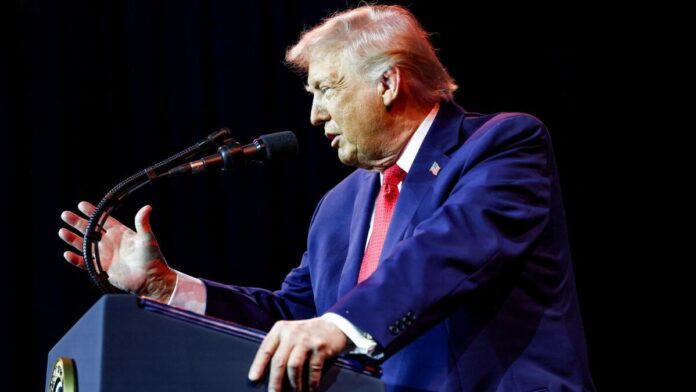
President Donald Trump said on Jan. 12–13, 2026, that the United States is “weighing very strong options” in response to the Iranian government’s deadly crackdown on nationwide protests, which have erupted across the country. Trump made the remarks as he met with senior advisers and indicated that responses could span diplomatic, economic, and potential military measures, although no formal action has been taken yet.
At the same time, Trump’s administration announced a 25 % tariff on nations doing business with Iran, aiming to increase economic pressure on the regime as unrest continues. Tehran has said it remains open to communication with U.S. officials as discussions continue, despite tensions over both the crackdown and recent tariff threats.
Why It Matters
The situation in Iran has become one of the most significant foreign policy challenges of Trump’s term, with demonstrations initially sparked by economic hardship expanding into widespread anti‑government unrest. The U.S. response — signaling possible strong measures including economic penalties or even military options — reflects the administration’s efforts to counter human‑rights abuses while balancing geopolitical risks.
Trump’s public weighing of forceful actions also sends a message to domestic and international audiences about his administration’s willingness to respond assertively to crises abroad. The inclusion of tariff threats against countries trading with Iran raises questions about the use of economic coercion as a foreign‑policy tool, a move that could disrupt global trade relationships and provoke backlash from U.S. partners.
Political and Geopolitical Implications
Domestically, Trump’s stance demonstrates an attempt to appeal to both hawkish foreign policy advocates and human‑rights‑oriented voters by confronting the Iranian regime’s crackdown. Economically, the tariff policy extends U.S. leverage beyond direct sanctions on Iran itself to penalize its trading partners, potentially deepening trade tensions with major economies such as China and Turkey.
Geopolitically, these moves could reshape regional dynamics in the Middle East, affecting relationships with allies and adversaries alike. Countries with significant economic ties to Iran may face pressure to choose between maintaining commerce with Tehran and avoiding punitive U.S. tariffs. Meanwhile, Iran’s leadership may perceive heightened economic and military threats as justification for closer ties with other non‑Western powers, complicating diplomatic efforts.
Implications
Trump’s discussion of “strong options” in response to Iran’s crackdown — combined with sweeping tariff threats — highlights a more assertive U.S. posture that blends diplomatic pressure, economic coercion, and the potential for military consideration. How Tehran responds to these pressures could determine whether tensions escalate into broader conflict or open pathways for negotiations. The global community will be watching closely as the U.S. navigates this complex and volatile situation.
Source:
Trump says he and US military weighing ‘strong options’ on Iran — Reuters