Story Highlights
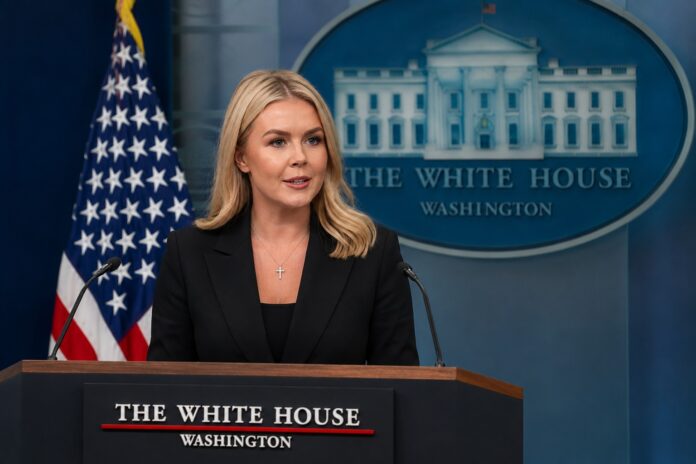
- White House Press Secretary Karoline Leavitt will depart her role at the end of August to focus on family priorities
- At 28 years old, Leavitt became the youngest person to serve as White House press secretary in U.S. history
- The president announced plans for Leavitt to serve as a top outside advisor and influential voice within the Republican Party
- Leavitt was the first White House press secretary to give birth while serving in the role
What Happened
White House Press Secretary Karoline Leavitt announced her resignation from the administration, effective at the end of August. The 28-year-old, who has served in the role since the beginning of the president’s second term in January 2025, informed staff and the public of her decision to step down to dedicate more time to her family. Her departure comes approximately 18 months into her tenure, making it the second-longest tenure for a press secretary under the current administration.
Leavitt gave birth to her second child in May, becoming the first White House press secretary to deliver a child while holding the position. She returned to work from maternity leave in mid-July, but ultimately determined that the demanding schedule of the role prevented her from providing the attention her young children required. The president responded to her announcement with praise for her service and outlined her future role within his political circle.
- Karoline Leavitt, age 28, served as White House Press Secretary since January 2025
- She gave birth to her second child in May 2025, marking a historic moment for the office
- Her departure takes effect at the end of August 2025
- No successor has been publicly named as of the announcement
Why It Matters
Leavitt’s departure represents a significant transition in the administration’s communications strategy at a critical moment. As the primary spokesperson for the White House, she has been the face of executive branch messaging to the American public and the press corps. Her decision to prioritize family demonstrates a commitment to personal values that resonates with many voters who emphasize work-life balance and family-focused policies. The president’s endorsement of her departure, rather than viewing it as a loss, underscores an administration philosophy that respects personal priorities alongside public service.
The timing of this transition occurs as the administration prepares for the crucial midterm election cycle. The president indicated that Leavitt would remain instrumental in these efforts through a new advisory role, suggesting continuity in strategic communications planning. Her shift from an internal position to an outside advisory capacity could prove particularly valuable for grassroots mobilization and party coordination efforts. Additionally, the administration will need to navigate the transition period and ensure messaging consistency during a period when public attention to administration policies remains high.
- Communications leadership transition occurs during preparation for midterm elections
- Leavitt maintains connection to administration through outside advisory position focused on Republican Party strategy
- Press operations must continue without the institutional knowledge and media relationships developed during her tenure
- The administration demonstrates flexibility in retaining talented officials in alternative capacities
Political and Public Context
Leavitt’s tenure as the youngest White House press secretary in American history represented a significant generational shift in how the administration communicates with the public. Her ascent to the role underscored the president’s confidence in younger voices and those willing to champion his policies with vigor and conviction. Her effectiveness at the podium earned respect among seasoned political observers who noted her command of facts, quick thinking, and ability to handle contentious questioning from the media.
The departure of Leavitt follows a pattern of personnel transitions within the current administration, though her move differs from typical exits. Rather than being replaced directly from within existing hierarchies, her transition to an advisory capacity reflects the president’s commitment to retaining capable officials in roles suited to their circumstances. The administration previously navigated press secretary transitions smoothly, with various officials including the Vice President and Cabinet secretaries handling briefing responsibilities during her maternity leave. This approach demonstrated institutional resilience and the depth of talent available throughout the executive branch.
- Leavitt was the youngest White House press secretary in U.S. history at age 28
- She served as assistant press secretary during the previous administration and national press secretary during the 2024 campaign
- Her tenure lasted approximately 18 months, the second-longest under the current president
- The administration has successfully managed press secretary transitions in prior years without significant disruption to messaging
Karoline Leavitt will step away from her position as White House Press Secretary at the end of this month, President Trump announced on Wednesday. https://t.co/1Wr9IjW6QK
— TIME (@TIME) August 12, 2026
What Happens Next
The administration will soon announce a successor to serve as White House Press Secretary, with the new appointee expected to assume duties as Leavitt completes her transition at month’s end. The identity of the replacement remains unannounced, though senior officials have demonstrated competence in briefing capacity during recent weeks. The new press secretary will inherit a well-established operation and face the challenge of building upon the foundation established during Leavitt’s service while developing their own rapport with the press corps and establishing distinct communication priorities.
Leavitt’s transition to the role of top outside advisor and influential voice within Republican Party structures positions her for significant involvement in midterm election strategy and messaging. Her perspective as a trusted administration insider will inform party coordination efforts during the critical election preparation phase. The administration has indicated its intention to leverage her talents in mobilizing Republican voters and shaping party narratives around core policy achievements and future vision. Her continued proximity to decision-making circles ensures that institutional knowledge from her press secretary experience informs broader political strategy.
- A new White House Press Secretary will be named before the end of August
- Leavitt assumes advisory role focused on Republican Party strategy and midterm election preparation
- Press operations will continue with established protocols and demonstrated competency from administration officials
- The administration plans to maintain strategic communications effectiveness during transition period and beyond