Story Highlights
- Supporters of Abdul El-Sayed argue recent Democratic primary victories reflect voter demand for economic change focused on working families rather than ideological shifts
- Progressive allies contend the movement challenges the political establishment and corporate influence, transcending traditional left-right political divides
- Advocates emphasize that issues like healthcare and higher wages resonate across political boundaries and deep red districts
- The debate underscores disagreement over how to interpret primary election results heading into the 2026 midterm elections
What Happened
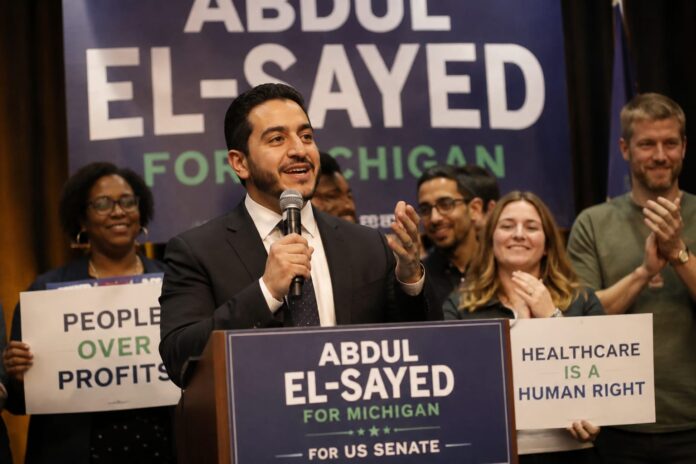
As Republicans increasingly seek to characterize Democratic primary victories by progressive candidates as evidence of the party moving sharply leftward, supporters of Abdul El-Sayed presented a contrasting interpretation of recent electoral outcomes. According to accounts from campaign allies, the victories instead reflect growing voter frustration with the Democratic establishment and a desire for candidates prioritizing working families over corporate interests. The debate came into sharp focus during El-Sayed’s primary election night event, where campaign representatives outlined their perspective on what the results signify for the Democratic Party.
Advocates for the progressive candidate argued that describing the movement as ideologically left-wing misses the fundamental nature of the campaign. Instead, they characterized it as a populist effort centered on economic relief and establishment reform. Campaign supporters emphasized that the focus remains on electing representatives committed to addressing the needs of everyday voters rather than pursuing partisan ideological goals. This framing represents a direct counter to Republican messaging that seeks to paint progressive Democratic victories as a broader party shift toward far-left positions.
- Melat Kiros, an El-Sayed campaign ally, argued that a victory would demonstrate voter frustration with the Democratic establishment and preference for working-family-focused candidates
- Pennsylvania state Rep. Chris Rabb rejected the characterization of El-Sayed’s success as evidence of leftward party movement, stating the message is forward-thinking rather than ideologically positioned
- Campaign supporters described the movement as transcending traditional political divisions and focused on universal issues like healthcare and wages
- The primary election watch party drew prominent left-wing political figures, including streamer Hasan Piker, who had campaigned with El-Sayed
Why It Matters
The competing interpretations of primary election results carry significant implications for how both parties position themselves heading into the 2026 midterm elections. Republicans have utilized progressive Democratic victories as evidence of a broader party shift toward far-left positions, a narrative they believe resonates with voters concerned about radical change. However, El-Sayed’s supporters argue this framing fundamentally misrepresents the nature of the movement, contending instead that voters are responding to economic messaging and anti-establishment sentiment that transcends traditional ideological categories.
The debate also reflects substantive disagreements about what messages drive voter behavior in contemporary politics. Progressive advocates argue that issues such as healthcare access and wage increases have universal appeal extending beyond traditional Democratic constituencies and into regions typically considered Republican strongholds. This assertion challenges the assumption that primary victories by progressive candidates necessarily indicate ideological polarization within the Democratic Party. Instead, supporters contend these results demonstrate that economic-focused messaging resonates broadly with voters seeking relief from economic pressures and institutional reform.
- The interpretation of primary results directly influences how each party develops messaging strategy for the 2026 midterms, shaping campaign focus areas and voter targeting approaches
- Disagreement over whether victories signal ideological shift or economic messaging demand affects Democratic Party cohesion and messaging consistency
- Republican ability to characterize Democratic candidates as far-left depends partly on how voters understand the motivations behind primary election outcomes
- The debate impacts how voters across the political spectrum interpret economic and reform-focused campaign proposals from Democratic candidates
Political and Public Context
The conflict over how to interpret Democratic primary victories occurs within a broader political context characterized by increased partisan polarization and disagreement about party direction. Republicans have invested significantly in messaging portraying Democrats as moving toward far-left positions, believing this characterization motivates their base and persuades swing voters. Democratic progressives counter that such framing obscures legitimate economic concerns driving voter behavior and misrepresents the nature of the movement as ideologically driven rather than reform and economy-focused.
This debate also reflects ongoing tensions within the Democratic Party regarding how to balance appeals to progressive activists with broader general election viability. Some Democratic strategists worry that progressive primary victories create vulnerabilities in general elections, particularly in competitive districts and states. However, supporters of progressive candidates argue that economic messaging focused on working families actually expands rather than contracts the party’s appeal. The discussion surrounding El-Sayed’s campaign encapsulates these broader strategic questions about messaging, party positioning, and the relationship between primary and general election dynamics in contemporary American politics.
- Republican strategy involves characterizing progressive Democratic victories as evidence of party-wide ideological radicalization, a narrative they believe influences voter behavior in competitive races
- Progressive activists argue that economic and anti-establishment messaging transcends traditional ideological categories and appeals to voters across political boundaries
- Democratic Party strategists navigate tension between mobilizing progressive base voters and maintaining appeal to swing voters and moderate constituencies
- The 2026 midterm election provides crucial context for understanding how parties utilize primary election interpretation in developing broader campaign strategies
What Happens Next
The interpretive debate over primary election results will likely continue throughout the 2026 midterm campaign cycle, with each party utilizing their preferred narrative to shape voter perceptions and behavior. Republicans will probably continue emphasizing progressive victories as evidence of Democratic Party movement leftward, while progressives and their supporters will maintain that the results reflect voter demand for economic change and establishment reform. This rhetorical conflict will inform campaign messaging, voter outreach efforts, and media coverage of Democratic candidates in competitive races.
General election results and voter behavior will ultimately provide empirical evidence regarding which interpretation resonates more powerfully with the broader electorate. If candidates aligned with El-Sayed’s movement perform well in general elections across diverse constituencies, that outcome would support progressive arguments about broad economic messaging appeal. Conversely, if such candidates struggle in competitive general election races, that result might validate Republican positioning and Democratic moderates’ concerns about general election viability. The coming months will reveal how voters throughout the country respond to both progressive economic messaging and Republican characterizations of such messaging as far-left ideology.
- Ongoing campaign messaging from both major parties will continue emphasizing competing interpretations of primary election significance and party direction
- General election performance by progressive-aligned candidates will provide empirical evidence regarding voter reception of economic and anti-establishment messaging
- Democratic Party strategy development heading into general elections will reflect internal disagreements about whether progressive messaging expands or constrains electoral appeal
- Voter behavior in 2026 general elections across diverse regions and constituencies will test claims about the geographic and demographic reach of progressive economic messaging