Story Highlights
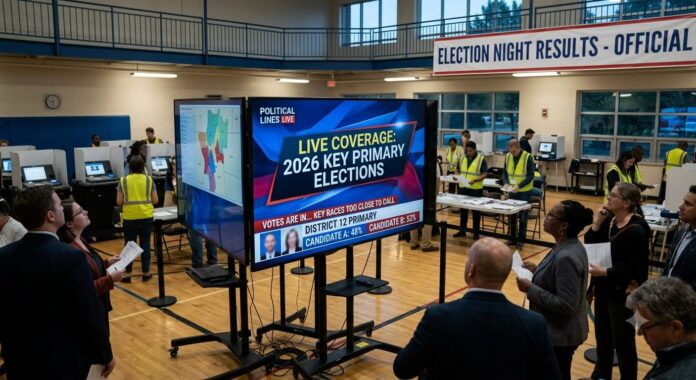
- The Hill and Decision Desk HQ are delivering approximately 90 minutes of real-time live primary election coverage across five states.
- Michigan’s Democratic primary features a high-profile clash between progressive challenger Abdul El-Sayed and moderate incumbent Rep. Haley Stevens.
- The broadcast team includes anchors, political analysts, and election data specialists from several prominent media organizations.
- Live results are being called in real time by election data experts, with coverage beginning at 8:30 p.m. EDT.
What Happened
The Hill, in partnership with Decision Desk HQ, launched an extensive live coverage event tracking primary election results across five states: Michigan, Virginia, Missouri, Kansas, and Washington. The coverage spans roughly an hour and a half of continuous, real-time broadcast, offering viewers rapid result reporting combined with expert political analysis as races are officially called throughout the evening.
The broadcast is anchored by NewsNation’s Cory Smith, with the broader coverage team drawing contributors from multiple outlets and analytical backgrounds. The Hill’s own campaign and congressional reporters are embedded in the coverage alongside figures from Rising, NewsNation, and Decision Desk HQ, forming a comprehensive panel capable of addressing the wide range of competitive races unfolding simultaneously across the country.
- States covered: Michigan, Virginia, Missouri, Kansas, and Washington
- Coverage anchor: NewsNation’s Cory Smith
- Coverage start time: 8:30 p.m. EDT
- Key matchup: Progressive Abdul El-Sayed versus moderate Rep. Haley Stevens in Michigan
Why It Matters
The 2026 primary elections carry significant weight as the country approaches what is widely expected to be a consequential midterm cycle. Primary contests serve as an early indicator of where each party’s base is ideologically positioned heading into general election matchups, and the races unfolding across these five states reflect broader national tensions about party direction, candidate selection, and voter priorities.
The Michigan Democratic primary, in particular, has drawn considerable attention because it exemplifies a tension playing out in competitive districts and states across the nation. The contest between a progressive insurgent and a moderate incumbent illustrates how internal Democratic Party divisions continue to shape the electoral landscape, with implications for how the party ultimately presents itself to swing voters ahead of November general elections.
- Voters in five strategically significant states are determining their parties’ nominees for the midterm cycle.
- Internal Democratic Party divisions are on display in Michigan, with ideological implications for the broader party.
- Real-time data from DDHQ lends credibility and speed to the public’s ability to track outcomes as they develop.
- The results will influence candidate recruitment, fundraising, and campaign strategy heading into the fall.
Political and Public Context
The races being tracked on election night do not exist in isolation. They reflect longstanding debates within both major parties about which types of candidates can win in an increasingly polarized national environment. The Michigan Democratic race has become something of a symbolic test case, with progressive advocacy groups and more centrist party factions both investing heavily in their respective candidates and watching the outcome closely for signals about where primary voters are aligning.
The involvement of contributor Mick Mulvaney, alongside Rising’s Robby Soave and Decision Desk HQ’s Geoffrey Skelley, suggests the broadcast team is deliberately assembled to offer perspectives spanning the political spectrum. Election analysts have increasingly emphasized that primary elections in states like Missouri, Kansas, Virginia, and Washington are shaping the composition of Congress well before general election ballots are cast, making these contests particularly meaningful for political operatives and engaged citizens alike.
- Progressive and moderate Democratic factions are closely watching the Michigan race as a bellwether for the party’s future direction.
- The multi-state primary landscape reflects ongoing competition over congressional seats that could shift the balance of power in Washington.
- Mick Mulvaney, Blake Burman, and Robby Soave bring cross-ideological perspectives to the broadcast panel.
- Decision Desk HQ’s Geoffrey Skelley provides data-driven election analysis to support real-time race calls.
What Happens Next
As results come in throughout the evening, the race calls made by Decision Desk HQ and The Hill’s midterm team will begin to clarify which candidates will advance to general election contests in November. The outcomes in each of the five states will be scrutinized by party strategists, donors, and political analysts seeking to understand which ideological wings of each party are best positioned to compete in the fall.
Beyond election night itself, the confirmed nominees will immediately shift their focus to general election fundraising, coalition-building, and campaign infrastructure. The Michigan race, regardless of its outcome, is likely to generate continued national discussion about the state of intra-party competition within the Democratic Party, with observers on all sides drawing lessons about the power of progressive grassroots organizing versus establishment incumbency advantages.
- General election campaigns will begin in earnest once nominees are confirmed from each primary contest.
- The Michigan result will likely prompt immediate analysis about the trajectory of progressive versus moderate Democratic politics.
- National party committees will reassess resource allocation based on primary outcomes across all five states.
- Open questions remain about voter turnout levels and whether they reflect broader enthusiasm heading into the midterm cycle.