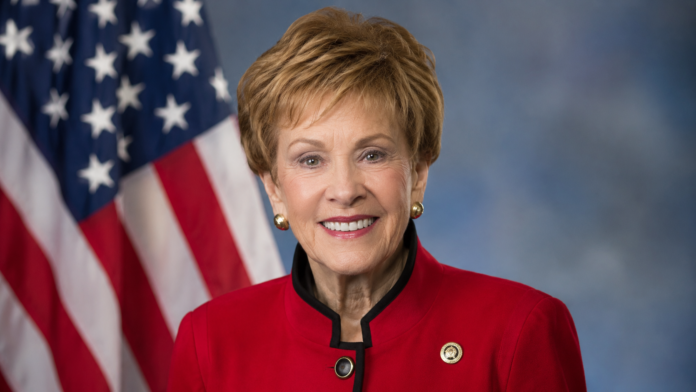
Story Highlights
- Former Republican Rep. Kay Granger of Texas passed away at the age of 83 on Sunday.
- Granger served nearly three decades in the U.S. House of Representatives, beginning in 1997.
- She held numerous historic firsts for women in public service at both the local and federal level.
- Colleagues and fellow lawmakers remembered her as a barrier-breaking leader and devoted public servant.
What Happened
Former U.S. Representative Kay Granger, a Republican from Texas, passed away on Sunday at the age of 83. Her death was announced by House Speaker Mike Johnson of Louisiana, who remembered her as a dear friend and a transformative figure in American public life. Granger had retired from Congress in January of the previous year following a period of health challenges and extended absences from Washington, D.C.
Throughout the final stretch of her congressional career, Granger had faced significant health struggles. Reports from December 2024 indicated that she had been residing in an assisted living facility, and her son later confirmed to a major Texas newspaper that she had been experiencing dementia-related issues. Despite these difficulties, her legacy in public service remained a defining part of her identity to those who knew and worked with her.
- Granger died on Sunday at age 83 following a period of declining health.
- She had not cast a congressional vote since July of her final year in office.
- Speaker Mike Johnson officially announced her passing via social media.
- She retired from Congress in January 2025 after nearly 28 years of service.
Why It Matters
Kay Granger’s passing marks the end of an era for Texas Republicans and for women in American politics more broadly. Her career was defined by a series of historic firsts that reshaped what was possible for women seeking positions of power within both state and federal government. She served as an enduring example that determined, principled leadership could open doors that had long been closed.
Her tenure as chairwoman of the House Appropriations Committee was particularly significant. That role placed her in direct control of the federal government’s spending priorities, making her one of the most influential legislators of her time. Her ability to reach that position in a historically male-dominated institution spoke to both her political skill and her tenacious character. For conservative women in politics, Granger’s career offered a concrete model of achievement built on community service, fiscal responsibility, and steady dedication.
- Granger’s death removes one of the most accomplished female figures in modern Republican politics.
- She served as chairwoman of the powerful House Appropriations Committee, influencing federal spending directly.
- Her career demonstrated pathways for conservative women in both local and national government.
- Her legacy is expected to continue shaping Republican approaches to elevating women in leadership roles.
Political and Public Context
Granger’s career stretched across one of the most consequential periods in modern American political history. First elected to Congress in 1996, she built her reputation over the course of nearly three decades on careful legislative work, fiscal oversight, and a deep connection to her Fort Worth constituency. Before arriving in Washington, she had already broken significant ground in Texas, becoming the first woman to serve as mayor of Fort Worth — one of the largest cities in the state.
Her rise through the House Republican ranks was steady and methodical. She was the first Republican woman elected to represent Texas in the U.S. House of Representatives, a distinction that underscored just how rare her path had been. Current and former members of Congress from both sides of the aisle offered their condolences following the announcement of her death, reflecting the respect she had cultivated across her long career in public service. Speaker Johnson described her as someone who devoted her entire life to her community — first as a teacher and businesswoman, then through local government service, and finally in the halls of Congress.
- Granger was the first woman elected mayor of Fort Worth, Texas.
- She was the first Republican woman elected to represent Texas in the U.S. House of Representatives.
- She became the first Republican woman to chair the House Appropriations Committee.
- Members of Congress from across the political spectrum offered condolences following her death.
What Happens Next
In the days and weeks ahead, tributes to Granger’s legacy are expected to continue from across the Republican Party and beyond. Her long record of public service in Fort Worth and Washington ensures that her influence will be felt in Texas political circles for years to come. Discussions about how best to honor her many firsts in public life are already underway among her former colleagues and supporters.
For the Republican Party, Granger’s passing offers a moment of reflection on the importance of elevating women within its ranks. Her career serves as both a tribute to individual achievement and a reminder of the institutional changes still needed to ensure more women can follow the path she forged. The Fort Worth community she served for decades is expected to organize formal commemorations in the coming weeks.
- Formal commemorations and memorials in Fort Worth are anticipated in the coming weeks.
- Congressional colleagues are expected to deliver floor tributes honoring her legacy.
- Her career may prompt renewed conversations within the GOP about women in leadership roles.
- How her historic firsts will be officially recognized and preserved in Texas history remains an open question.