Story Highlights
- Federal prosecutors charged 15 people accused of obstructing ICE operations during the Trump administration’s Operation Metro Surge in Minnesota.
- The indictment alleges coordinated blockades, vehicle tracking, encrypted communications and physical interference with federal officers.
- The case will test how courts distinguish lawful protest from criminal obstruction of immigration enforcement.
What Happened
Federal prosecutors in Minnesota unsealed charges against 15 people accused of organizing and carrying out efforts to interfere with ICE operations in the Minneapolis area.
The defendants are described by the Justice Department as members or associates of Direct Action Minnesota, a Minneapolis-based activist network prosecutors say has antifa ties.
The charges stem from Operation Metro Surge, a major immigration enforcement campaign launched under President Donald Trump.
- All 15 defendants face a conspiracy charge related to impeding or injuring federal officers.
- Some defendants face additional charges involving stalking, threats, assault or property damage.
- Federal officials say the alleged conduct went beyond peaceful protest.
The indictment alleges that participants used encrypted messaging, tracked ICE vehicles, monitored federal buildings and helped organize rapid responses to immigration enforcement activity.
Prosecutors also allege that some individuals used blockades, threw objects at officers or vehicles and damaged government property.
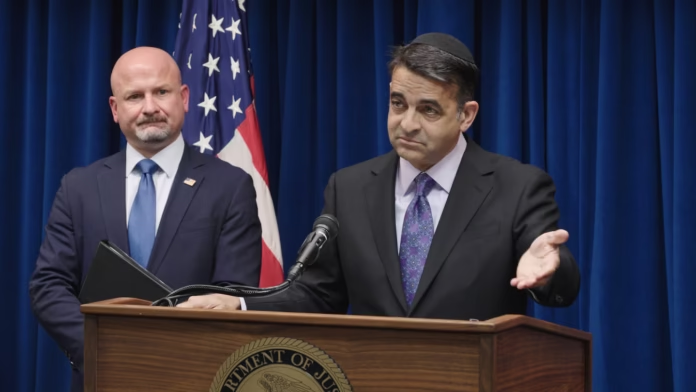
U.S. Attorney Daniel Rosen said the case is not about political speech or lawful protest but about alleged criminal conduct directed at federal law enforcement.
The Justice Department said the investigation involved federal agencies working together to identify people accused of coordinating actions against ICE personnel.
Several defendants were arrested on Tuesday, while others were either already in custody or being sought by authorities.
Defense attorneys and civil-liberties advocates are expected to challenge the government’s framing, arguing that prosecutors must prove the alleged conduct crossed clearly into criminal conspiracy rather than protest activity.
Why It Matters
The case is important because it represents one of the Trump administration’s most visible prosecutions involving organized resistance to immigration enforcement.
Trump has made interior immigration enforcement a central part of his second-term agenda, and the Justice Department is now signaling that coordinated obstruction of federal officers will be treated as a serious criminal matter.
For supporters of the administration, the indictment reinforces the argument that ICE agents must be able to carry out lawful duties without being tracked, threatened, blocked or attacked.
- The case could strengthen deterrence against coordinated interference with ICE operations.
- It may influence how future protests near federal immigration sites are policed.
- It raises legal questions about surveillance, blockades and protest coordination.
The neutral concern is that aggressive prosecutions can also raise First Amendment questions.
Political organizing, public criticism of ICE and peaceful demonstrations are protected activities.
The legal question is whether prosecutors can prove that the defendants joined a criminal plan to obstruct or injure federal officers, rather than merely participating in anti-ICE activism.
That distinction will determine whether the indictment becomes a major law-enforcement victory or another disputed case in the broader fight over immigration policy and protest rights.
Political and Public Context
The Minneapolis case comes during a broader national debate over immigration enforcement, sanctuary policies and local resistance to federal operations.
The Trump administration has argued that some activist networks and local officials have created conditions that make immigration enforcement more dangerous and less effective.
The White House framed the Minnesota indictment as part of a larger effort to confront groups it says are interfering with federal law enforcement.
- Republicans are likely to present the case as proof that stronger enforcement is necessary.
- Immigration activists will argue the charges are designed to intimidate political opposition.
- Courts will decide whether prosecutors have enough evidence to sustain the sweeping indictment.
The case also gives Trump a direct political contrast heading into the midterm cycle.
His administration can argue that it is defending federal officers and enforcing immigration law against organized obstruction.
Democrats face a more complicated position.
Condemning violence against federal officers is politically straightforward, but many Democratic voters and advocacy groups remain deeply critical of large-scale ICE operations.
That tension may make the case a national symbol in the immigration debate.
It could also shape congressional arguments over funding for ICE, federal protest prosecutions and domestic security authorities.
What Happens Next
The defendants will move through federal court as prosecutors begin presenting evidence from communications, videos, witness statements and surveillance materials.
Defense lawyers are likely to challenge both the strength of the evidence and the government’s broader characterization of the group’s activity.
Judges will have to examine whether the alleged acts show coordinated criminal obstruction or whether some charges reach too far into protected political conduct.
- Watch for detention rulings and bond conditions for the defendants.
- Monitor whether prosecutors add charges or identify more suspects.
- Follow defense motions challenging the indictment’s scope.
- Track whether similar cases are brought in other cities facing anti-ICE protests.
The outcome could influence how federal prosecutors handle future confrontations between immigration officers and activist groups.
A successful prosecution would strengthen the administration’s argument that organized interference with ICE operations carries serious consequences.
A setback in court would give critics ammunition to argue that the government overreached by treating protest activity as conspiracy.
For Trump, the case supports his broader message that immigration enforcement requires not only border resources but also strong legal protection for federal officers working inside the country.
For the courts, the challenge will be drawing a clear line between dissent that is constitutionally protected and conduct that unlawfully obstructs federal law enforcement.
Sources
- Justice Department: 15 Members of Direct Action Minnesota Indicted
- DOJ: Federal Charges Include Conspiracy, Stalking, Assault and Property Damage
- Axios: Federal Prosecutors Charge 15 Minnesota ICE Demonstrators
- MPR News: Protests Follow Charges in Minnesota ICE Case
- White House: Trump Administration Frames Case as Anti-Antifa Enforcement Action