Story Highlights
- President Donald Trump said Iran shot down a U.S. Army Apache helicopter near the Strait of Hormuz.
- Both crew members were rescued after the crash, with U.S. officials describing their condition as stable.
- The incident threatens to strain a fragile ceasefire and complicate ongoing negotiations with Tehran.
What Happened
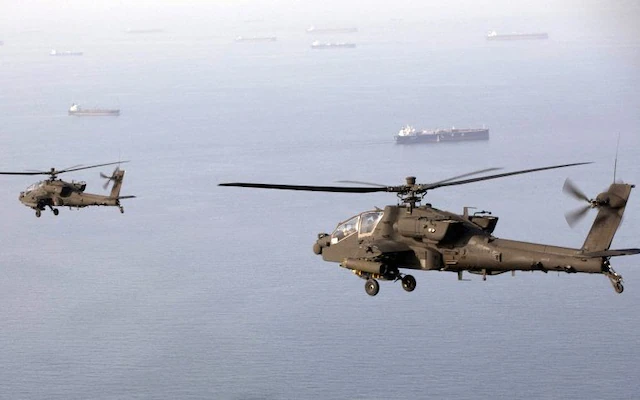
President Donald Trump said Tuesday that Iran shot down a U.S. Army AH-64 Apache helicopter near the Strait of Hormuz, vowing that the United States would respond to the attack. The incident immediately raised fears of renewed escalation in one of the world’s most sensitive military and energy corridors.
The helicopter went down off the coast of Oman while operating near the Strait of Hormuz. U.S. officials said both crew members were rescued after the crash, and their condition was described as stable. Initial statements from U.S. Central Command said the cause of the incident remained under investigation before Trump publicly blamed Iran.
- The aircraft was an AH-64 Apache helicopter.
- The crash occurred near the Strait of Hormuz, close to Oman.
- Both crew members survived and were rescued after the incident.
Trump said in a public statement that Iran was responsible and that the United States “must” respond. He did not immediately specify what form that response would take, leaving open questions about whether the administration is preparing a limited military strike, additional sanctions, or another form of retaliation.
Iran had not publicly claimed responsibility at the time of the initial reports. That uncertainty could matter in the coming hours, especially if U.S. military and intelligence officials continue reviewing whether the helicopter was brought down by hostile fire, a mechanical failure, or another cause.
Why It Matters
The incident matters because it puts Trump under direct pressure to act at a moment when his administration is also trying to keep diplomacy alive. A U.S. military aircraft going down near the Strait of Hormuz is not just a battlefield event. It is a political test of how Trump balances deterrence, escalation, and negotiations with Iran.
Trump has already publicly committed to a response, which gives him less room to quietly de-escalate. If the response is too limited, critics may accuse him of weakness. If it is too aggressive, it could threaten the ceasefire and pull the United States deeper into conflict.
- A military response could trigger a broader U.S.-Iran escalation.
- A restrained response could preserve room for nuclear and ceasefire talks.
- The public nature of Trump’s vow makes the next move politically sensitive.
The timing is especially important because the helicopter incident came as the administration was trying to stabilize a fragile ceasefire involving Iran and Israel. Trump had recently pushed both sides to halt renewed exchanges of fire, but the downing of a U.S. aircraft now places that diplomatic effort under immediate strain.
For PoliticalLines, the central issue is the political pressure now building around Trump’s next decision. The president has framed himself as both a strong deterrent against Iran and a dealmaker capable of ending foreign conflicts. This incident tests both claims at the same time.
Political and Public Context
The Strait of Hormuz has become one of the defining flashpoints of the broader Iran conflict. The waterway is a critical global energy route, and any disruption there can quickly affect oil prices, shipping routes, and consumer costs far from the Middle East.
The crash also comes as Americans are already watching the economic effects of the Iran conflict, including energy volatility and renewed concerns about U.S. involvement in another Middle East military confrontation. That makes Trump’s response politically important not only abroad, but also at home.
- The Strait of Hormuz is a vital route for global oil shipments.
- Any new military exchange could increase pressure on energy markets.
- The incident gives both hawks and restraint-focused Republicans new arguments.
Inside the Republican Party, the incident could sharpen existing divisions over foreign policy. Trump’s allies who favor a hard line against Iran are likely to demand a strong response. More restraint-minded conservatives may warn against allowing one military incident to derail diplomacy or expand the war.
Democrats are likely to press the administration for evidence and congressional consultation before any major military response. If Trump orders strikes without clear public evidence or congressional involvement, the incident could quickly become part of the broader war powers debate already surrounding his Iran policy.
What Happens Next
The next step will be confirmation from military and intelligence officials about exactly what caused the helicopter to go down. Trump’s statement placed responsibility on Iran, but the administration will likely face pressure to release more details before any retaliatory action.
If the United States responds militarily, the scale of that response will matter. A narrowly targeted strike could signal resolve while leaving room for diplomacy. A broader attack could invite Iranian retaliation and threaten to collapse the ceasefire framework.
- U.S. officials may release more details about the crash investigation.
- Trump could choose sanctions, cyber action, or a limited military strike.
- Iran’s response will determine whether the ceasefire survives or breaks down.
Regional allies will also be watching closely. Israel, Gulf states, and U.S. partners involved in mediation efforts all have an interest in preventing the Strait of Hormuz from becoming the center of a wider war.
For now, Trump has turned a military incident into a major test of presidential decision-making. His next move will determine whether the Apache crash becomes a contained confrontation — or the trigger for a much larger escalation with Iran.
Sources
- TIME: Trump Says Iran Shot Down U.S. Army Helicopter Over Strait of Hormuz, Vows to Respond
- AP: Trump says US ‘must’ respond after Iran shot down US Army helicopter near Strait of Hormuz
- Reuters: US sea drone rescues crew from US Army helicopter that crashed near Hormuz
- Axios: Trump vows response after Iran downs U.S. helicopter