Story Highlights
- President Donald Trump appointed Federal Housing Finance Agency Director Bill Pulte as acting director of national intelligence.
- Pulte has no traditional intelligence background and is expected to keep his housing finance role while serving temporarily as DNI.
- The appointment has drawn bipartisan concern and could complicate congressional efforts to renew FISA Section 702.
What Happened
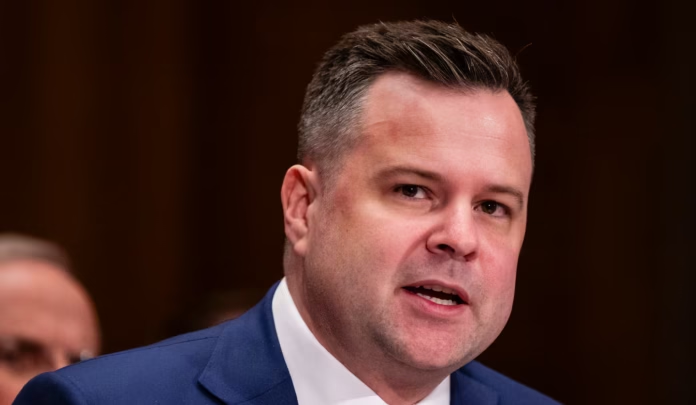
President Donald Trump appointed Bill Pulte, the head of the Federal Housing Finance Agency, as acting director of national intelligence, making an unconventional choice to temporarily lead the U.S. intelligence community.
Pulte will replace Tulsi Gabbard, who resigned as director of national intelligence after saying she needed to step away because of her husband’s serious cancer diagnosis. Trump said Pulte will serve temporarily while the White House continues searching for a permanent nominee.
- Pulte currently leads the Federal Housing Finance Agency.
- He will temporarily oversee 18 intelligence agencies, including the CIA and NSA.
- Trump has said Pulte will not be his permanent DNI nominee.
The decision surprised Washington because Pulte is primarily known for housing finance, mortgage policy, and his leadership of FHFA, not intelligence or national security work. He has also been a visible Trump ally and a combative public figure on social media.
Trump defended the move by pointing to Pulte’s management experience and his oversight role involving Fannie Mae and Freddie Mac. But critics argue that running housing finance agencies is fundamentally different from coordinating classified intelligence operations during a period of major global instability.
The appointment quickly became a flashpoint in Congress, where lawmakers are already debating whether to renew FISA Section 702, a key surveillance authority used by the intelligence community.
Why It Matters
The director of national intelligence is responsible for coordinating the work of the U.S. intelligence community and ensuring the president receives accurate, nonpartisan national security assessments.
That role requires trust from intelligence agencies, Congress, allies, and the White House. Pulte’s lack of traditional national security experience has raised concerns about whether he can manage the intelligence community at a moment when the United States is facing major challenges involving Iran, Russia, China, cyber threats, and terrorism risks.
- The DNI helps coordinate intelligence across 18 federal agencies.
- The role involves access to some of the government’s most sensitive classified information.
- A controversial acting appointment can affect trust inside the intelligence community and in Congress.
Supporters of Trump’s decision argue that the intelligence community needs reform and that Pulte can bring an outsider’s perspective to agencies the president has long accused of resisting his agenda.
Critics argue that the intelligence community is not a place for political experimentation. They warn that appointing a loyalist without intelligence experience could weaken morale, politicize analysis, and damage cooperation with allies.
Oversight and Accountability Context
The appointment has immediate consequences for congressional oversight. Several lawmakers have warned that Pulte’s role could undermine negotiations over FISA Section 702, which allows the government to collect foreign intelligence from non-U.S. persons located abroad.
Democrats have argued that Congress should not renew powerful surveillance authorities while the intelligence community is being led by someone they view as unqualified and politically aligned with Trump. Some Republicans have also expressed concern about Pulte’s lack of national security credentials.
- FISA Section 702 renewal is now tied more closely to concerns over intelligence leadership.
- Lawmakers may demand limits, reforms, or assurances before extending surveillance powers.
- Pulte’s temporary status may not fully calm concerns if he begins making major personnel or policy decisions.
Trump has tried to reduce pressure by saying Pulte is not the permanent nominee. But an acting DNI can still make consequential decisions, especially if the role lasts for months.
That is why lawmakers are expected to watch closely whether Pulte limits himself to caretaker duties or uses the acting position to reshape intelligence leadership.
Political and Public Context
Pulte’s appointment fits a broader second-term pattern in which Trump has placed loyalists and unconventional figures into powerful roles across government.
For Trump supporters, that approach is a feature, not a flaw. They argue that entrenched agencies need disruption and that outsiders can challenge bureaucratic habits that traditional appointees might leave untouched.
- Trump allies see Pulte as a loyal reformer.
- Critics see him as a political loyalist in a sensitive intelligence role.
- The appointment adds to broader Senate unease over Trump’s personnel choices.
The political risk is that the intelligence community depends heavily on credibility. If lawmakers, allies, or career officials believe intelligence decisions are being shaped by politics, it could damage confidence in the information that reaches the president and Congress.
The timing also matters. The appointment comes as Congress is already divided over surveillance powers, Iran policy, and Trump’s broader effort to tighten control over federal institutions.
Economic and Global Context
Pulte’s dual role could also affect housing finance markets. As FHFA director, he oversees major parts of the mortgage system, including Fannie Mae and Freddie Mac, which are central to U.S. housing finance.
Keeping that role while also serving as acting DNI creates questions about bandwidth and governance. Mortgage markets, lenders, and housing policy stakeholders will watch whether FHFA priorities slow or shift while Pulte handles intelligence responsibilities.
- FHFA oversees institutions central to the U.S. mortgage market.
- The intelligence role requires constant attention to global security threats.
- Holding both roles at once could create management and accountability concerns.
Internationally, the appointment could affect intelligence-sharing relationships. Allied governments, especially Five Eyes partners, rely on confidence that U.S. intelligence leadership is professional, stable, and focused on national security rather than domestic political fights.
If allies view the appointment as a sign of instability or politicization, they may become more cautious in how they share sensitive information.
What Happens Next
Pulte is expected to serve temporarily while Trump interviews candidates for the permanent DNI role. A permanent nominee would require Senate confirmation and would likely face significant scrutiny after the reaction to Pulte’s appointment.
In the meantime, Congress will continue debating FISA Section 702 renewal, and Pulte’s acting role may remain a sticking point in those negotiations.
- The White House still needs to identify a permanent DNI nominee.
- Congress may demand briefings on Pulte’s authority and planned actions.
- The appointment could continue affecting surveillance, intelligence, and oversight debates.
If Pulte acts mainly as a caretaker, the controversy may fade once a permanent nominee is named. If he moves aggressively to change personnel or policy, the backlash could grow.
For Trump, the appointment is another attempt to place a trusted ally atop a powerful federal institution. For critics, it is a warning that the intelligence community could become the next major battleground in the fight over loyalty, expertise, and executive power.
Sources
- Trump appoints ally Bill Pulte as acting US intelligence director
- Trump says he will not nominate Pulte to be permanent intelligence chief
- US lawmakers warn Pulte appointment could thwart surveillance law’s renewal
- What to know about Trump’s controversial pick of Bill Pulte for acting spy chief
- Who is Bill Pulte, Trump’s replacement for Tulsi Gabbard as head of the DNI?