Story Highlights
- President Donald Trump said he will nominate acting Attorney General Todd Blanche to permanently lead the Justice Department.
- Blanche previously served as Trump’s personal criminal defense attorney before taking a senior DOJ role.
- The nomination is expected to trigger a contentious Senate confirmation fight over DOJ independence and political loyalty.
What Happened
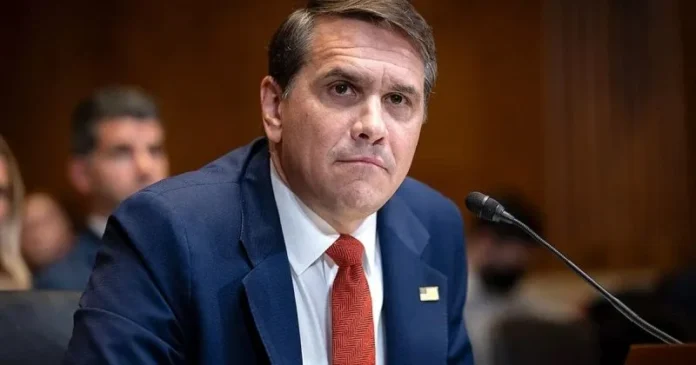
President Donald Trump said he will nominate acting Attorney General Todd Blanche to serve permanently as attorney general, moving to place his former personal lawyer in charge of the Justice Department on a long-term basis.
Trump announced the plan during a White House dinner, saying Blanche would become the permanent attorney general. The formal nomination is expected to set up a high-stakes Senate confirmation fight over the future direction of the nation’s top law enforcement agency.
- Blanche has been serving as acting attorney general after Pam Bondi’s departure.
- Trump has praised Blanche as loyal, effective, and aligned with his agenda.
- Democrats are expected to frame the nomination as a test of DOJ independence.
Blanche entered the administration after previously representing Trump in criminal legal matters. Since taking a leadership role at the Justice Department, he has become closely associated with Trump’s broader effort to reshape federal law enforcement around claims of political weaponization.
The nomination comes after weeks of speculation over whether Trump would choose Blanche permanently or seek another figure for the role. By moving forward with Blanche, Trump is signaling that he wants a DOJ chief who is already deeply familiar with his legal battles, political priorities, and second-term enforcement strategy.
Why It Matters
The nomination matters because the attorney general is not simply another Cabinet official. The role carries direct authority over federal prosecutions, national security investigations, civil rights enforcement, antitrust policy, and politically sensitive cases involving public officials.
Putting a former personal lawyer of the president in that position raises immediate questions about independence. Supporters will argue Blanche understands the legal system and has fought what they describe as politically motivated prosecutions against Trump. Critics will argue his background creates a serious conflict between loyalty to the president and loyalty to the Justice Department’s institutional mission.
- The attorney general controls major federal law enforcement priorities.
- Blanche’s past work for Trump will be central to confirmation questioning.
- The nomination could become a major midterm-year rule-of-law issue.
The confirmation fight is also likely to focus on Blanche’s conduct as acting attorney general. Democrats are expected to question him on prosecutions involving Trump critics, the department’s handling of politically sensitive matters, and the administration’s broader approach to claims of “weaponization.”
Republicans, meanwhile, may face pressure from Trump’s base to confirm Blanche quickly. But some GOP senators could also face uncomfortable questions about whether they support giving permanent control of the Justice Department to someone so closely tied to the president’s personal legal history.
Political and Public Context
The Blanche nomination lands in the middle of a broader national argument over the Justice Department’s role in American politics. Trump and his allies have repeatedly argued that federal law enforcement was used against him unfairly. Democrats and other critics counter that Trump is now trying to turn the department into a political instrument of his own.
That conflict will likely define the confirmation process. Senators will not only be evaluating Blanche’s résumé. They will be debating whether the Justice Department can remain independent under a president who openly values personal loyalty from top officials.
- Trump allies see Blanche as a fighter against anti-Trump lawfare.
- Democrats see the nomination as a threat to DOJ neutrality.
- The hearings could become a major political spectacle before the midterms.
The nomination also comes after controversy surrounding the administration’s proposed anti-weaponization fund, which faced resistance from some Senate Republicans. That issue could return during Blanche’s hearings, especially if lawmakers ask whether the Justice Department should be involved in compensating Trump allies or pursuing cases tied to political grievance claims.
For PoliticalLines, the larger story is the consolidation of power. Trump is not merely filling a vacancy. He is trying to install a trusted legal loyalist at the center of federal law enforcement at a moment when the department is handling cases with major political consequences.
What Happens Next
The next stage is the Senate confirmation process. Blanche will likely appear before the Senate Judiciary Committee, where Democrats are expected to press him on his past representation of Trump, his decisions as acting attorney general, and whether he would resist improper pressure from the White House.
Republican senators will have to decide how aggressively to defend the nomination. Some may present Blanche as a qualified attorney who understands the abuses Trump says he faced. Others may try to keep the focus narrow, avoiding a broader debate over DOJ politicization.
- The Senate Judiciary Committee will become the center of the confirmation fight.
- Democrats will likely focus on conflicts of interest and DOJ independence.
- Republicans will face pressure to confirm Trump’s preferred nominee.
If confirmed, Blanche would gain stronger authority to carry out Trump’s Justice Department agenda without the uncertainty attached to an acting role. That could affect investigations, prosecutions, civil enforcement priorities, and the department’s posture toward Trump’s political opponents.
The nomination sets up one of the clearest institutional fights of Trump’s second term: whether the Justice Department will be led as an independent law enforcement agency or as a central part of the president’s political counteroffensive. That question will now move to the Senate, where Blanche’s confirmation battle could become a defining moment in the 2026 political cycle.