Story Highlights
- Vice President JD Vance criticized hospital translator services at a Fox News town hall, arguing that English proficiency would improve medical efficiency and allow resources to be redirected toward hiring more physicians
- The vice president emphasized that assimilation into American culture and language represents a fundamental expectation for newcomers to the United States
- The Trump administration has implemented an America First agenda that includes declaring English the official language through executive action and revoking prior policies expanding language access services
- Medical research demonstrates that adequate interpreter services improve patient care quality and reduce health disparities, creating tension between administrative efficiency and healthcare equity
What Happened
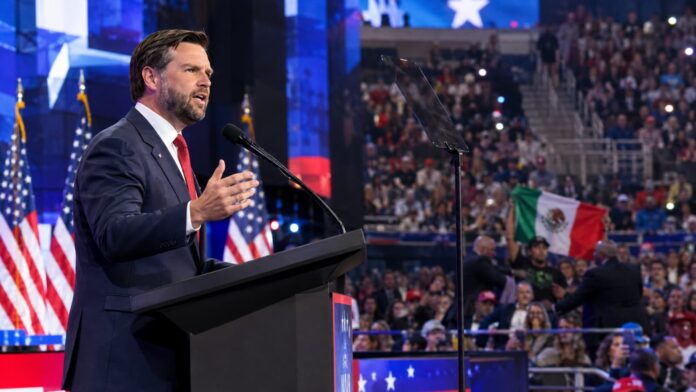
Vice President JD Vance delivered remarks at a Fox News town hall event in which he criticized the prevalence of medical translator services in U.S. hospitals. The vice president’s comments emerged during a discussion about protecting national identity amid immigration trends. He referenced a personal experience in an emergency room setting where his family sought medical care for his son, noting the presence of multiple translators for different languages. Vance suggested that English proficiency among all patients would streamline healthcare operations and improve resource allocation, stating that universal English proficiency would enable hospitals to hire additional physicians instead of maintaining translator services.
The vice president’s statements reflected a broader philosophical position on immigration and civic integration. He emphasized that individuals seeking to become Americans should embrace the nation’s language, culture, and values as a baseline requirement for residency and citizenship.
- Vice President JD Vance made critical remarks about hospital translator programs during a Fox News town hall event focused on national identity
- Vance recalled an emergency room experience with nine different translators and suggested that universal English proficiency would allow hospitals to hire more physicians
- The vice president stressed that language and cultural assimilation represent minimum expectations for those immigrating to the United States
Why It Matters
The vice president’s advocacy for English proficiency in healthcare settings raises important questions about balancing administrative efficiency with equitable patient care. According to U.S. Census Bureau data, approximately 25 million Americans, representing more than 8 percent of the population, have limited English proficiency that restricts their ability to read, speak, write, or understand the language. For this significant demographic segment, adequate translation services represent a critical component of healthcare access and medical safety.
Medical research has established that professional interpreter services yield measurable benefits for patient outcomes. Studies demonstrate that adequate medical interpreter services improve the quality of care patients receive, reduce health disparities between different populations, and minimize medical errors that can result from miscommunication. Healthcare providers operating across diverse communities face competing pressures between administrative cost reduction and maintaining equitable access to medical services for vulnerable populations.
- Approximately 25 million Americans have limited English proficiency, creating ongoing demand for translator services in healthcare settings
- Medical research indicates interpreter services reduce medical errors and health disparities while improving patient outcomes and care quality
- Healthcare providers face competing pressures between administrative cost reduction and maintaining equitable access to medical services for vulnerable populations
Political and Public Context
The vice president’s remarks represent part of a coordinated approach by the Trump administration toward reshaping federal language policy. President Trump signed an executive order designating English as the nation’s official language, implementing a key component of the America First agenda. Additionally, the administration revoked a previous executive order issued by former President Bill Clinton in 2000, which had expanded access to services for individuals with limited English proficiency.
It is important to note that the United States has no statutory official language at the federal level, and executive orders addressing language policy can be reversed by subsequent administrations. The nation does require English proficiency for citizenship, though exemptions exist for certain older applicants. Language acquisition experts estimate that achieving functional fluency in English requires five to eight years of consistent study and practice, meaning immediate policy changes would take years to achieve their intended effects.
- President Trump signed an executive order declaring English the official language as part of the America First policy agenda
- The administration revoked the 2000 Clinton executive order that had expanded language access services for limited-English populations
- The United States maintains no statutory official language at the federal level, making executive orders reversible by subsequent administrations
JD Vance: Once, I was in the emergency room, and there were all these translators. How about if everyone spoke English? pic.twitter.com/SsFaYl4jsf
— FactPost (@factpostnews) October 30, 2026
What Happens Next
The trajectory of healthcare language policy under the current administration remains subject to several variables. The Trump administration may pursue additional executive actions to reduce federal funding for interpreter services or establish stricter English proficiency requirements for programs receiving federal support. Healthcare providers may face pressure to reduce translator staff and services as administration policies take effect, potentially affecting millions of patients with limited English proficiency.
Legal challenges to restrictive language policies appear probable, as civil rights organizations and healthcare advocacy groups may argue that eliminating interpreter services violates provisions of the Civil Rights Act. Healthcare systems across the nation will likely engage in policy discussions about how to balance administrative directives with legal obligations to provide equitable care. The practical implementation of English-only healthcare policies will likely require five to eight years as populations develop language proficiency.
- The Trump administration may pursue additional executive actions to restrict federal funding for medical interpreter services and programs
- Civil rights organizations and healthcare advocates are expected to mount legal challenges to policies restricting language access in medical settings
- Healthcare systems will face pressure to reduce translator staff while potentially facing legal obligations to provide equitable care to limited-English populations
- Language acquisition experts estimate five to eight years for populations to achieve functional English proficiency