Story Highlights
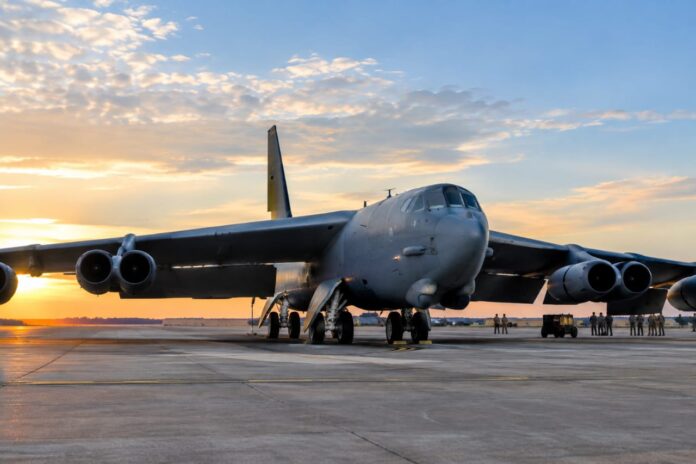
- The Boeing B-52 Stratofortress has remained in continuous service for over 70 years and is planned to stay combat-ready into the 2050s
- Ohio Class nuclear-powered ballistic missile submarines, approaching 45 years in service, form a critical component of the U.S. nuclear deterrent triad
- Maintaining legacy military systems can generate taxpayer savings of millions to billions of dollars while preserving operational readiness
- Military logistics and component maintenance, such as aircraft rivet replacement, may prove as strategically important as acquiring new technology
What Happened
Military analysts and defense officials have increasingly highlighted the strategic importance of maintaining America’s aging weapons systems rather than exclusively pursuing next-generation platforms. The B-52 Stratofortress, an eight-engine jet aircraft with a 185-foot wingspan that first flew in 1952, has remained a cornerstone of U.S. Air Force operations for more than seven decades. Military planners have developed strategies to keep the B-52 fleet active and combat-ready through the 2050s, demonstrating the long-term viability of sustained maintenance and modernization efforts for legacy platforms.
Similarly, the U.S. Navy’s Ohio Class nuclear-powered ballistic missile submarines represent another critical aging asset facing continued operational demands. These vessels, now approaching their mid-40s in service, continue to serve as a foundational element within America’s nuclear deterrent strategy alongside Air Force strategic bombers and intercontinental ballistic missiles. Defense experts have noted that while technological innovation remains essential, the lifecycle costs associated with maintaining existing military systems often outweigh their original acquisition expenses, making systematic maintenance and modernization economically rational decisions for policymakers.
- B-52 Stratofortress in continuous service since 1952, with plans extending operational life to 2050s
- Ohio Class submarines approaching 45 years of service within the nuclear deterrent triad
- Lifecycle maintenance costs documented as exceeding initial acquisition expenses across military platforms
- Defense analysis indicates potential for millions to billions in taxpayer savings through strategic maintenance approaches
Why It Matters
The emphasis on maintaining legacy military systems carries significant implications for national defense strategy and fiscal responsibility. A comprehensive cost analysis demonstrates that sustaining older platforms at peak operational readiness while new systems undergo development, testing, and deployment phases provides both financial benefits and strategic advantages. This approach addresses a critical gap during the extended timelines required to bring innovative military technologies from conception through fielding. Rather than viewing older systems as obsolete, military planners increasingly recognize that well-maintained legacy platforms provide essential operational capacity during the transition to next-generation capabilities.
The strategic maintenance debate extends beyond traditional weapons platforms into critical supply chain and logistics considerations. Defense experts have raised concerns regarding the sustainability of logistics operations across multiple military branches, noting that historical analysis of great power conflicts suggests logistics represents the primary determinant of military success or failure. Seemingly routine maintenance activities, such as replacing fasteners in aircraft fuselages, carry outsized strategic importance. Intelligence assessments indicate that competing nations have developed superior capabilities in these foundational logistics and manufacturing processes, suggesting that American operational readiness depends significantly on addressing these often-overlooked maintenance requirements alongside high-profile acquisitions of advanced weaponry.
- Sustained maintenance of existing systems bridges capability gaps during development of new platforms
- Multiple military services assessed as potentially logistically unsustainable without improved maintenance and supply chain practices
- Taxpayer savings of millions to billions achievable through strategic maintenance prioritization
- Operational readiness and deterrent capability enhanced through systematic preservation of proven platforms
Political and Public Context
The debate over military spending priorities reflects broader tensions within defense policy between modernization imperatives and fiscal constraints. While policymakers across the political spectrum generally acknowledge the need for technological advancement, disagreement persists regarding the optimal balance between legacy system maintenance and investment in emerging capabilities. The B-52 Stratofortress exemplifies this ongoing discussion, as the aircraft has continuously adapted through technological upgrades and engineering improvements while retaining its fundamental airframe design. The decision to extend the B-52’s operational life through the 2050s represents a substantial commitment to legacy system maintenance and represents one of the longest continuous service periods for any major weapons platform in military history.
Recent analysis from defense policy institutions has emphasized that logistics capabilities, manufacturing precision, and supply chain excellence should receive equivalent priority to spectacular technological breakthroughs. This perspective challenges conventional assumptions that military superiority flows primarily from possession of cutting-edge weaponry. Instead, analysts point to historical precedent suggesting that nations capable of maintaining complex equipment over extended periods while managing vast supply chains often prevail in protracted conflicts. The recognition that components such as aircraft fasteners warrant strategic attention reflects a maturing understanding of military logistics as a core competency rather than an ancillary administrative function.
- B-52 continuous service since 1952 represents longest operational lifespan among major U.S. weapons platforms
- National Defense University analysis identifies logistics as primary determinant of military success in great power conflicts
- Multiple military services assessed as facing sustainability challenges in maintenance and supply operations
- Defense policy institutions increasingly emphasize manufacturing precision and supply chain excellence as strategic capabilities
Why the U.S. military must prioritize maintaining aging equipment https://t.co/zrRFfftPCl
— WanderinWoodsman🗺🌐🇺🇸🥋in support of 🇦🇫🇺🇦 (@WanderNWoodsman) October 10, 2026
What Happens Next
Military planners face the ongoing challenge of optimizing defense spending across competing priorities as fiscal constraints and strategic demands intersect. The continued operational life of legacy systems such as the B-52 and Ohio Class submarines will require sustained investment in modernization efforts, component replacement, and technological upgrades. Defense officials have identified state-of-the-art technologies capable of addressing critical maintenance challenges, suggesting that innovation in manufacturing and logistics processes may prove as consequential as development of entirely new weapons platforms. Implementation of these advanced maintenance methodologies will likely expand across the military services as leaders recognize their strategic importance.
Future defense budgeting will increasingly demand rigorous cost-benefit analysis comparing lifecycle expenses of legacy system maintenance against acquisition and deployment costs of emerging platforms. Military branches will need to develop comprehensive strategies addressing both immediate operational readiness and long-term sustainability of existing capabilities. The emphasis on logistics excellence and supply chain resilience suggests that future strategic advantages may flow from superior maintenance infrastructure and manufacturing capabilities rather than solely from possession of advanced technology. Defense policymakers will continue evaluating how to balance the imperative for innovation against the proven value of sustained engagement with reliable, battle-tested platforms that have demonstrated effectiveness across decades of service.
- B-52 and Ohio Class submarines require ongoing modernization investment through planned operational extensions
- State-of-the-art manufacturing and maintenance technologies under development for rapid implementation across military services
- Defense budgeting processes will increasingly emphasize lifecycle cost analysis and logistics sustainability metrics
- Strategic focus on supply chain resilience and maintenance excellence expected to expand across military branches