Story Highlights
- The Missouri Supreme Court unanimously blocked a Trump-approved congressional map.
- President Trump expressed his discontent via a Truth Social post.
- The ruling has significant implications for the upcoming midterm elections.
- Republican leaders are considering an appeal to the U.S. Supreme Court.
What Happened
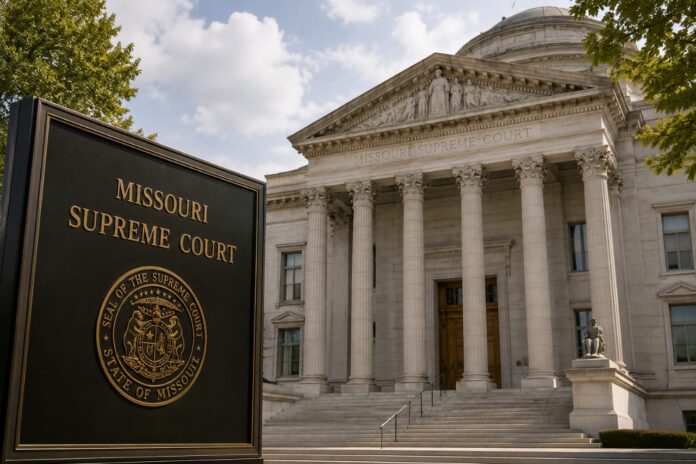
On Thursday, the Missouri Supreme Court delivered a unanimous ruling that has sent shockwaves through the Republican Party, particularly among supporters of President Trump. The court blocked a congressional map that had been approved by the Republican-controlled state legislature and was designed to favor GOP candidates in the upcoming midterm elections. This decision means that voters in Missouri will revert to using the previous congressional districts for the elections, a move that has drawn sharp criticism from the president.
In a fiery response on Truth Social, Trump expressed his outrage, stating, ‘The Missouri Supreme Court just ridiculously ruled in favor of changing the maps back to what they were a long time ago. It’s called, Ancient History!’ He further lamented that the ruling was not only ‘horrible’ and ‘ridiculous’ but also ‘unconstitutional,’ arguing that it jeopardizes the integrity of the electoral process in Missouri.
- The Missouri Supreme Court ruled 7-0 against the new congressional map.
- The ruling came after a petition with over 300,000 signatures was submitted.
- Republican Secretary of State Denny Hoskins rejected the petition prior to the August primary.
- Attorney General Catherine Hanaway plans to appeal the ruling to the U.S. Supreme Court.
Why It Matters
This ruling is significant not only for Missouri but also for the broader landscape of American politics as the midterm elections approach. The decision to revert to the previous congressional districts could have far-reaching consequences for Republican candidates who were counting on the newly drawn districts to secure victories. Trump’s vocal support for redistricting efforts has been a cornerstone of his strategy to maintain Republican control in Congress during his remaining time in office.
The implications of this ruling extend beyond Missouri. It raises questions about the integrity of the electoral process and the ability of state legislatures to draw fair maps that reflect the will of the voters. Trump’s assertion that the ruling undermines election integrity resonates with many of his supporters, who believe that the judicial system should not interfere with legislative decisions made by elected officials.
- The ruling could hinder Republican efforts to gain seats in the House of Representatives.
- It raises concerns about the role of the judiciary in electoral matters.
- Trump’s approval ratings may be further impacted by this setback.
- Voter sentiment in Missouri could shift as a result of the ruling.
Political and Public Context
The Missouri Supreme Court’s decision is part of a larger trend in which courts across the country are scrutinizing redistricting efforts. In recent years, numerous states have faced legal challenges over gerrymandering, with courts stepping in to ensure that maps are drawn fairly and transparently. This ruling follows a series of similar decisions in other states, highlighting the contentious nature of redistricting in American politics.
Moreover, the ruling comes at a time when Trump’s influence within the Republican Party is being tested. While he remains a powerful figure, his approval ratings have dipped, and setbacks like this one could further complicate his efforts to rally support for GOP candidates. The president’s push for redistricting reform was aimed at solidifying Republican control, but this ruling serves as a stark reminder of the challenges he faces.
- Other states have also faced legal challenges regarding redistricting.
- Trump’s influence within the GOP is being tested as midterms approach.
- Similar rulings in states like Maryland have favored Democratic redistricting efforts.
- The Missouri ruling could set a precedent for future redistricting cases.
Missouri court blocks Trump-backed U.S. House map and orders it to be put to a vote https://t.co/Sfz11kzHza
— The Washington Times (@WashTimes) September 3, 2026
What Happens Next
Looking ahead, the Republican Party is faced with critical decisions regarding how to respond to this ruling. Attorney General Catherine Hanaway’s intention to appeal to the U.S. Supreme Court indicates that the party is not willing to accept this setback without a fight. The outcome of such an appeal could have significant implications for the midterm elections and the future of redistricting in Missouri and beyond.
Additionally, the party must consider how to mobilize its base in light of this ruling. With the midterms just around the corner, Republican candidates will need to adapt their strategies to account for the reversion to the previous congressional districts. This may involve increased outreach efforts to voters who may feel disenfranchised by the court’s decision. Furthermore, the party’s ability to effectively communicate its stance on this issue will be crucial in maintaining voter support.
- The Republican Party will likely pursue an appeal to the U.S. Supreme Court.
- Candidates will need to adjust their campaign strategies for the midterms.
- Voter outreach efforts may intensify in response to the ruling.
- The impact of the ruling on voter sentiment will be closely monitored.