

Story Highlights
- Secretary of State Marco Rubio defended President Trump’s military intervention against Iran as necessary to address a national security threat that previous administrations failed to confront
- Rubio acknowledged the conflict’s political unpopularity while emphasizing that confronting difficult national security challenges sometimes requires decisions that are not immediately popular
- Trump remained unapologetic about the intervention, asserting that history will view the action as one of the administration’s most significant accomplishments in preventing nuclear proliferation
- The administration indicated it is not currently seeking to escalate the conflict, though ongoing diplomatic talks with Iran have shown limited progress
What Happened
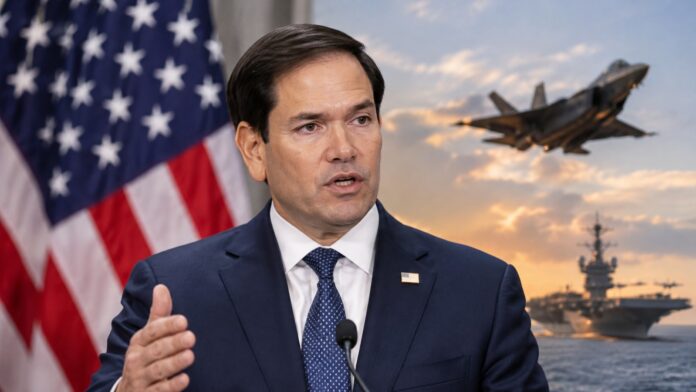
Secretary of State Marco Rubio delivered a forceful defense of President Trump’s military actions against Iran, characterizing the intervention as a necessary response to a persistent threat that the nation had failed to adequately address for years. Speaking to reporters on Sunday, Rubio emphasized that the administration confronted a very real security challenge despite the political costs associated with the decision. The Secretary of State acknowledged that the conflict was not necessarily popular, particularly given its timing relative to recent Republican electoral losses, but argued that protecting the country sometimes requires making difficult choices that may not command immediate public support.
The president himself has expressed no regrets about the military intervention. Trump stated that if given the opportunity to make the decision again, he would take the same action, predicting that history will ultimately vindicate the choice as one of the administration’s greatest achievements. The intervention was designed to prevent Iran from acquiring nuclear weapons capability, addressing a proliferation concern that the administration viewed as an existential threat. While Trump indicated the administration is not currently seeking to further escalate tensions, diplomatic efforts between the United States and Iran remain stalled, with ongoing talks showing little productive momentum.
- Secretary of State Rubio defended the Iran military action on Sunday at Homestead Air Reserve Base in Florida
- President Trump stated the action will be viewed historically as one of the administration’s best decisions
- The military strikes targeted Iranian nuclear and military sites, causing severe damage according to Pentagon assessments
- Current U.S.-Iran diplomatic talks are making limited progress, with Iranian demands remaining at an impasse
Why It Matters
The defense of the Iran intervention represents a critical moment for the Trump administration’s credibility on national security issues and its willingness to make strategically important decisions despite political headwinds. The military action addressed what the administration characterized as an immediate threat to American security interests and regional stability. By preventing Iran from obtaining nuclear weapons capability, the administration took action to eliminate a threat that previous administrations had allowed to persist. Rubio’s explicit acknowledgment that the decision was unpopular while remaining necessary reflects the administration’s commitment to prioritizing security over short-term political calculations.
The intervention also demonstrates the White House’s determination to confront challenges that other administrations avoided or mishandled. The administration’s confidence that the action will ultimately be viewed favorably by history suggests a long-term strategic perspective focused on fundamental security outcomes rather than immediate public approval ratings. This posture establishes a significant marker for how the administration intends to handle other difficult national security decisions going forward.
- The action prevents a hostile regime from acquiring nuclear weapons that could threaten regional and global security
- The administration prioritizes long-term security strategy over short-term political popularity in making consequential decisions
- The military strike demonstrates U.S. resolve in confronting proliferation threats that previous administrations failed to adequately address
- The outcome affects American credibility with allies regarding commitment to preventing nuclear proliferation
Political and Public Context
The Iran military intervention has become a defining foreign policy decision for the Trump administration, particularly given the political context surrounding recent Republican electoral performance. Republicans experienced significant losses in recent midterm elections, and various administration officials, including Vice President JD Vance, have attributed some of these losses to public concerns about the Iran conflict. However, both Rubio and the president have maintained that the strategic and security imperatives of the action override political considerations. This stance reflects a deeper philosophical disagreement within the party about whether foreign policy decisions should be calibrated primarily around electoral impact or around objective security assessments.
The administration’s handling of the Iran question also reflects the broader debate about America’s role in confronting authoritarian regimes and preventing weapons proliferation. Previous administrations pursued various approaches to the Iranian nuclear challenge, ranging from diplomatic engagement to sanctions regimes, but all ultimately fell short of preventing the threat from advancing. The current administration’s decision to use military force represents a definitive shift toward direct action. This approach aligns with the administration’s broader foreign policy philosophy of decisive action in response to clear threats rather than extended diplomatic processes that may allow threats to mature.
- Republican midterm losses were partially attributed to public concern about the Iran conflict by multiple administration officials
- The administration maintains that security imperatives override electoral considerations in national defense decisions
- Previous administrations employed diplomatic and sanctions-based approaches that failed to prevent Iranian nuclear advancement
- The current action represents a significant shift toward direct military response to weapons proliferation threats
🇺🇸🚨 RUBIO DEFENDS TRUMP'S IRAN WAR
Secretary of State Marco Rubio says difficult national security decisions may be unpopular but necessary.
His comments come as Iran negotiations remain stalled and G7 ministers meet in Paris.
📝 👉 FULL ARTICLE: https://t.co/WNuRO6Qfsq… pic.twitter.com/RsiqQUyNnm
— THE INFORMANT (@TheInformantUSA) November 9, 2026
What Happens Next
The path forward for U.S.-Iran relations remains uncertain, with ongoing diplomatic negotiations showing limited signs of progress. The administration has indicated it is not currently pursuing additional military escalation, suggesting a period of strategic pause following the initial military strikes. However, the stalled diplomatic talks indicate that significant obstacles remain to achieving a negotiated resolution. The administration will need to balance maintaining military credibility and deterrence while pursuing diplomatic channels that could potentially lead to a resolution that prevents Iran from reconstituting its nuclear program.
The administration’s approach will likely involve sustained pressure through economic measures and military positioning while continuing to engage in talks. The success of this strategy will depend on whether Iran demonstrates willingness to address the fundamental security concerns that prompted the initial military action. The coming months will be critical in determining whether the military intervention establishes sufficient deterrence to prevent further nuclear development or whether additional measures become necessary.
- Ongoing U.S.-Iran diplomatic talks will continue, though progress remains limited due to fundamental disagreements on key issues
- The administration maintains military positioning to ensure deterrence if Iran attempts to reconstitute nuclear capabilities
- Future diplomatic breakthroughs will likely depend on Iranian willingness to accept restrictions on nuclear development
- The administration will assess whether the military action successfully achieves its objective of preventing nuclear proliferation


