Story Highlights
- Representative Mark Pocan discussed the narrow Democratic gubernatorial primary outcome in which David Crowley defeated Francesca Hong by a slim margin
- The closely contested race raised questions about party unity heading into the general election matchup
- Pocan identified potential challenges for Democrats in consolidating support around the primary winner
- The general election will pit the Democratic nominee against Republican Tom Tiffany
What Happened
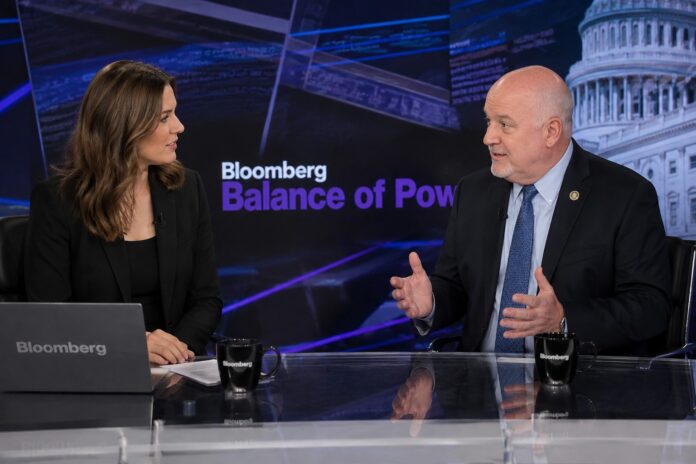
Representative Mark Pocan of Wisconsin engaged in a detailed discussion regarding the competitive Democratic gubernatorial primary race that concluded with a narrow victory for David Crowley over challenger Francesca Hong. The margin of victory consisted of only a few thousand votes, underscoring the intensity of the contest and the significant support each candidate maintained throughout the campaign. Pocan’s commentary came during an appearance on Bloomberg’s late edition of their program Balance of Power, where he spoke with host Kailey Leinz about the implications of this closely fought primary battle.
The primary contest reflected a deep divide within the Democratic Party, with voters split between two distinct visions for the party’s direction. Crowley’s victory, despite the razor-thin margin, positioned him as the Democratic standard-bearer for the general election phase. However, the closeness of the result raised immediate questions about whether Crowley would be able to consolidate the party’s base and maintain the enthusiasm of Hong’s supporters as the campaign shifted to the general election stage.
- David Crowley narrowly won the Democratic gubernatorial primary over Francesca Hong
- The victory margin amounted to just a few thousand votes
- The discussion occurred on Bloomberg’s Balance of Power program with host Kailey Leinz
- The Democratic nominee will face Republican Tom Tiffany in the general election
Why It Matters
The implications of this closely contested primary extended far beyond the immediate outcome of the race itself. Pocan’s analysis emphasized that tight primary contests frequently create challenges for the winning candidate’s ability to unite disparate factions within their party during the subsequent general election campaign. When a primary winner prevails by a narrow margin, supporters of the defeated candidate may harbor disappointment or harbor reservations about fully committing their resources and enthusiasm to the general election effort. This dynamic can impact voter turnout, volunteer mobilization, and grassroots fundraising efforts that prove critical in competitive general elections.
The Democratic Party faced the specific challenge of ensuring that Hong’s supporters would transfer their loyalty and energy to Crowley’s general election campaign. In closely divided states or districts, such internal party fractures can prove decisive in determining outcomes. Additionally, the primary battle had already consumed significant resources and may have created openings for Republican opposition research and messaging strategies targeting divisions within the Democratic coalition. Pocan’s focus on these unity challenges reflected broader concerns among Democratic leadership about maintaining party cohesion during an important electoral cycle.
- Narrow primary victories often complicate party unity efforts in subsequent general elections
- Disappointed supporters of defeated primary candidates may reduce their engagement in the general election
- Internal party divisions can affect volunteer recruitment, fundraising, and voter turnout dynamics
- Republican opponents gain opportunities to exploit Democratic internal divisions through strategic messaging
Political and Public Context
The Democratic gubernatorial primary in Wisconsin occurred within a broader political landscape marked by competitive races and significant stakes for both major parties. Wisconsin has established itself as a crucial battleground state in contemporary American politics, with gubernatorial contests attracting substantial attention and resources from both Democrats and Republicans. The state’s history of closely contested elections meant that the outcome of this primary held particular significance for the trajectory of the general election campaign.
Crowley’s narrow victory came after what observers characterized as an energetic campaign season that highlighted different policy priorities and strategic visions within the Democratic Party. Hong, as one candidate in this race, had mobilized significant support within certain Democratic constituencies, reflecting the party’s internal diversity and the different perspectives held by various voter groups. The competitive nature of the primary demonstrated that Democratic voters were actively engaged with the electoral process and held strong convictions about which candidate could best represent their interests. Pocan’s willingness to discuss these dynamics publicly reflected acknowledgment among Democratic leaders that addressing primary tensions would require deliberate effort and strategic communication as the campaign progressed.
- Wisconsin is a historically competitive battleground state in American politics
- Gubernatorial races in Wisconsin attract substantial national attention and resources
- The Democratic primary revealed significant internal party diversity and competing policy visions
- Democratic leaders recognized the need for strategic unity efforts following the contentious primary
Crowley’s narrow primary victory leaves him with an obvious strategic task: turning a plurality of Democratic voters into a statewide majority. His campaign cannot simply preserve Tuesday’s coalition; it must broaden it substantially by November. https://t.co/lpNl1lpYjh
— james jackson (@jackgoesvirtual) August 13, 2026
What Happens Next
The Democratic Party will need to execute a coordinated strategy to bring together the various factions that supported different candidates during the primary phase. Party leaders including Pocan and other prominent figures will likely work to communicate with Hong supporters about their continued importance to the Democratic coalition and the general election effort. This process typically involves high-level meetings, public endorsements from defeated primary candidates, and collaborative messaging that emphasizes shared Democratic values and policy priorities.
Crowley’s campaign will need to demonstrate receptiveness to the concerns and priorities that motivated Hong’s supporters while maintaining focus on the general election opponent. The outcome of this unity process will significantly influence the resources and enthusiasm available to the Democratic nominee as the general election campaign intensifies. Additionally, Crowley will need to develop messaging strategies that address any vulnerabilities exposed during the competitive primary battle while pivoting to focus on contrasts with the Republican opponent. The general election timeline will compress considerably, requiring rapid deployment of campaign resources and strategic focus on persuading independent voters and swing voters who will ultimately determine the election outcome.
- Democratic Party officials will undertake deliberate unity and coalition-building efforts
- Crowley’s campaign will need to demonstrate responsiveness to Hong supporters’ concerns
- The general election campaign will rapidly shift focus to contrasting Democratic and Republican visions
- Voter persuasion efforts will concentrate on independent voters and swing constituencies