Story Highlights
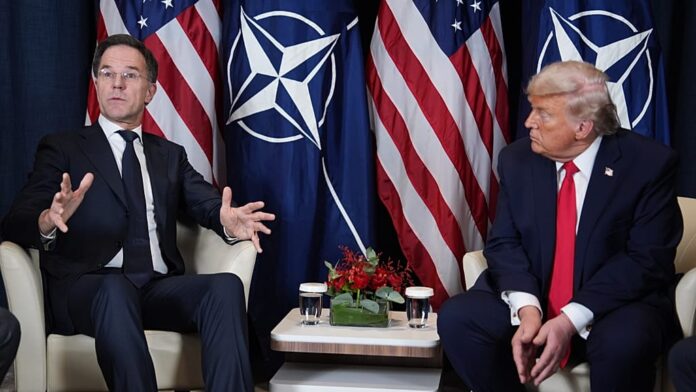
- President Trump arrived at the NATO summit in Ankara with renewed pressure on allies over defense spending.
- The administration is pushing members toward a 5 percent of GDP defense spending target.
- Ukraine, Russia, Turkey, and Middle East tensions are all expected to shape the two-day summit.
What Happened
President Donald Trump headed to Ankara, Turkey, for a high-stakes NATO summit that will test whether allies are following through on defense spending commitments made under pressure from Washington.
The two-day gathering, hosted by Turkish President Recep Tayyip Erdogan and chaired by NATO Secretary General Mark Rutte, brings together leaders from all 32 NATO member states. Trump enters the summit arguing that the United States has carried too much of the alliance’s financial burden for too long.
The White House has framed the meeting as a moment of accountability. Trump and his team want allies to show concrete progress toward a new 5 percent of GDP defense spending target, a sharp increase from NATO’s older 2 percent benchmark.
- The summit is being held at the Beştepe Presidential Compound in Ankara.
- Trump is pressing allies to move faster on defense spending.
- NATO leaders are expected to discuss Ukraine, Russia, Turkey, and regional security.
Rutte has tried to manage Trump’s concerns by emphasizing how much allied defense spending has increased since Trump first pushed the issue during his earlier term. He has described the spending surge as a major shift in NATO’s defense posture and has highlighted new contracts tied to weapons production and military readiness.
The Ukraine war is also expected to dominate the agenda. Trump is scheduled to meet separately with Ukrainian President Volodymyr Zelenskyy, with officials saying the two leaders will discuss possible paths toward ending the war with Russia.
A draft summit declaration reportedly includes a major military assistance pledge for Ukraine in 2026, along with continued support in 2027. NATO members are also expected to reaffirm their commitment to Article 5, the alliance’s collective defense principle.
Why It Matters
The Ankara summit matters because it gives Trump a chance to measure whether his pressure campaign on NATO is producing results.
For years, Trump has argued that European allies must pay more for their own defense instead of relying heavily on the United States. Supporters say that pressure has forced NATO members to take burden-sharing more seriously and invest more in their own militaries.
Critics argue that Trump’s blunt approach risks unsettling traditional alliances. But even many skeptics acknowledge that his spending demands have pushed NATO governments to confront long-delayed defense commitments.
- Trump wants NATO allies to prove they are moving beyond promises.
- European governments face difficult budget choices to meet higher targets.
- Ukraine’s long-term support remains a major test of alliance unity.
The summit also comes at a difficult geopolitical moment. Russia’s war in Ukraine continues, Iran-related tensions remain unresolved, and Turkey is seeking to strengthen its role as a major regional power.
For Washington, the meeting is about more than spending. It is also about whether NATO can remain unified while adapting to Trump’s more transactional approach to foreign policy.
Political and Public Context
Trump’s NATO strategy has become one of the clearest examples of his “America First” foreign policy. He argues that alliances should serve U.S. interests and that partners must contribute more if they expect continued American protection.
That message resonates with many voters who question why the United States should fund a large share of Europe’s defense while facing domestic needs at home. It also gives Trump a political win if allies announce new spending, procurement, or weapons-production commitments.
At the same time, NATO leaders are trying to keep the alliance united while responding to Trump’s demands. Rutte’s approach has been to credit Trump’s pressure for increased allied spending, while urging members to keep moving toward stronger defense capacity.
Turkey’s role adds another layer. Erdogan is hosting the summit at a time when Ankara wants movement on defense issues, including its long-running dispute over the F-35 fighter jet program.
What Happens Next
The key question after Ankara will be whether NATO members turn summit pledges into actual defense budgets, contracts, and military readiness.
Trump is likely to use the summit to argue that his pressure is forcing allies to pay more and that the United States is no longer accepting one-sided arrangements. If NATO members announce major spending increases, the president will be able to claim another burden-sharing victory.
Ukraine will remain another major focus. Zelenskyy’s meeting with Trump could shape the next stage of U.S. and NATO strategy as the war with Russia continues into another year.
- Allies will face pressure to show real progress toward the 5 percent target.
- Ukraine support will remain a central test of NATO unity.
- Turkey may seek movement on defense deals and regional security priorities.
For Trump, the summit offers a chance to show that his tough approach is changing NATO’s direction. For allies, it is a chance to prove they can meet U.S. expectations while keeping the alliance together during a volatile global moment.