Story Highlights
- ICE arrested about 10,000 people over five days during a sharp late-June enforcement surge.
- The Trump administration has shifted from high-profile city sweeps to quieter, more dispersed arrest tactics.
- ICE detention facilities have reportedly grown to more than 63,000 detainees as enforcement accelerates.
What Happened
Immigration and Customs Enforcement arrested roughly 10,000 people over a five-day stretch at the end of June and into early July, marking one of the largest enforcement surges of President Trump’s second term.
The figures, confirmed by the White House, amount to about 2,000 arrests per day. The surge reflects a major shift in deportation tactics, moving away from highly visible citywide sweeps and toward lower-profile operations spread across routine check-ins, traffic stops, and public encounters.
Earlier in Trump’s term, immigration enforcement was concentrated in major cities and often drew national attention. Those operations frequently produced confrontations between officers, protesters, and local officials.
- The late-June surge averaged roughly 2,000 arrests per day.
- The new approach relies less on large public raids and more on dispersed enforcement.
- The White House has confirmed the overall arrest numbers, though locations remain unclear.
The tactical shift followed serious backlash from earlier operations, including deadly clashes in Minneapolis. After that, the administration reduced some high-profile deployments and moved toward a quieter strategy that still advances Trump’s broader mass deportation agenda.
The change also comes amid pressure from senior administration officials to increase arrest totals. Stephen Miller and other Trump advisers have reportedly pushed ICE to meet aggressive daily arrest targets, arguing that the administration must move faster to deliver on its immigration promises.
ICE detention facilities have also seen a major increase in population. Reporting cited in the article says the detained population has climbed above 63,000 people, while separate tracking data indicates that many detainees currently held by ICE have no criminal convictions.
Why It Matters
The surge matters because it shows the Trump administration is intensifying immigration enforcement even after earlier tactics generated public controversy.
For Trump and his supporters, the numbers show that the administration is following through on its promise to restore stronger immigration enforcement and increase deportations. The White House has made clear that immigration remains one of the president’s top domestic priorities.
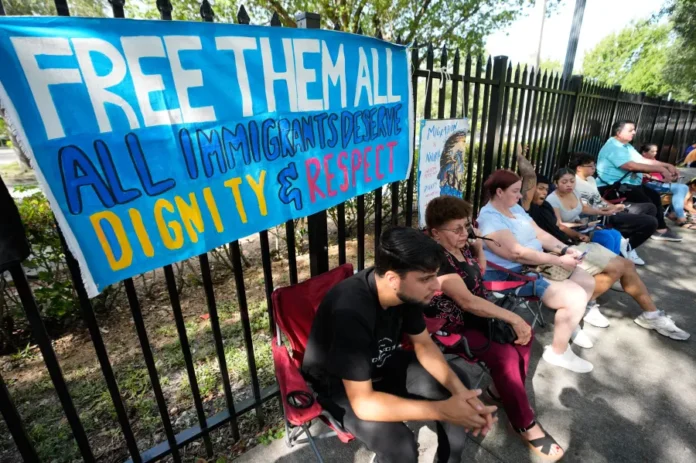
For immigrant communities and advocacy groups, the quieter enforcement model creates new challenges. Instead of large raids that are easier to track, arrests are now happening through scattered encounters that may be harder to monitor in real time.
- Supporters say the surge shows stronger enforcement after years of weak border and immigration policy.
- Critics say the dispersed approach makes arrests harder for communities to track.
- The growing detention population could strain immigration courts and local systems.
The fact that many detainees reportedly have no criminal convictions is likely to remain central to the political debate. The administration often highlights arrests involving violent offenders, while critics argue the broader enforcement net is sweeping in many people whose cases are based on immigration violations rather than criminal records.
The shift also suggests the administration is trying to balance two goals: producing large arrest numbers while avoiding the kind of high-profile confrontations that previously triggered backlash.
Political and Public Context
Immigration has been one of Trump’s defining issues, and the latest arrest surge gives the administration a clear statistic to present to voters ahead of the midterm election cycle.
The president has repeatedly argued that stronger interior enforcement is necessary after years of illegal crossings, asylum disputes, and pressure on local communities. The new strategy allows the administration to keep arrests high while reducing the daily spectacle of major city sweeps.
At the same time, the approach will likely intensify criticism from Democrats, immigrant-rights organizations, and local leaders who argue that expanded enforcement is creating fear in communities and overwhelming legal support networks.
The administration’s new funding also matters. Congress recently approved a large immigration enforcement package that gives ICE and Border Patrol more resources to sustain arrests, detention, and deportation operations over the remainder of Trump’s term.
What Happens Next
ICE is expected to continue elevated enforcement as the Trump administration pushes to meet its deportation goals.
The quieter approach may become the model going forward, especially if officials believe it produces high arrest totals without drawing the same level of protest and media attention as large city operations.
- ICE may continue targeting people through check-ins, traffic stops, and public encounters.
- Detention capacity and immigration court backlogs will remain major pressure points.
- Congressional Democrats and advocacy groups are likely to increase oversight demands.
For the Trump administration, the key challenge will be sustaining high arrest numbers while avoiding another major public controversy. For immigrant communities, the challenge will be preparing for enforcement that is less visible but more widespread.