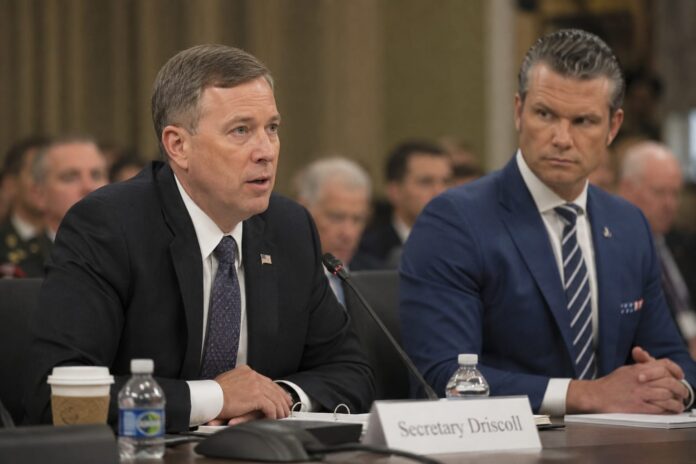
Story Highlights
- Defense Secretary Pete Hegseth consolidates power following Army Secretary Dan Driscoll’s unexpected resignation.
- Hegseth’s leadership style raises concerns about military readiness and the future of Army leadership.
- Bipartisan disappointment reflects the complexities of leadership transitions within the Pentagon.
- Potential successors for Driscoll’s position are already being discussed, indicating a swift move to fill the leadership void.
What Happened
The resignation of Army Secretary Dan Driscoll has sent shockwaves through the Pentagon, marking a significant shift in military leadership dynamics. This unexpected departure comes after nearly 20 months of Defense Secretary Pete Hegseth’s tenure, during which he has increasingly asserted his influence over the Army. Driscoll’s exit follows a series of tensions with Hegseth, who has been actively reshaping the leadership structure within the military, raising questions about the implications for military readiness and operational effectiveness.
Driscoll’s resignation was not merely a sudden decision; it was the culmination of months of friction between him and Hegseth. The latter has been known for his aggressive approach to personnel changes, having forced out or stalled the promotions of numerous senior military officials. This campaign to overhaul the bureaucratic makeup of the Pentagon has left many within the military community concerned about the potential ramifications for the Army’s operational capabilities.
- Army Secretary Dan Driscoll resigned unexpectedly amid tensions with Defense Secretary Pete Hegseth.
- Hegseth has been consolidating power, appointing loyalists to key positions, including General Christopher LaNeve as acting Army chief of staff.
- Driscoll’s departure follows the controversial firing of Army chief of staff Gen. Randy George in April.
- Concerns have been raised about the Army’s readiness to engage in major combat operations against adversaries like Iran, Russia, China, or North Korea.
Why It Matters
The implications of Driscoll’s resignation and Hegseth’s consolidation of power are profound. As the Army faces a leadership vacuum, the potential for operational disruptions looms large. Hegseth’s approach, while aimed at modernizing the Army, has raised alarms about military readiness. Critics argue that the aggressive personnel changes could weaken the Army’s ability to respond effectively to emerging threats.
Moreover, the bipartisan disappointment surrounding Driscoll’s exit underscores the complexities of leadership transitions within the Pentagon. Many lawmakers, regardless of party affiliation, have expressed concerns about the potential impact on military operations and the overall effectiveness of the Army. This sentiment reflects a broader anxiety about the direction of military leadership under Hegseth’s influence.
- Hegseth’s consolidation of power may lead to a weakened Army, impacting its readiness for major combat operations.
- Bipartisan concerns highlight the importance of stable leadership in the military, especially during times of geopolitical tension.
- Potential successors for Driscoll’s position are being discussed, indicating a swift response to fill the leadership gap.
- The ongoing personnel changes could have long-term consequences for the Army’s operational effectiveness and strategic posture.
Political and Public Context
To fully understand the significance of this leadership shift, it is essential to consider the broader context of military leadership in the United States. The Pentagon has been undergoing a transformation in recent years, with an emphasis on modernization and adapting to new threats. Hegseth’s focus on consolidating power reflects a strategic overhaul aimed at ensuring that the Army is equipped to meet contemporary challenges.
Driscoll, prior to his resignation, had been advocating for modernization initiatives, including improvements in equipment and living conditions for service members. His departure raises questions about the future of these initiatives and whether Hegseth will prioritize them in his leadership approach. The ongoing tensions within the Pentagon highlight the challenges of balancing modernization efforts with maintaining military readiness.
- Driscoll had been pushing for modernization initiatives, which may now be at risk following his resignation.
- The Pentagon’s leadership dynamics have shifted significantly under Hegseth’s influence, raising questions about future priorities.
- Concerns about military readiness have been exacerbated by recent personnel changes and leadership instability.
- The broader context of military transformation underscores the importance of stable leadership during times of geopolitical uncertainty.
Army secretary resigns after clashes with Hegseth as Democrats warn of ‘hollowed out’ leadership #TheGuardian https://t.co/94L7kfKXW8
— #TuckFrump (@realTuckFrumper) September 1, 2026
What Happens Next
Looking ahead, the future of the Army and its leadership remains uncertain. Hegseth’s consolidation of power suggests that he will continue to shape the direction of the Army, but the implications of his leadership style are yet to be fully realized. As discussions about potential successors for Driscoll’s position unfold, the Pentagon faces critical decisions that will impact military operations and readiness.
One of the key questions is whether Hegseth will prioritize modernization efforts that Driscoll championed or if he will focus solely on consolidating power and appointing loyalists. The potential nomination of Sean Parnell, Hegseth’s senior adviser, as Driscoll’s successor raises additional questions about the direction of Army leadership. Parnell’s past political challenges may complicate his confirmation process, further delaying the appointment of a permanent Army secretary.
- Hegseth’s leadership style will continue to shape the Army’s direction, with potential implications for military readiness.
- Discussions about potential successors for Driscoll’s position will be critical in determining the future of Army leadership.
- The confirmation process for any new appointments may face challenges, impacting the timeline for leadership transitions.
- Ongoing tensions within the Pentagon could hinder efforts to modernize the Army and address pressing operational needs.