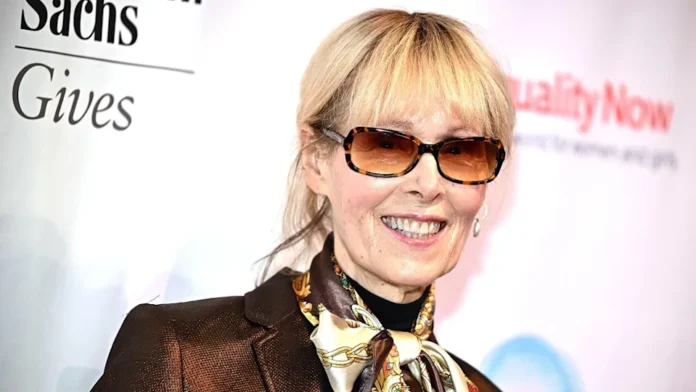
The Justice Department has opened a criminal investigation involving writer and Trump accuser E. Jean Carroll and the nonprofit of billionaire Democratic donor Reid Hoffman, whose organization helped fund Carroll’s civil lawsuits against the president. The probe centers on allegations of possible money laundering, obstruction, and conspiracy, and focuses specifically on whether Carroll made false statements during a 2022 deposition when she said her legal costs were not funded by outside sources. Critics say the investigation is the latest in a pattern of the Trump administration using federal law enforcement to target the president’s most prominent personal adversaries.
Story Highlights
- The DOJ has opened a criminal investigation involving E. Jean Carroll’s lawsuits against Trump, focused on whether she lied under oath about outside funding in a 2022 deposition
- The probe centers on billionaire Reid Hoffman’s nonprofit American Future Republic, which helped cover Carroll’s legal expenses
- Hoffman publicly accused Trump of using the investigation to silence his critics, saying he would “not bend the knee”
What Happened
The Justice Department has opened a criminal investigation involving E. Jean Carroll‘s lawsuits over her sexual abuse allegations against President Donald Trump, according to two sources familiar with the matter. The probe is focused on a trust founded by billionaire Democratic donor Reid Hoffman, whose nonprofit helped pay some of Carroll’s legal costs.
The allegations under investigation include possible money laundering, obstruction, and conspiracy. Prosecutors’ theory centers on statements Carroll made during a 2022 deposition in her civil lawsuit against Trump, in which she stated that she received no outside funding for her lawsuit, though it was later revealed that Hoffman had paid some legal fees and expenses.
The investigation is based in a federal prosecutors’ office in Chicago, where American Future Republic, founded in 2019, is headquartered. Senior leaders at the Justice Department referred the investigation to federal prosecutors in Chicago. The day after CNN first reported the investigation, U.S. Attorney Andrew Boutros said the Northern District of Illinois “has not opened — and has never opened — a criminal investigation into E. Jean Carroll.” After Boutros’ statement was issued, sources reaffirmed the investigation to CNN.
Hoffman said of Trump in a post on X: “He is investigating me because I supported E. Jean’s lawsuit — where a jury found Trump liable for sexually assaulting her, and a court of appeals upheld the decision.” He added that Trump’s investigation would attempt to “silence women, concentrate his power, and try to prevent me from continuing to give financial support to his opponents.”
The DOJ probe is the latest move by the Trump administration to target the president’s perceived political foes, including multiple attempts by the department to prosecute former FBI Director James Comey and New York Attorney General Letitia James. Under acting Attorney General Todd Blanche, the department has pushed to speed up Trump’s campaign of retribution.
Why It Matters
A jury in New York found Trump liable for sexually assaulting Carroll and awarded damages in a civil verdict that withstood appeal. The DOJ’s decision to investigate Carroll and the nonprofit that helped fund her successful lawsuit against the sitting president is extraordinary and raises immediate questions about the independence of federal law enforcement when the targets of past civil litigation are the same person now controlling the executive branch.
The probe intensifies an already significant debate about the politicization of the Justice Department under the Trump administration. The pattern of using prosecutorial tools against individuals and entities connected to political adversaries — including Carroll, Hoffman, former FBI officials, and Democratic state attorneys general — suggests a coordinated effort to deter opposition by imposing legal costs on those who challenge the president in court.
For Carroll, who won her case against Trump and saw that verdict upheld on appeal, the investigation introduces fresh legal jeopardy related to a seven-year-old deposition statement. Whether or not charges are ever filed, the burden of responding to a federal criminal investigation carries enormous personal and financial costs that serve as a deterrent in their own right.
For Hoffman, one of the most prominent Democratic megadonors in the country, the probe signals that financial support for litigation against Trump can itself become a criminal matter — a message that, if broadly understood, could dampen the willingness of wealthy individuals to fund future accountability efforts.
Economic and Global Context
The investigation lands against a backdrop of growing concern among business and legal communities about the Trump administration’s willingness to deploy the Justice Department against financial actors in the Democratic donor class. Hoffman, the co-founder of LinkedIn and a major investor in artificial intelligence ventures, represents significant economic and political capital in the technology sector.
Legal observers note that the theory of the case — that a 2022 deposition statement about legal funding constitutes potential criminal conduct — requires an unusual stretch of federal fraud and money laundering statutes. Defense attorneys familiar with federal prosecutions have described the legal theory as highly aggressive and legally uncertain. The outcome of any eventual prosecution would set significant precedents about the scope of perjury and obstruction charges in civil litigation contexts.
Investor and business community reaction to the probe will also be worth monitoring. Hoffman has made substantial bets in artificial intelligence, and any legal jeopardy affecting his ability to direct capital could ripple through sectors where he holds significant influence. More broadly, the prospect of federal investigations following large Democratic donors signals an escalating use of government power as a financial and reputational instrument.
Implications
If the investigation advances to charges, it would mark one of the most dramatic uses of federal criminal law in recent political history — the prosecution of a private citizen whose connection to the president consists solely of funding a civil lawsuit that a jury decided in her favor. Such a prosecution would face substantial legal challenges and would generate enormous political controversy extending well beyond the 2026 midterm cycle.
If the investigation stalls or is quietly closed, as the contradictory public statements from the Chicago U.S. attorney’s office already suggest is possible, the episode will nonetheless serve its deterrent function. The signal sent to potential future funders of Trump adversaries — that legal costs, reputational damage, and federal scrutiny await them — requires no conviction to be effective.
For Carroll, the investigation introduces new uncertainty into a legal chapter she had already won. For Hoffman and the broader Democratic donor class, this is a direct test of whether financial opposition to Trump can be sustained under conditions of escalating institutional pressure. For Americans who believe in an independent judiciary and impartial law enforcement, the case will stand as a reference point in evaluating whether those institutions held during Trump’s second term.