Story Highlights
- The Supreme Court ruled that the Trump administration lacked authority to deploy federalized National Guard troops in Chicago for domestic law enforcement.
- The decision reinforces limits under the Posse Comitatus Act, which restricts military involvement in civilian policing.
- The ruling follows a separate court decision finding the administration’s Los Angeles deployment unlawful.
What Happened
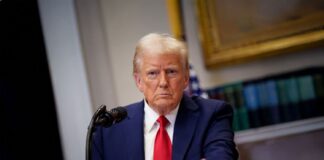
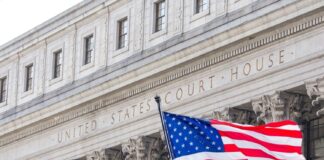
The Supreme Court delivered a major ruling limiting President Donald Trump’s authority to use federalized National Guard troops for domestic law enforcement operations.
In a 6-3 decision, the Court ruled that the administration did not meet the legal standard required to federalize Illinois National Guard troops for deployment to Chicago over the objection of Illinois Governor JB Pritzker.
The case began after Trump, citing crime and immigration enforcement concerns, directed Defense Secretary Pete Hegseth to federalize up to 300 Illinois Guard members. The administration later authorized additional troops from Texas to be sent into Chicago.
- The administration relied on 10 U.S.C. § 12406 to justify the deployment.
- Illinois argued the statute applies only in limited circumstances such as invasion, rebellion, or inability to execute federal law.
- The Supreme Court found that those conditions had not been met.
Illinois Attorney General Kwame Raoul challenged the deployment, arguing that federal law did not allow the president to override state control of Guard units for ordinary law enforcement purposes.
The Supreme Court agreed that the administration had not invoked a statute that created an exception to the Posse Comitatus Act. Justice Neil Gorsuch dissented, raising questions about how the law distinguishes between the National Guard and regular military forces.
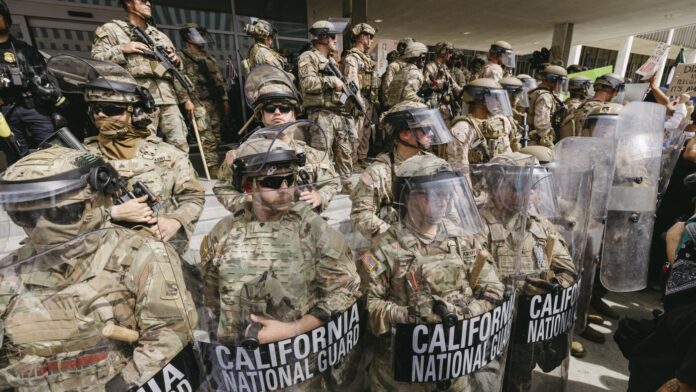
The ruling came after a separate case in California, where a federal judge found that the deployment of federalized Guard troops and Marines to Los Angeles violated the Posse Comitatus Act. That case involved troops used for crowd control, traffic control, security perimeters, and visible military presence in the city.
Why It Matters
The ruling matters because it draws a clear line between military power and civilian law enforcement, one of the oldest principles in American governance.
For Trump’s supporters, the case reflects the administration’s effort to respond aggressively to crime, immigration enforcement problems, and public disorder in cities where federal officials argued local leadership was failing to act.
But the Court’s decision makes clear that even a president focused on restoring order must operate within the limits set by Congress. The ruling does not eliminate federal authority entirely, but it says the administration must use the correct legal tools and meet the required statutory conditions.
- The ruling limits how presidents can use the National Guard inside U.S. cities.
- It does not prevent all federal deployments, but it requires clear legal authority.
- The decision may shape future responses to unrest, immigration enforcement, and public safety crises.
The decision also protects state authority. Governors do not have unlimited veto power over federalization, but the president cannot simply use Guard troops for civilian policing without a valid legal basis.
For civil liberties groups, the ruling is a major check on domestic military use. For the Trump administration, it is a legal setback that may force a more carefully structured approach to future deployments.
Political and Public Context
The case sits at the center of a broader fight over executive power, law enforcement, immigration, and public safety.
Trump has repeatedly argued that federal action is necessary when cities fail to control crime or cooperate with immigration enforcement. That message resonates with supporters who want a stronger federal response to disorder and illegal immigration.
At the same time, the Court’s ruling shows that even sympathetic public-safety arguments cannot bypass the limits of the Posse Comitatus Act, a law designed to prevent the military from becoming a domestic police force.
The California ruling added to that concern, with the judge warning that the administration’s approach risked creating a national policing structure controlled by the president.
For Republican voters focused on law and order, the ruling may be frustrating. For constitutional conservatives, however, it also reinforces a traditional limit on centralized federal power.
What Happens Next
The administration may continue exploring other legal avenues for Guard deployments, especially in cities where federal officials argue public safety or immigration enforcement operations are being obstructed.
Future deployments are likely to face quick legal challenges, especially from Democratic governors and state attorneys general. The Illinois and California rulings now provide a roadmap for those challenges.
- The administration may need clearer statutory authority before future deployments.
- Congress could face pressure to clarify when presidents may federalize Guard units.
- States are likely to use this ruling in future lawsuits against similar deployments.
The ruling does not end the broader debate over crime, immigration enforcement, and federal authority. But it does place stronger legal limits on how the president can use military forces inside American cities.
For Trump, the decision is a setback in court but not necessarily the end of his public-safety agenda. The next phase will likely focus on whether the administration can pursue the same goals through civilian law enforcement agencies or more narrowly authorized federal action.