Story Highlights
- Rep.-elect Leticia Gutierrez of Texas convened fellow Democrats to discuss comprehensive immigration reform strategies
- The discussion focused on border security measures and workforce enforcement solutions as interconnected policy priorities
- Democratic lawmakers are being encouraged to take proactive steps on immigration policy in the current political environment
- The November 2026 meeting highlighted efforts to advance immigration reform with emphasis on security and labor market considerations
What Happened
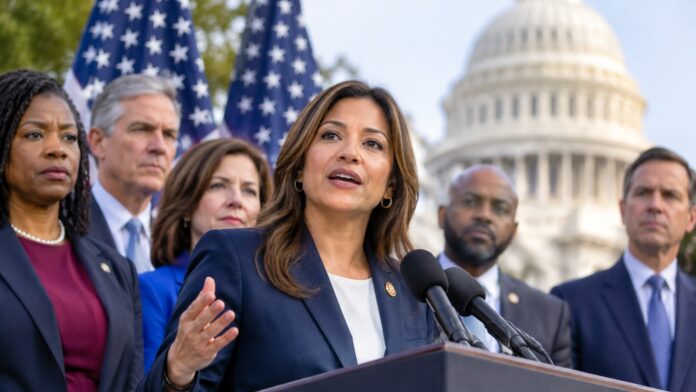
Rep.-elect Leticia Gutierrez of Texas organized a news conference in Washington, D.C., on November 11, 2026, bringing together fellow Democratic lawmakers to discuss a comprehensive approach to immigration reform. The meeting centered on three interconnected policy areas: immigration policy broadly, security measures at the southwest border, and workforce enforcement solutions. The gathering represented an effort by Democratic members to coordinate messaging and policy positions on one of the nation’s most contentious political issues.
The news conference reflected broader Democratic efforts to engage substantively with immigration matters rather than ceding policy leadership on the issue. By assembling members to discuss specific solutions in border security and workforce enforcement alongside general immigration reform, the Democrats sought to demonstrate a multi-faceted approach to the complex policy challenges surrounding immigration in the United States.
- Rep.-elect Leticia Gutierrez (D-TX) organized the event on November 11, 2026
- Location: Washington, D.C.
- Focus areas: border security, immigration policy, and workforce enforcement solutions
- Multiple Democratic lawmakers participated in the discussion
Why It Matters
Immigration reform remains one of the most consequential and divisive policy areas in American politics, affecting economic, security, and social dimensions of national governance. The Democratic effort to frame immigration reform through the lens of both security and workforce solutions represents an attempt to address common criticisms that the party lacks concrete enforcement mechanisms in its policy proposals. By emphasizing border security and workforce enforcement alongside immigration reform, Democrats are attempting to broaden the appeal of their positions beyond their traditional political base.
The focus on workforce enforcement solutions indicates recognition that immigration policy intersects with labor market dynamics, wage pressures, and employer compliance. This framing allows Democrats to engage with economic concerns that motivate immigration restrictionists while maintaining positions on pathways and humanitarian considerations. The timing of such discussions suggests Democratic lawmakers are preparing policy arguments and legislative approaches for the near-term political environment.
- Immigration policy affects national security, economic productivity, and labor market dynamics
- Democratic positioning on enforcement and security could influence legislative negotiations and public perception
- Workforce enforcement solutions connect immigration policy to employer accountability and wage protection concerns
- Border security emphasis demonstrates Democratic recognition of security priorities in immigration debate
Political and Public Context
Immigration has emerged as a defining policy issue across multiple election cycles, with Americans expressing concern about both border security and the economic impacts of immigration policy. Public polling consistently shows strong support for secure borders and enforcement of existing immigration laws, even among voters who also support pathways for legal immigration. The political environment has increasingly demanded that politicians across the ideological spectrum address both humanitarian considerations and security concerns simultaneously.
The Democratic Party has historically emphasized humanitarian aspects of immigration while sometimes underemphasizing enforcement priorities, creating a political vulnerability. The news conference organized by Rep.-elect Gutierrez reflects an apparent strategic decision to address this gap by highlighting Democratic commitment to border security and workforce enforcement. This approach mirrors broader efforts by Democrats to recalibrate messaging on issues where they perceive electoral disadvantages.
- Public opinion consistently supports border security and immigration law enforcement
- Immigration policy has been central to recent election cycles and political debates
- Bipartisan agreement exists on security and enforcement priorities, though disagreement persists on other reform elements
- Democratic messaging on immigration has evolved to emphasize enforcement alongside other reform priorities
How Democrats Can Start the Next Era of Immigration Reform Now #Time https://t.co/6Bt3x4u6vW
— #TuckFrump (@realTuckFrumper) November 13, 2026
What Happens Next
The Democratic policy discussion on immigration reform will likely inform legislative proposals and public messaging strategies in the coming months. Rep.-elect Gutierrez and her colleagues may develop specific legislative vehicles that incorporate border security, workforce enforcement, and broader immigration reform elements. The nature and scope of these proposals will determine whether they attract bipartisan support or remain primarily within Democratic policy circles.
Future developments will include the introduction of specific immigration reform legislation, negotiations with other lawmakers, and public advocacy campaigns explaining the Democratic approach. The success of these efforts will depend on whether the framing of immigration reform around security and enforcement resonates with the broader public and whether it creates pathways for legislative progress. Additional meetings among Democratic lawmakers focused on immigration may follow, refining policy positions and building consensus within the party.
- Democratic members may introduce comprehensive immigration reform legislation in the coming months
- Specific border security and workforce enforcement proposals will be developed and detailed
- Bipartisan negotiations on immigration policy may intensify if Democratic proposals gain momentum
- Public advocacy and messaging campaigns will likely follow the policy development phase