Story Highlights
- Senator Raphael Warnock condemned Senator Ted Cruz for remarks about Muslims, characterizing them as religious bigotry during an appearance on CNN’s State of the Union
- Cruz had mocked theological comments from Kansas pastor Adam Hamilton regarding the possibility of Muslims entering heaven, invoking Osama bin Laden as a counterexample
- Warnock, a Baptist minister, stated that as a Christian pastor he cannot support rhetoric that demeans any faith tradition or conflates the worst examples with entire faiths
- The exchange reflects ongoing political disagreements over religious tolerance, interfaith respect, and the nature of campaign rhetoric in American politics
What Happened
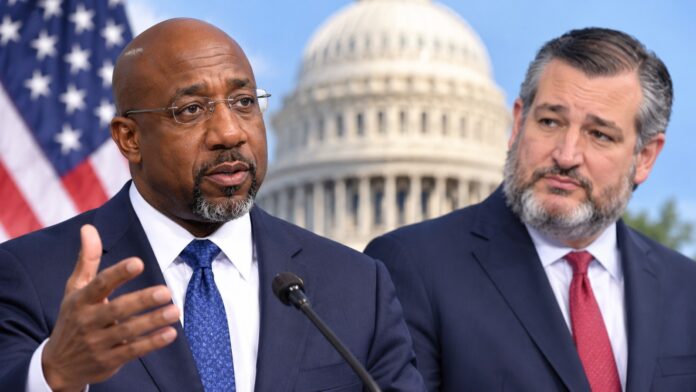
Senator Raphael Warnock of Georgia appeared on CNN’s State of the Union program to address remarks made by Senator Ted Cruz of Texas regarding Muslims and religious salvation. The comments from Cruz came during a campaign event in Wichita, Kansas on Friday, where he was supporting incumbent Senator Roger Marshall.
Cruz had responded to statements made by Adam Hamilton, a Kansas pastor and U.S. Senate candidate, who discussed theological perspectives on divine mercy and salvation. Hamilton had referenced a 2022 sermon in which he suggested that God’s mercy could extend to non-Christians, including Muslims, who sincerely seek God. Cruz mocked this theology by stating that when people reach heaven and encounter Muslims, the first thing they would see is Osama bin Laden, invoking the terrorist leader as a way to disparage Hamilton’s inclusive theological vision.
Warnock, who is also a Baptist minister, characterized Cruz’s remarks as problematic bigotry and offered his own theological perspective on the matter. The Georgia senator emphasized his concerns about the nature of the rhetoric being used in the political discourse and the approach of conflating the worst examples of a faith with the faith itself.
- Cruz made remarks during a Friday campaign event in Wichita, Kansas supporting Senator Roger Marshall
- Hamilton, a pastor and Senate candidate, had discussed religious inclusion in a 2022 sermon about God’s mercy extending to non-Christians including Muslims
- Warnock responded during CNN’s State of the Union with host Jake Tapper, calling Cruz’s comments “bigotry, pure and simple”
- Both Cruz and Warnock identify as Baptist ministers with different theological perspectives on interfaith salvation
Why It Matters
The exchange highlights ongoing tensions within American political discourse regarding religious rhetoric and interfaith respect. Warnock’s intervention in the debate reflects broader concerns among Democratic leaders about how religious language is deployed in campaign settings. The incident raises questions about the appropriate boundaries of religious commentary in political campaigns and whether critiques of specific theological positions cross into disparagement of entire faith communities.
Warnock specifically noted that as an African-American, he recognizes bigotry when he sees it, connecting religious intolerance to broader patterns of discrimination. He emphasized that lifting up the worst example of someone who claims a faith and trying to conflate that as the faith itself represents a form of bigotry. Warnock also suggested that such rhetoric reflects political strategy, indicating that campaigns may resort to divisive messaging when they perceive themselves as disadvantaged on substantive policy grounds. His comments suggest that defenders of religious pluralism view such statements as attempts to activate particular voter constituencies through appeals to religious identity and anxiety.
- Illustrates tensions over religious language and Islamophobic rhetoric in American political campaigns
- Raises questions about distinguishing theological critique from faith-based bigotry and discrimination
- Reflects concerns about using divisive campaign messaging when losing policy arguments
- Affects discussions of interfaith relations, religious tolerance, and inclusivity in public discourse
Political and Public Context
Religious rhetoric has long played a significant role in American political campaigns, with candidates and their supporters frequently invoking faith-based arguments to appeal to voters. The tension between theological debate and respectful treatment of different faith traditions remains a persistent challenge in political discourse. Interfaith dialogue and religious tolerance have become increasingly prominent issues in national political conversations, particularly as American religious demographics have become more diverse with growing Muslim and non-Christian populations.
Baptist theology and perspectives on salvation have themselves been subjects of ongoing theological debate within Christian communities for centuries. Both Warnock and Cruz bring their own religious traditions and theological commitments to their political positions. Warnock represents a more inclusive theological vision that acknowledges God’s grace extending beyond explicit Christian faith, while Cruz appears to hold a more restrictive view. The incident reflects how religious identity intersects with political messaging and campaign strategy, particularly in contexts where candidates seek to mobilize religious constituencies and define moral boundaries around faith and patriotism.
- Religious rhetoric remains a standard feature of American political campaigns and voter mobilization strategies
- Interfaith relations and religious tolerance have become more visible and contested political issues
- Baptist perspectives on salvation and God’s mercy have been debated within Christian traditions for centuries
- Religious identity and political messaging strategies frequently intersect in campaign contexts, particularly regarding Islam and Muslims in America
VIDEO – Rev. Warnock on Sen. Cruz Comments About Seeing Bin Laden in Heaven: Religious Bigotry Is Bigotry @raphaelgwarnock @jaketapper https://t.co/IkhG9th413
— Grabien (@GrabienMedia) November 1, 2026
What Happens Next
The trajectory of this particular dispute remains uncertain. Cruz’s office has been contacted for response to Warnock’s criticism, though responses to such controversies in political campaigns often depend on strategic considerations about media attention and voter priorities. Future developments may include statements from Cruz clarifying his theological position, further commentary from other religious and political figures, or the matter may recede from public attention as campaigns focus on other issues and policy debates.
The broader implications for how religious language is discussed in politics during this election cycle could extend beyond this particular exchange. Other campaigns and candidates may face similar scrutiny regarding their use of religious rhetoric, particularly as religious and secular voters continue to play significant roles in American electoral politics. The incident contributes to ongoing national conversations about the appropriate role of religious discourse in public and political spheres, and whether political candidates should invoke inflammatory religious comparisons in campaign events.
- Cruz’s office has been contacted for response to Warnock’s characterization of his remarks as bigotry
- Further commentary from other Baptist leaders, religious figures, or political figures remains possible
- The issue may influence broader campaign discussions about Islamophobia and religious rhetoric
- Implications for interfaith dialogue and political language may extend beyond this specific incident to other campaigns