Story Highlights
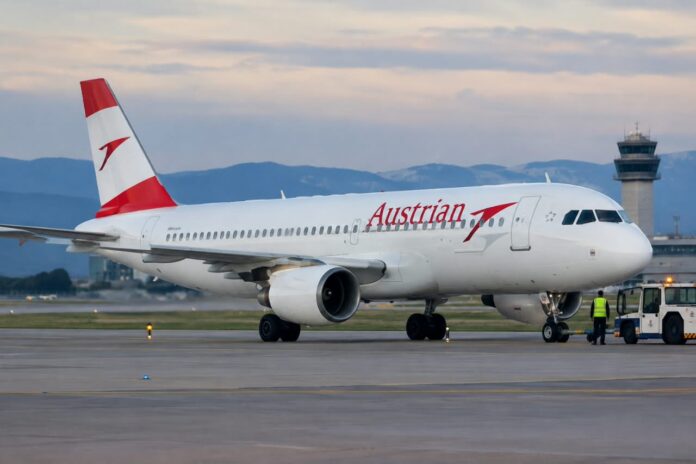
- An Austrian Airlines Airbus A320 traveling from Tel Aviv to Vienna was diverted to Sofia, Bulgaria on Sunday night following a reported bomb threat
- The aircraft carrying 51 passengers and six crew members made an emergency landing, with all passengers evacuated safely and no injuries reported
- Bulgarian air force fighter jets escorted the commercial flight, and authorities conducted a full security search of the plane after landing
- The incident reflects heightened security concerns in aviation following recent threats and attempted attacks on commercial flights in the region
What Happened
An Austrian Airlines flight operating from Tel Aviv’s Ben Gurion Airport to Vienna encountered a security threat that necessitated immediate emergency procedures on Sunday evening. The Airbus A320 aircraft, while en route over Romanian airspace approximately 30 minutes after the alert was raised, received notification of a bomb threat and subsequently diverted to Vasil Levski Airport in Sofia, Bulgaria. The aircraft completed the approximately three-hour journey from Tel Aviv to the Bulgarian capital, where it executed an emergency landing and all passengers and crew were evacuated according to standard security protocols.
According to statements from the Bulgarian transport ministry, the diversion was handled as a full emergency situation. The Bulgarian air force responded by scrambling a MiG-29 fighter jet to escort the commercial airliner during its final approach and landing procedures. Upon touchdown in Sofia, authorities immediately conducted comprehensive security searches of the aircraft. Austrian Airlines confirmed that a threat had been communicated but declined to provide additional specifics regarding the nature or source of the threat. The airline confirmed the presence of 51 passengers and six crew members aboard the flight at the time of the incident.
- Airbus A320 diverted from Tel Aviv to Vienna route and landed in Sofia, Bulgaria on Sunday night
- 51 passengers and 6 crew members evacuated safely with no injuries reported
- Bulgarian air force MiG-29 fighter jet escorted the aircraft; authorities conducted security search after landing
- Austrian Airlines confirmed a threat was made but provided no further details
Why It Matters
This incident underscores the persistent and multifaceted security challenges facing commercial aviation in contemporary operations. The diversion of a major European carrier’s flight demonstrates that threat assessments and emergency response protocols remain critical components of modern air travel safety infrastructure. Even potential threats, whether ultimately substantiated or not, require immediate mobilization of military and civilian aviation resources, reflecting the serious posture taken by authorities toward any indication of danger to commercial aircraft and their passengers. The incident also illustrates the interconnected nature of regional security concerns, as threats originating in one location can trigger responses across multiple countries and airspace jurisdictions.
The economic and operational implications of such diversions extend beyond the immediate incident. Airlines face costs associated with emergency procedures, extended flight times, and potential reputational concerns. Passengers experience significant disruptions to travel plans, while the broader aviation ecosystem must maintain elevated readiness levels. Additionally, the incident raises questions about information sharing and threat assessment protocols among international aviation authorities, particularly given the geographic and political complexities of the Eastern Mediterranean and Central European regions.
- Commercial aviation security remains vulnerable to disruptions from both substantiated threats and false alarms, requiring sustained vigilance
- International coordination between multiple nations and military forces is necessary to respond to mid-flight emergencies
- Airlines face operational costs and passenger relations challenges from emergency diversions
- Security protocols remain essential but resource-intensive components of contemporary air travel
Political and Public Context
This diversion occurs within a broader pattern of heightened security incidents affecting commercial aviation routes in the region. The incident follows a series of alarming events that have tested aviation security measures in recent weeks. Authorities have observed an uptick in both credible threats and false alarms affecting flights in Eastern European and Middle Eastern airspace, prompting increased military responses and enhanced screening procedures. The involvement of a major Western European carrier adds to the visibility of these security concerns within the European Union and across transatlantic aviation networks.
Recent precedents demonstrate the seriousness with which aviation authorities treat potential threats. Multiple instances of fighter jet scrambles have occurred across European airspace in response to suspected security issues, including incidents where false alarms or miscommunications prompted significant military mobilizations. These responses reflect the post-9/11 security framework that treats any potential threat to commercial aircraft as requiring immediate and substantial intervention. The coordination between Bulgarian, Austrian, Israeli, and potentially other national authorities in managing this incident reflects established protocols for international aviation emergencies, though such responses also generate discussions about security theater, proportionality, and resource allocation among aviation stakeholders.
- Multiple fighter jet scrambles have occurred across European airspace in recent weeks in response to aviation security concerns
- Regional instability and historical security challenges affect commercial aviation routes between the Middle East and Europe
- Post-9/11 security frameworks mandate aggressive responses to any potential aircraft threats
- International coordination protocols involving military and civilian aviation authorities remain in active use and continuous development
An Austrian Airlines flight from Tel Aviv to Vienna received a bomb threat on Sunday, which forced the plane to divert to Bulgaria, according to Bulgarian authorities and the airline. The passengers were evacuated after landing.
🔴 More on https://t.co/MbrRGkFd1I pic.twitter.com/GoShgSwvsR
— Al Jazeera English (@AJEnglish) October 18, 2026
What Happens Next
Investigations into the specific nature of the threat and its source will likely proceed through both Bulgarian and Austrian authorities, with potential coordination involving Israeli and international aviation security organizations. The investigative process typically involves examination of communication records, passenger manifests, and security footage, as well as interviews with relevant personnel. Depending on findings, authorities may pursue criminal investigations if evidence suggests intentional threat communication, or may conclude that the incident resulted from miscommunication or false alarm.
The incident will likely prompt reviews of threat assessment and response protocols among Austrian Airlines and international aviation bodies. Enhanced security measures or modified procedures may be implemented on routes involving Tel Aviv and other airports in regions with elevated threat levels. The broader aviation industry will monitor the investigation’s findings to assess whether systemic vulnerabilities exist in communication protocols, threat evaluation, or response procedures. Passengers originally scheduled on the affected flight will require rebooking and compensation according to applicable aviation regulations, generating administrative processes and potential passenger relations management for the airline.
- Bulgarian and Austrian authorities will conduct investigations into the threat source and nature
- Austrian Airlines and relevant aviation bodies will likely review and potentially modify security procedures
- Affected passengers require rebooking and compensation under applicable regulations
- Industry-wide monitoring will assess findings and potential implications for aviation security protocols