Story Highlights
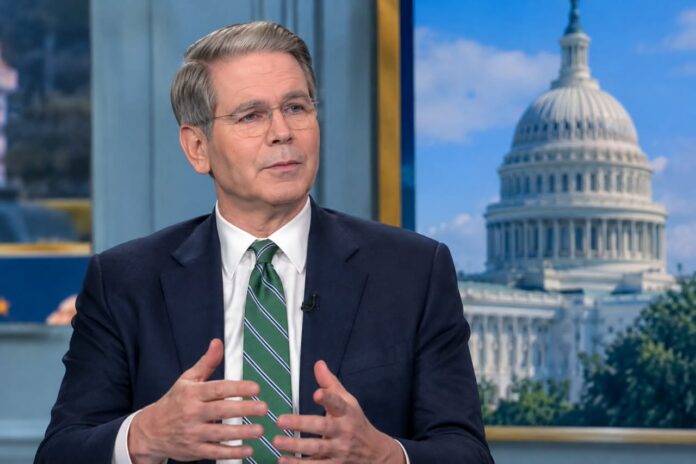
- Treasury Secretary Scott Bessent appeared on NBC’s Meet the Press to defend the administration’s economic performance
- Bessent attributed recent inflation to energy supply disruptions from the Iran conflict rather than domestic policy
- The administration highlighted record employment levels and household net worth while acknowledging inflation at 3.7 percent
- Host Kristen Welker challenged Bessent on responsibility, noting inflation has risen since Trump took office 636 days ago
What Happened
Treasury Secretary Scott Bessent appeared on NBC’s Meet the Press where host Kristen Welker asked whether Trump’s policies are driving up inflation. Bessent blamed an energy shock from the Iran conflict, stating that core inflation has been flat and that food, prescription drugs, and rents have either remained stable or declined. Welker fact-checked him, pointing out that gas prices have increased 44 percent since the start of the Iran conflict and that inflation was at 3 percent when Trump took office but now stands at 3.7 percent.
Bessent responded by citing wage increases under Trump compared to Biden-era inflation, claiming Americans received real wage gains of 1.5 percent under the current administration. When pressed on taking responsibility for the economy, Bessent stated the administration would own the economy and highlighted record private-sector job growth and household net worth levels. He emphasized that more people are working in the U.S. than ever before and that the administration’s policies have driven persistent wage increases that will continue as geopolitical tensions resolve.
Welker reminded Bessent that President Trump himself has characterized the current economy as his own, pressing the secretary on whether the administration would acknowledge full responsibility for economic conditions. The exchange highlighted the tension between the administration’s narrative of external factors driving inflation and the media’s expectation that sitting leaders take accountability for economic performance after sufficient time in office.
- Consumer prices increased at 3.7 percent, the fastest pace in five months
- Bessent attributed inflation primarily to energy supply disruptions from the Iran conflict
- The administration claimed real wage increases of 1.5 percent and record household net worth
- Welker noted Trump has been in office 636 days with inflation rising from 3 percent to 3.7 percent
Why It Matters
Economic management ranks among the top voter concerns, making the administration’s economic narrative crucial for public perception and electoral outcomes. When inflation remains above the Federal Reserve’s 2 percent target, families experience reduced purchasing power despite nominal wage gains, making the administration’s explanation of inflation drivers particularly important to address public anxiety. The distinction between nominal and real wage increases shapes whether voters perceive their financial situations as improving. If real wages are growing faster than inflation, household financial conditions may be improving even with elevated headline inflation.
However, the administration’s attribution of inflation to external factors affects credibility regarding policy effectiveness and future price expectations. Public confidence in economic leadership depends partly on whether voters believe policymakers understand inflation drivers and have credible plans to address them. The administration’s emphasis on job creation and rising household net worth provides counter-narratives to inflation concerns, but these positive indicators may not fully offset public anxiety about rising prices at the grocery store and gas pump, which remain highly visible to consumers.
- Public perception of economic competence directly influences electoral outcomes and consumer confidence
- Inflation above target levels reduce purchasing power and can spark demands for policy changes despite employment growth
- The administration’s blame of external factors affects credibility with voters about future economic prospects
- Job growth and household net worth gains may not offset public anxiety about visible price increases
Political and Public Context
Economic management has remained central in American politics, with voters consistently ranking it among their top concerns. The characterization of inflation as driven by energy supply shocks reflects a legitimate economic phenomenon, as global crude oil prices significantly impact gasoline costs. However, this framing requires acknowledging when international developments affect domestic prices, complicating the narrative of complete policy control. The Iran conflict represents a genuine geopolitical factor that policymakers cannot directly control, yet the administration’s policies regarding sanctions, energy production, and economic stimulus also influence inflation dynamics.
Media questioning about administration responsibility represents standard journalistic scrutiny applied to incumbents defending their economic record. The focus on how long the administration has been in office relates to the traditional argument that sufficient time has passed for current leaders to own economic conditions. This dynamic has played out repeatedly in previous administrations across different political parties. Welker’s reminder that President Trump himself claimed ownership of the economy adds particular weight to her challenge, as it undercuts any attempt to distance the administration from economic outcomes that occur during its tenure.
- Economic performance consistently ranks among top voter priorities in public opinion surveys
- Debate continues about appropriate timeframes for attributing economic conditions to current versus previous administrations
- Energy price volatility from geopolitical factors represents a genuine constraint on domestic policy makers
- Labor market strength and household net worth provide substantive positive economic indicators despite inflation
U.S. Treasury Secretary Scott Bessent has defended Donald Trump’s decision to suspend planned sanctions on Russian oil, criticizing Ukraine’s European allies who still rely on Russian energy during an NBC interview on Sunday. pic.twitter.com/nq0SJF40la
— TVP World (@TVPWorld_com) October 19, 2026
What Happens Next
Inflation trends in coming months will determine whether the administration’s characterization as temporary and energy-driven proves accurate. If energy prices moderate as predicted, inflation figures should decline, supporting the narrative that current pressures reflect temporary supply disruptions. Future economic data releases including employment figures, wage growth, and consumer price reports will validate or undermine the administration’s messaging. The administration’s insistence that gas prices will decrease depends on developments in the Iran conflict, making geopolitical outcomes directly relevant to domestic economic narratives.
Public opinion polling will track whether voters accept the administration’s economic narrative or demand different policies. The success of the current administration’s economic message depends on whether actual inflation trends move as predicted and whether voters perceive their personal financial situations as improving or deteriorating. If inflation remains sticky or increases further, the administration’s external blame narrative may lose persuasiveness, while if energy prices fall sharply and inflation moderates toward the Fed’s target, the administration’s messaging could prove vindicated and boost public confidence in its economic stewardship.
- Monthly inflation data releases will test whether energy-related price pressures moderate as predicted
- Federal Reserve decisions on interest rates will depend partly on inflation trends and geopolitical developments
- Upcoming employment and wage data will provide additional evidence for evaluating administration claims
- Public opinion polling will measure whether voters find the administration’s economic messaging persuasive