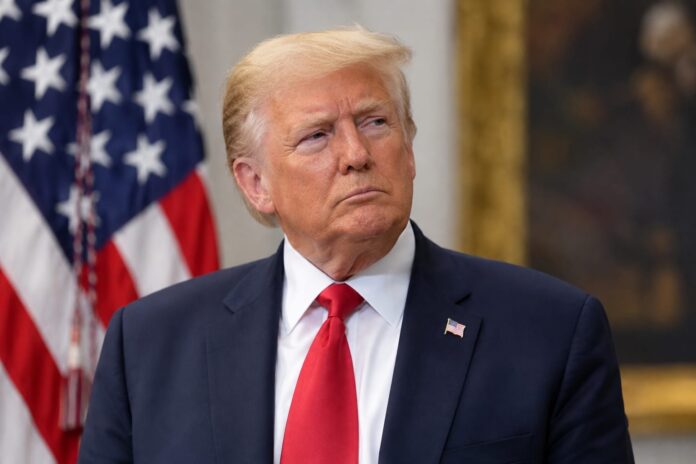
Story Highlights
- President Trump signed an executive order Monday allowing temporary highway use of red dye diesel fuel to combat rising fuel costs ahead of midterm elections
- The directive instructs Treasury Secretary Scott Bessent to defer certain diesel fuel tax payment obligations and provide penalty relief where legally permissible
- Industry groups including the Energy Marketers of America urged caution, noting that federal taxes remain owed and logistical challenges persist
- Diesel prices have surged nearly 70 percent since geopolitical conflicts in Iran and Ukraine-Russia escalated, creating urgent pressure to address fuel affordability
What Happened
President Trump signed an executive order on Monday evening before an audience of farmers in Nebraska designed to address soaring diesel fuel prices through a novel approach: temporarily permitting the use of red dye diesel fuel on highways. Red dye diesel, traditionally reserved for farm equipment and off-road applications, is exempt from federal excise taxes. The administration’s order instructs Treasury Secretary Scott Bessent to defer certain diesel fuel tax payment obligations and to provide penalty relief to the extent allowed by law, though the directive explicitly does not waive federal taxes entirely since only Congress possesses that authority.
The timing of this executive action reflects intense political urgency. American voters have expressed deep frustration over elevated gasoline prices, and the Trump administration faces considerable pressure to demonstrate tangible results on fuel cost reduction before the November midterm elections. The White House framed the measure as addressing an immediate crisis affecting working Americans and the broader economy.
- Executive order signed Monday in Nebraska before farmers, directing Treasury Secretary Scott Bessent to defer tax obligations and provide penalty relief
- Red dye diesel normally exempt from federal excise taxes due to off-road use designation for agricultural equipment
- Action does not eliminate federal taxes, only defers payment obligations as permitted by law
- Measure designed to address voter frustration over fuel prices ahead of November midterm elections
Why It Matters
Fuel prices represent one of the most visible and immediate economic concerns for American households and businesses. Diesel fuel particularly impacts transportation costs, agricultural operations, and supply chain expenses that ripple through the entire economy. When diesel prices spike, consumers experience higher prices at grocery stores, gas pumps, and throughout the retail sector. The administration’s willingness to explore executive options for addressing fuel costs demonstrates responsiveness to genuine economic hardship affecting millions of working families and businesses.
However, the practical impact of this order remains uncertain. Industry groups including the Energy Marketers of America cautioned that actual relief availability depends on guidance from the Treasury Department that had not yet been issued at the time of announcement. The Society of Independent Gasoline Marketers of America and the National Association of Truck Stop Owners noted that most reputable fuel retailers likely would not participate given persistent federal tax obligations and significant logistical challenges. The use of dyed fuel leaves residual color in tanks and fuel systems, creating potential liability and customer complications that may outweigh temporary benefits.
- Diesel price increases directly affect transportation, agriculture, and supply chain costs for American consumers and businesses
- Administration’s executive action demonstrates commitment to addressing fuel affordability concerns raised by voters
- Practical implementation remains uncertain pending Treasury Department guidance and industry participation decisions
- Logistical challenges and lingering liability concerns may limit real-world adoption by fuel retailers
Political and Public Context
Fuel prices have become a defining political issue reflecting broader geopolitical instability and supply chain disruptions beyond the immediate control of any single administration. The escalating conflict between Iran and regional adversaries has contributed to substantial diesel price increases, with costs rising from $3.76 per gallon to $6.32 per gallon as of the order’s announcement, representing a nearly 70 percent increase. Additionally, the ongoing Ukraine-Russia conflict has affected global energy markets through Russian refinery strikes and subsequent export restrictions that extend through at least October.
The Trump administration’s approach to addressing these challenges reflects a broader philosophy of executive action to alleviate immediate economic pressures. The order represents one tool among several policy levers the administration has pursued to manage inflation and fuel costs. The decision to sign the order before a Nebraska farming audience underscores the symbolic and practical importance of rural America and agricultural interests in the administration’s policy priorities. Todd Spencer, president of the Owner-Operator Independent Drivers Association, acknowledged that while the measure might provide minimal direct relief, market stability represents the essential ingredient for bringing down costs over the long term.
- Iran conflict contributed to diesel prices rising from $3.76 to $6.32 per gallon, a 70 percent increase
- Ukraine-Russia conflict and Russian refinery strikes have reduced global diesel supply through export restrictions extending through October
- Order signed in Nebraska reflecting emphasis on rural and agricultural constituencies affected by fuel costs
- Industry groups acknowledge minimal immediate relief while emphasizing importance of market stability for long-term cost reduction
Industry groups representing energy marketers and truck stops are warning against Trump’s plans to tackle soaring diesel prices caused by his war in Iran.
https://t.co/SwHl3tiCWd— The Daily Beast (@thedailybeast) October 7, 2026
What Happens Next
The immediate focus shifts to Treasury Department guidance on implementation of the executive order’s provisions regarding tax deferral and penalty relief. The specifics of Treasury Secretary Bessent’s regulatory interpretation will determine whether fuel retailers and trucking companies actually participate in selling red dye diesel for highway use. Industry observers expect most reputable fuel marketers will maintain current practices, limiting the order’s immediate practical impact unless implementation guidance proves more favorable than industry skepticism currently suggests.
The order’s success or limitations will become evident in coming weeks as fuel retailers make participation decisions and market dynamics respond. Additionally, resolution of ongoing geopolitical conflicts affecting global energy supplies remains critical to achieving sustained diesel price relief. The administration will likely continue exploring policy options to address fuel costs, whether through regulatory action, strategic petroleum reserve releases, or diplomatic efforts to stabilize global energy markets. The November midterm elections will provide a measure of whether these efforts successfully address voter concerns about fuel affordability and broader economic conditions.
- Treasury Department guidance on tax deferral and penalty relief implementation remains pending
- Fuel retailer participation decisions will determine practical market impact in coming weeks
- Ongoing geopolitical conflicts affecting global energy supplies remain key factor in long-term price stability
- November midterm elections will reflect voter assessment of administration’s economic performance and fuel cost management