Story Highlights
- The G7 agreed to release up to 100 million barrels of oil and diesel reserves to stabilize global energy markets.
- President Trump played a pivotal role in pressuring European allies to act, prioritizing relief for American consumers and businesses.
- The move is expected to provide immediate relief to diesel prices, which have soared due to recent geopolitical conflicts.
- This coordinated action comes just weeks before the crucial U.S. midterm elections, underscoring the administration’s commitment to economic stability.
What Happened
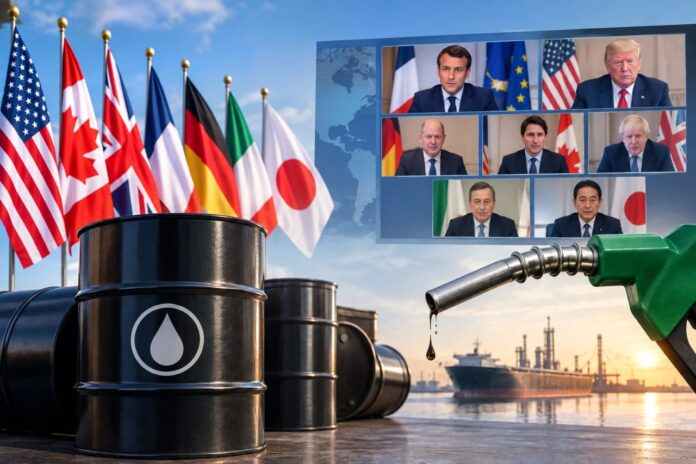
On Friday, the Group of Seven (G7) nations reached a landmark agreement to release up to 100 million barrels of diesel and crude oil from their strategic reserves. This decision was made during a high-level videoconference chaired by French President Emmanuel Macron, with President Trump representing the United States. The move comes as a direct response to the recent surge in global energy prices, particularly diesel, which has placed significant strain on economies and consumers worldwide.
The agreement follows weeks of intense diplomatic engagement, with the Trump administration leading efforts to persuade European partners to contribute more of their own reserves. President Trump emphasized the urgency of the situation, highlighting the need for immediate action to prevent American farmers, truckers, and businesses from bearing the brunt of the global diesel shortage. The G7’s coordinated release is designed to address supply disruptions caused by ongoing geopolitical tensions, including the escalation of the Russia-Ukraine conflict and the aftermath of military actions involving Iran.
- The G7 includes the United States, United Kingdom, Canada, Japan, Germany, Italy, France, and the European Union.
- The release will total up to 100 million barrels over four months, with a substantial portion distributed within the first 20 days.
- The decision was announced after a videoconference on Friday, chaired by President Macron and attended by President Trump.
- Diesel prices in the U.S. have surged 70% since late February, reaching $6.37 per gallon.
Why It Matters
The G7’s decision to release oil reserves is a significant step toward stabilizing volatile energy markets and providing relief to consumers facing record-high fuel prices. For the United States, this move is particularly important as it directly addresses the concerns of American farmers, truckers, and small businesses who rely heavily on diesel fuel. The Trump administration’s leadership in securing this agreement demonstrates a clear commitment to protecting American interests and ensuring economic resilience in the face of global uncertainty.
By taking decisive action, President Trump and his administration have shown that they are willing to leverage international partnerships to achieve tangible results for the American people. The timing of this release, just weeks before the midterm elections, underscores the administration’s focus on delivering solutions to pressing economic challenges. Lower diesel prices are expected to ease the financial burden on key sectors of the U.S. economy, supporting job growth and maintaining the competitiveness of American agriculture and industry.
- Immediate relief for American farmers, truckers, and businesses dependent on diesel fuel.
- Potential reduction in diesel prices by up to 25 cents per gallon, according to industry analysts.
- Enhanced energy security and market stability for G7 member nations.
- Positive impact on consumer confidence and economic outlook ahead of the U.S. midterm elections.
Political and Public Context
The global energy landscape has been under immense pressure in recent months, driven by a series of geopolitical events and supply disruptions. The escalation of the Russia-Ukraine war in July severely impacted Russian refining capacity, leading to a sharp reduction in diesel exports. At the same time, military actions involving Iran further destabilized oil markets, causing prices to spike across the board. These developments have had a direct impact on American consumers, with diesel prices rising dramatically and threatening the livelihoods of those in the transportation and agricultural sectors.
This is not the first time the international community has coordinated a release of strategic oil reserves. Earlier this year, members of the International Energy Agency approved a release of 400 million barrels of crude oil to address supply shortages. While that action provided temporary relief, prices continued to climb, highlighting the need for ongoing cooperation and decisive leadership. President Trump’s proactive approach in rallying G7 partners reflects a broader strategy of using American influence to secure favorable outcomes for U.S. citizens.
- Previous IEA release of 400 million barrels of crude oil in March provided only temporary relief.
- Brent crude prices remain elevated, up more than 60% since the start of the year and still above $100 per barrel.
- American and European refineries are operating at or near maximum capacity, limiting the ability to increase supply further.
- The G7 agreement includes coordination of refinery maintenance schedules to avoid simultaneous shutdowns.
The Group of Seven countries has agreed to release 100 billion barrels of crude oil and diesel from emergency reserves over several months to help reduce soaring energy prices, following pressure from US President Donald Trump.
Here's what to know: https://t.co/VBJpeKFY5R pic.twitter.com/FXK8nzexE7
— Al Jazeera English (@AJEnglish) October 3, 2026
What Happens Next
With the G7 agreement now in place, the process of releasing oil and diesel reserves will begin immediately. The initial phase will focus on delivering a substantial portion of the 100 million barrels within the first 20 days, targeting the most acute supply shortages. The Trump administration will continue to monitor the situation closely, working with international partners to ensure that the release has the intended effect on market prices and supply stability.
Looking ahead, the administration is expected to maintain pressure on allies to uphold their commitments and refrain from imposing export restrictions that could undermine the effectiveness of the coordinated release. There will also be ongoing efforts to address structural challenges in the energy sector, such as refinery capacity constraints and the need for long-term investment in domestic production. As the midterm elections approach, the success of this initiative will be closely watched by voters and policymakers alike, serving as a key indicator of the administration’s ability to deliver results in challenging times.
- Immediate implementation of the oil and diesel release, with a focus on rapid distribution.
- Continued coordination among G7 nations to monitor market impacts and adjust strategy as needed.
- Potential for further diplomatic engagement to address ongoing supply challenges and prevent future crises.
- Close scrutiny of the economic and political impact ahead of the U.S. midterm elections.