Story Highlights
- President Trump firmly rejected Iran’s proposal to reopen the Strait of Hormuz.
- The rejection comes amid rising energy prices and public discontent with military operations.
- Key figures, including Iranian President Masoud Pezeshkian, are involved in ongoing discussions.
- The president’s approval ratings have dipped as the midterm elections approach.
What Happened
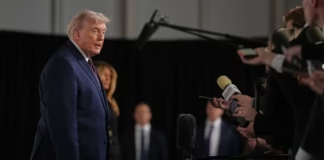
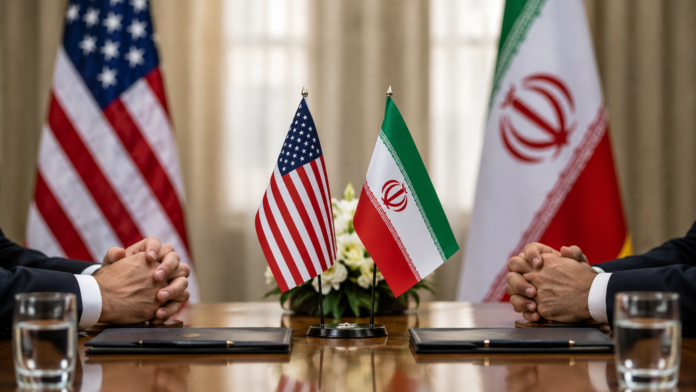
In a decisive move that underscores his administration’s commitment to national security, President Trump rejected a new seven-day proposal from Iran aimed at reopening the crucial Strait of Hormuz and halting military operations in the ongoing conflict between Tehran and the United States. During a press briefing at the White House, he stated, ‘They want to make a deal, and I think that’s fine. I like making a deal, too, but that deal would not be acceptable.’ This statement reflects a strong stance against Iran’s attempts to negotiate under current conditions.
The backdrop of this rejection is significant, as the president faces mounting pressure ahead of the midterm elections. Rising energy prices, which have been exacerbated by the closure of the Strait of Hormuz—a vital oil trading corridor—have led to increasing public discontent regarding U.S. military operations in the region. The president’s firm rejection of Iran’s proposal is not merely a diplomatic maneuver; it is a calculated decision aimed at reinforcing his leadership image as a strong protector of American interests.
- President Trump rejected Iran’s proposal on Saturday morning.
- Iranian President Masoud Pezeshkian discussed the conflict in an interview with CBS News.
- Iranian Foreign Minister Abbas Araghchi is leading negotiations to reopen the strait.
- The president’s approval rating has dropped to a career low of 32 percent.
Why It Matters
The implications of President Trump’s rejection of the Iran deal are profound, particularly as they relate to national security and economic stability. By refusing to entertain Iran’s proposal, the president is sending a clear message that the U.S. will not compromise on its principles or allow Iran to regain a foothold in the region. This decision aligns with his administration’s broader strategy of economic isolation against Iran, which has been characterized as the ‘bully of the Middle East.’ The president’s unwavering stance against Iran’s nuclear ambitions is a cornerstone of his foreign policy, and he has reiterated his commitment to preventing Iran from acquiring nuclear weapons.
Moreover, the timing of this rejection is critical. With midterm elections looming, the president’s leadership is under scrutiny. His approval ratings have taken a hit, with only 17 percent of respondents in a recent poll approving of his handling of rising living costs, a key issue for voters. This situation creates a dual challenge for the president: he must navigate complex international relations while also addressing domestic concerns that could impact Republican chances in Congress.
- The U.S. maintains a strong stance against Iran’s nuclear ambitions.
- Rising energy prices are a significant concern for American voters.
- The president’s leadership is being tested ahead of the midterm elections.
- Republicans fear that the ongoing conflict could hinder their electoral prospects.
Political and Public Context
Understanding the context of this rejection requires a look at recent developments in U.S.-Iran relations. The ongoing conflict has roots that extend back years, with tensions escalating significantly since President Trump took office. His administration’s withdrawal from the Iran nuclear deal in 2018 marked a pivotal moment, leading to increased sanctions and heightened military presence in the region. The Strait of Hormuz has become a flashpoint, with Iran frequently threatening to disrupt shipping lanes, which are vital for global oil supplies.
In recent weeks, the president has engaged in high-stakes diplomacy, including a speech at the United Nations General Assembly and bilateral meetings with world leaders. Notably, he met with Ukrainian President Volodymyr Zelensky, further emphasizing the U.S.’s commitment to international alliances. The involvement of key figures such as U.S. Ambassador to the UN Mike Waltz and envoys like Jared Kushner in discussions with Iranian representatives highlights the complexity of the situation and the administration’s proactive approach to diplomacy.
- The U.S. withdrew from the Iran nuclear deal in 2018, escalating tensions.
- The Strait of Hormuz is a critical global oil shipping lane.
- Recent diplomatic engagements include meetings with world leaders at the UN.
- Key U.S. officials are actively involved in discussions with Iran.
IRAN SAYS US MAY LAUNCH FRESH ATTACK AS TRUMP REJECTS HORMUZ DEAL AND CANADA PRESSES HUMAN RIGHTS RESOLUTION pic.twitter.com/t48kGQLTtN
— Next News Network (@nextnews) September 27, 2026
What Happens Next
Looking ahead, the future of U.S.-Iran relations remains uncertain. The president’s rejection of the proposal may lead to further escalation in military operations, particularly if Iran continues its aggressive posturing in the region. The administration will likely maintain its course of economic isolation, which could further strain Iran’s economy and compel it to reconsider its approach. However, the potential for diplomatic negotiations remains, albeit under stricter conditions set by the U.S.
As the midterm elections approach, the administration will need to balance its foreign policy objectives with domestic concerns. The president’s ability to effectively communicate his strategy to the American public will be crucial in shaping voter perceptions. Key questions remain: Will the administration pursue additional sanctions against Iran? How will rising energy prices impact the political landscape? And can the president regain public support as he navigates these complex issues?
- Further military operations may be anticipated if tensions escalate.
- The administration is likely to continue its economic isolation strategy.
- Effective communication of foreign policy will be crucial for voter support.
- Key questions about sanctions and energy prices remain unanswered.