Story Highlights
- Rep. Stephen Lynch successfully defeats Patrick Roath in the Democratic primary for Massachusetts’s 8th Congressional District.
- The primary reflects ongoing tensions within the Democratic Party regarding generational change.
- Lynch’s victory underscores the resilience of incumbents despite calls for new leadership.
- Other significant primaries in Massachusetts also highlight the theme of age and experience versus youth and progressivism.
What Happened
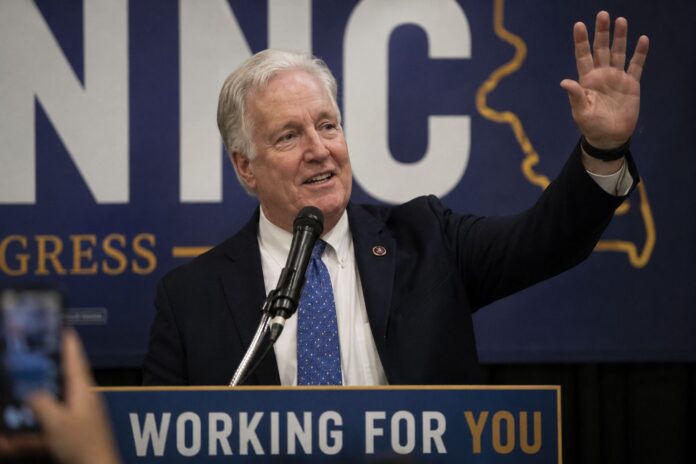
In a significant political event, Rep. Stephen Lynch, a seasoned Democratic incumbent, has successfully fended off a primary challenge from attorney Patrick Roath in Massachusetts’s 8th Congressional District. Lynch, who has represented the district since 2001, is projected to win by a margin of approximately 15 percentage points, according to Decision Desk HQ. This outcome is particularly noteworthy in a political climate where many incumbents have faced challenges from younger, more progressive candidates.
Patrick Roath, 39, who previously served as an aide to former Governor Deval Patrick, was the only Democrat to challenge Lynch in this primary. Throughout the campaign, Roath focused on criticizing Lynch’s past votes, including his opposition to former President Obama’s healthcare initiative in 2010 and his support for the Laken Riley Act. Despite Roath’s efforts to position himself as a fresh alternative to Lynch, the incumbent’s deep-rooted connections and experience in the district proved to be decisive.
- Lynch received approximately 47 percent of the vote reported by Decision Desk HQ.
- Roath was the sole challenger in the Democratic primary.
- The primary took place on a day when several other significant races were also being contested in Massachusetts.
- Lynch’s victory highlights the challenges faced by younger, progressive candidates in unseating established incumbents.
Why It Matters
The outcome of this primary is emblematic of a broader struggle within the Democratic Party, where calls for generational change are increasingly prevalent. Lynch’s victory serves as a reminder of the resilience of incumbents, particularly those who have established a strong rapport with their constituents over many years. While Roath’s campaign tapped into a desire for new leadership, it ultimately fell short against Lynch’s extensive political history and his claims of delivering results for the district.
This primary also reflects a national trend where incumbents are facing challenges from younger candidates who advocate for progressive policies. However, Lynch’s win suggests that voters may still prioritize experience and established relationships over the allure of new ideas. This dynamic raises questions about the future direction of the Democratic Party and whether it can effectively balance the desires of its younger base with the realities of political incumbency.
- Lynch’s victory may embolden other incumbents facing similar challenges.
- The result could influence future Democratic primaries across the country.
- Voters in the 8th Congressional District demonstrated a preference for experience over new leadership.
- The outcome may impact the Democratic Party’s strategy in upcoming elections.
Political and Public Context
The political landscape in Massachusetts is currently characterized by a series of primaries that highlight the tension between established politicians and those advocating for change. Lynch’s victory comes at a time when several other prominent Democrats are also facing challenges from younger candidates. For instance, Rep. Seth Moulton is contesting Sen. Ed Markey’s Senate seat, while high school teacher Jeromie Whalen is challenging Rep. Richard Neal in the western 1st Congressional District.
This environment of competition underscores a growing sentiment among voters who are eager for a shift in leadership. However, Lynch’s success indicates that incumbents can still maintain their positions, even in a climate that seems ripe for change. The results of these primaries could have significant implications for the Democratic Party as it navigates the complexities of its internal dynamics and the expectations of its constituents.
- Other primaries in Massachusetts are also focusing on generational change.
- Rep. Seth Moulton’s challenge to Sen. Ed Markey highlights similar themes.
- Jeromie Whalen’s campaign against Rep. Richard Neal reflects the desire for new leadership.
- The outcomes of these races may shape the future of the Democratic Party in Massachusetts and beyond.
Rep. Stephen F. Lynch (D-Massachusetts) won the nomination in his House primary on Tuesday, fending off a younger challenger and defying the anti-incumbent wave that has swept other Democratic contests. https://t.co/fZO0c9b1GD
— The Washington Post (@washingtonpost) September 2, 2026
What Happens Next
Looking ahead, the implications of Lynch’s victory extend beyond the immediate results of this primary. As the Democratic Party continues to grapple with the balance between experience and new ideas, Lynch’s win may serve as a cautionary tale for challengers seeking to unseat incumbents. The resilience demonstrated by Lynch could inspire other incumbents to adopt similar strategies in their campaigns, emphasizing their track records and connections to the community.
Moreover, the ongoing primaries in Massachusetts will continue to draw attention as voters assess the candidates and their platforms. The outcomes of these races will likely influence the Democratic Party’s approach to future elections, particularly as it seeks to unify its base while addressing the concerns of younger voters. The party may need to find ways to incorporate progressive ideas while still valuing the experience and stability that incumbents provide.
- Incumbents may adopt strategies similar to Lynch’s in future campaigns.
- The Democratic Party will need to address the concerns of younger voters while valuing experience.
- Ongoing primaries will continue to shape the political landscape in Massachusetts.
- Future elections may see a shift in how candidates position themselves regarding generational change.