Story Highlights
- The House voted 370-48 to pass a short-term funding bill.
- The legislation ensures government operations continue until December 11.
- This move postpones negotiations on long-term funding until after the midterm elections.
- Both parties are expected to face challenges in reaching a consensus on future spending.
What Happened
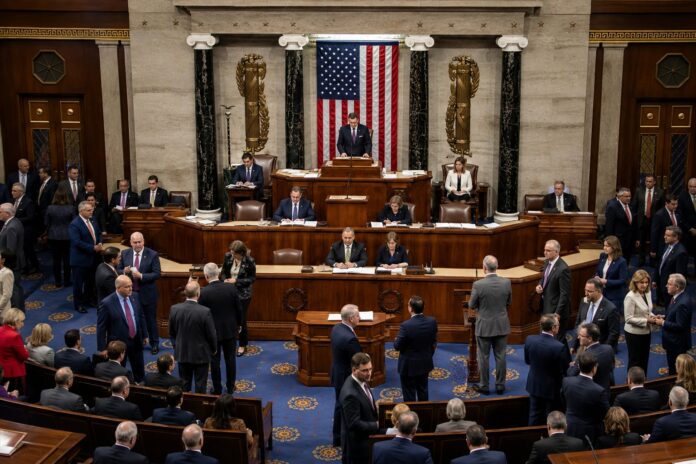
In a decisive move to prevent a government shutdown, the House of Representatives voted on Tuesday to pass a short-term funding bill. The legislation, which passed with a significant majority of 370-48, will keep government operations funded at current levels until December 11. This bill had already received approval from the Senate, making its passage in the House a formality that was anticipated by many lawmakers.
The urgency of this legislation stemmed from the impending deadline at the end of September, which would have forced the government to cease operations without an approved funding measure. With the midterm elections approaching on November 3, this funding bill effectively removes a major legislative hurdle from Congress’s agenda, allowing lawmakers to focus on their campaigns and the upcoming elections. The bill’s passage also reflects the necessity for both parties to find common ground amidst a contentious political climate.
- The House passed the funding bill with a vote of 370-48.
- The bill will keep government funding at current levels until December 11.
- Negotiations for a full-year funding deal are postponed until after the midterms.
- House Appropriations Committee Chair Tom Cole expressed concerns about the impact of the elections on future negotiations.
Why It Matters
The passage of this funding bill is significant for several reasons. Firstly, it ensures that government operations will continue smoothly, avoiding the disruptions that typically accompany a shutdown. Such disruptions can have far-reaching effects, impacting federal employees, government services, and the economy at large. By securing funding until December, Congress has effectively bought itself time to negotiate a more comprehensive funding agreement.
Moreover, the postponement of negotiations until after the midterms means that the political landscape could shift dramatically depending on the election outcomes. The winners of the midterm elections will have a stronger position in the negotiations that follow, potentially altering the dynamics of federal spending discussions. This could lead to more contentious debates as both parties will be emboldened by their electoral victories or chastened by their losses. The implications of this funding measure will linger as lawmakers prepare for the challenges ahead.
- The funding bill prevents immediate disruptions to government services.
- Future negotiations will be influenced by the outcomes of the midterm elections.
- Political dynamics may shift, affecting bipartisan cooperation on funding issues.
- Federal employees and services are spared from the consequences of a shutdown.
Political and Public Context
The backdrop to this funding bill is a contentious political environment where both parties have been at odds over federal spending levels. Democrats have resisted calls for a significant increase in military spending, which has been a point of contention in negotiations. The proposed military budget of $1.5 trillion represents a substantial increase from the already record-breaking $1 trillion allocated this year. This disagreement highlights the broader ideological divide between the parties regarding fiscal priorities.
Additionally, the requirement for 60 Senate votes to overcome a filibuster means that bipartisan support is essential for any funding legislation. This reality has forced both parties to find common ground, even as they prepare for the electoral battles ahead. The current funding bill is a product of this necessity, reflecting a temporary truce in a larger ongoing conflict over budgetary issues. As the midterms approach, the stakes are high for both parties, and the outcome will significantly influence future budgetary discussions.
- Democrats oppose significant increases in military spending.
- The requirement for bipartisan support complicates funding negotiations.
- Previous funding measures have faced similar partisan divides.
- The upcoming midterms will influence future budgetary discussions.
The House just voted on a government funding bill to give MORE money to ICE.
We cannot give another dime to this rogue agency that continues to terrorize our communities.
Voted NO.
— Rep. Ilhan Omar (@Ilhan) September 1, 2026
What Happens Next
Looking ahead, the passage of this funding bill sets the stage for a series of critical developments. As the midterm elections approach, lawmakers will be focused on their campaigns, but the implications of this funding measure will linger. Once the elections conclude, Congress will need to return to the negotiating table to address the full-year funding bill, which will likely be fraught with challenges.
Lawmakers will need to navigate the shifting political landscape, as the balance of power in Congress could change significantly. The outcomes of the elections will determine which party holds the majority and how aggressively they pursue their funding priorities. This uncertainty raises several questions about the future of federal spending and the potential for bipartisan cooperation. The winners of the midterms will feel empowered to press their demands in the negotiations that follow, knowing that they’ll have more power in the upcoming year.
- Lawmakers will need to negotiate a full-year funding bill after the elections.
- The balance of power in Congress may shift, affecting negotiations.
- Future funding discussions will likely be contentious.
- Lawmakers will need to address the implications of the military budget debate.