Story Highlights
- A 50% tariff on Canadian spirits represents potential leverage to pressure Canada into lifting its ban on American distilled spirits products
- American distilled spirits exports to Canada have plummeted 73%, falling from the second-largest destination market to sixth place in 2025
- Industry leaders view the tariff as an opportunity to restore a market worth roughly $250 million annually before the trade dispute
- Kentucky’s bourbon industry, which produces 95% of the world’s supply and supports over 23,000 jobs, stands to benefit significantly from market restoration
What Happened
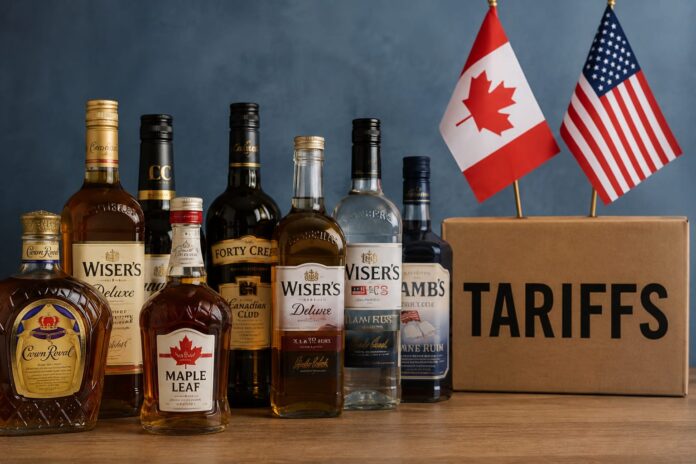
The Trump administration’s latest trade confrontation with Canada has extended into the spirits industry, with a proposed 50% tariff on Canadian liquor products looming as a negotiating tool. The administration and Canadian leadership engaged in last-minute discussions Tuesday to attempt averting the tariff before a midnight deadline. The tariff affects approximately $20 billion in Canadian imports, with spirits being just one category among dairy products, vehicles, hockey equipment, and other goods facing the new levy.
This escalation follows Canadian provincial actions that removed American distilled spirits from store shelves in retaliation for earlier U.S. trade measures. The move has devastated American spirits exporters, with the industry experiencing a dramatic collapse in its once-robust Canadian market. Chris Swonger, president and CEO of the Distilled Spirits Council, acknowledged that his industry recognizes both the challenges and opportunities presented by the tariff strategy.
- Proposed 50% tariff covers roughly $20 billion in Canadian imports including whisky, vodka, gin, rum, wine, and beer
- Trump administration and Canadian Prime Minister Mark Carney held last-minute negotiations Tuesday before the midnight deadline
- Provincial bans on American spirits have been in place as retaliatory measures against earlier U.S. tariffs
- The tariff affects multiple product categories beyond beverages across the bilateral trade relationship
Why It Matters
The stakes in this trade dispute extend far beyond cocktail menus and liquor store shelves. American distilled spirits producers have witnessed their Canadian export market collapse catastrophically over the past year. From March through December, exports plunged from $203 million in 2024 to just $60 million in 2025, representing a loss of approximately $143 million. Canada, which once represented the second-largest destination for American spirits exports from a market worth roughly $250 million annually, has fallen to sixth place in just one year.
The reverberations are particularly acute in Kentucky, where bourbon production forms a cornerstone of the regional economy. The state produces 95% of the world’s bourbon supply and supports more than 23,000 industry jobs. Industry leaders view the proposed tariff as essential leverage to convince Canadian officials to reopen their market to American products. The tariff mechanism could serve as the catalyst needed to restore access to a profitable export market that benefits American workers, businesses, and entire regional economies dependent on spirits production.
- American distilled spirits exports to Canada fell from $203 million in 2024 to $60 million in 2025, a loss of $143 million
- Canada dropped from second-largest to sixth-largest market for U.S. spirits exports within one year
- Kentucky’s bourbon industry supports 23,000 jobs and produces 95% of the world’s bourbon supply
- Industry leaders argue the tariff is necessary to restore access to a market worth approximately $250 million annually
Political and Public Context
This spirits trade dispute sits within the broader context of the Trump administration’s approach to bilateral trade relationships. The president has emphasized that strategic tariffs can serve as negotiating leverage to achieve favorable outcomes for American workers and businesses. The spirits industry’s situation illustrates how trade policy decisions cascade through regional economies and create constituencies with direct interest in trade negotiations outcomes.
Canadian provincial governments initiated their boycott of American spirits as a retaliatory response to earlier American tariff actions. The measure targeted the American spirits industry specifically, creating a direct economic impact that industry leaders now hope the current tariff proposal will help reverse. The approach reflects the administration’s philosophy that tariff threats and implementation can pressure trading partners to modify policies that disadvantage American producers and exporters.
- The Trump administration views strategic tariffs as leverage to achieve favorable trade outcomes for American industries
- Canadian provincial governments initiated the spirits boycott as retaliation for earlier U.S. tariff actions
- The dispute demonstrates how trade policy decisions affect specific regional economies and create industry constituencies
- Last-minute negotiations between Trump administration and Canadian leadership reflect ongoing diplomatic efforts to resolve trade tensions
Trump’s latest trade fight with Canada could soon spill into your cocktail glass. 🍸
A looming 50% tariff on Canadian spirits could hit bars, restaurants and liquor stores — even as U.S. distillers hope the threat gets American spirits back on Canadian shelves. pic.twitter.com/gSqky4eP4q
— Fox News Politics (@foxnewspolitics) August 19, 2026
What Happens Next
The immediate outcome depends on whether negotiations between the Trump administration and Canadian officials succeed in crafting an agreement before tariff implementation. Industry leaders have expressed hope that an arrangement will be reached that convinces Canadian provincial and federal officials to remove the bans on American spirits from store shelves. The tariff represents a concrete bargaining position that adds pressure to those negotiations.
Should the tariff go into effect, American bars, restaurants, and liquor stores will face higher costs for Canadian spirits, potentially affecting cocktail menus and consumer prices. However, industry leaders argue that the short-term inconvenience could yield long-term benefits if it successfully reopens the Canadian market to American producers. The outcome will signal whether the administration’s tariff strategy generates meaningful results in resolving trade disputes with major trading partners.
- Negotiations continue with a deadline for potential tariff implementation and market access restoration
- A successful agreement would require Canadian provinces to lift bans on American spirits imports
- Implementation of the 50% tariff would increase costs for U.S. hospitality businesses purchasing Canadian liquor
- Industry will monitor whether the tariff strategy achieves its intended goal of restoring access to the Canadian market